






A_map_of_New_England,_being_the_first_that_ever_was_here_cut_..._places_(2675732378).jpg

Vox clamantis in deserto

Commentary Robert Whitcomb Commentary Robert Whitcomb

Seeking while traveling

Taylor Two works by MAGGIE TAYLOR, in the "Winter Group Show,'' at Lanoue Gallery, Boston, through Jan. 31.


Read More
Commentary Robert Whitcomb Commentary Robert Whitcomb

Robert Whitcomb: Why people don't work; my training

News media have recently reported on the many people who have permanently given up looking for work. Among the causes cited: federal and some states’ generous disability programs, marriage’s decline, the aging population, the rise of the Internet and the Affordable Care Act.

I would add corporate short-termism, which leads companies to lay off people faster and to be more disinclined to share profits with lower-level employees in raises. Many ex-workers decide it isn’t worth working again. (And grifters game disability payments …)

Especially since the 1980s, senior executives have been heavily rewarded for quarter-to-quarter earnings gains with gigantic pay packages. When I worked for The Wall Street Journal, in the ’70s, the annual earnings report was the big thing; now it’s the quarterly one. Pension and other investment funds (including unions’!) have also pushed for short-term-profit maximization.

A wider view of corporate duties — such as lower-level employees’ compensation and the communities where the companies do business — has slipped in the priority list, especially in public companies. That chief executives tend to stay in their jobs only a few years encourages this by eroding loyalty to fellow employees.

And private-sector union membership has plunged, weakening a power to push companies to share their wealth more widely with non-executives and people without company stock. So while senior execs’ compensation may rise by double digits in a year, average workers are lucky if their raises reach the inflation rate.

Don’t expect any major share-the-wealth action by executives or owners or a higher federal minimum wage anytime soon.

But the large voting constituencies of these seemingly permanently jobless people make it unlikely that programs that help them avoid work will be slashed. Interestingly, their percentages are highest in the Tea Party regions, where complaints about “welfare’’ and the taxes to pay for it are most strident.

Many of the sort of people who 40 years ago would have been working will henceforth continue not contributing to America’s productive energy. Based on anecdotal reportage, most of these people seem pretty depressed and/or bored by their status.


I TOOK THE TRAIN the other week to and from Philadelphia. As I gazed out the window at the beautiful Long Island Sound marshes, I thought of how much of my life I have spent on trains, and how nice it is that we still have so many on the East Coast.

I remember the excitement of being in Pullman car sleeping compartments on trips to the Midwest to see relatives, and the train down to Tennessee to see family there. At every major stop, they’d bring aboard local newspapers. The attendants were almost entirely African-American; being a sleeping-car porter was the most reliable job that blacks could get then.

Then there were the rackety Old Colony Line commuter trains, with their itchy seat upholstery, from Boston’s South Shore to South Station — with the cars and the station dingy and reeking of cigarette and cigar smoke. Still, it was exciting to be put on a train alone as a little kid. And I began the habit of using the train time to figure out assorted issues and to catch up on sleep.

In school I often took a Budd Car train from Bridgeport to Waterbury, Conn., through a heavily polluted sort of Ruhr Valley industrial landscape (most of the factories are long closed now), after getting to Bridgeport from Boston on an old New Haven Railroad train where you could order a nice meal, with linen tablecloth, in a dining car, checking off your order on a card since inane union rules prohibited speaking the order to a waiter. They were remarkably relaxed about enforcing drinking-age rules.

Then I commuted on such innovations as the Metroliners between New York and Washington, and, for a time in the sexy TurboTrains on the Shoreline Route in New England. (They had an elevated section, like trains Out West.)

The Northeast Corridor trains are too often late, especially when they come from the south, the infrastructure way behind European and many East Asian trains and the eating accommodations mediocre. Still, you have much more space than increasingly unhealthy planes (whose ever tighter seating sets you up for a pulmonary embolism), buses and cars and a moving train’s rhythm is soothing, indeed soporific. Trains get you away from it all, even if you’re going to a job.

Robert Whitcomb (rwhitcomb51@gmail.com) is the overseer of New England Diary.

Read More
Commentary Robert Whitcomb Commentary Robert Whitcomb

A doctor's lessons from a dying agnostic patient

Read More
Commentary Robert Whitcomb Commentary Robert Whitcomb

Some fixes for R.I.

Some of the best things that Rhode Island could do to improve its economy: Get rid of dozens of  its excess taxing authorities while making its state taxes as similar as possible to Massachusetts's.

Emphasize German-style vocational education as well as the usual academic courses. The biggest complaint  that present or potential employers have about the Ocean State is the inadequately educated population.

Clarify/simplify  its  confusing and contradictory regulations. Throw out some of them. Enact "sunset laws'' to eliminate outdated and/or redundant statutes and regulations.

Speed the runway extension. Traffic has been dropping at T.F.  Green Airport for one major reason -- the delay in getting a longer runway that will allow NONSTOP trips to the West Coast and frequent flights to Europe.  (And get more European businesses here! Vive la France, etc.)

Traffic will surge when the runway is extended. The delay in that extension can be blamed on the extreme localism of some constituencies and the spinelessness of some political leaders in the face of it.

Make Quonset Point the major seaport it is designed to be.

Get rid of the state estate tax. It loses the state more revenue than it gains. It hurts the marketing of the state to CEO's and directors who make location decisions for their companies. And while it's far from onerous, it still sends fleeing some rich retirees.

Read More
Commentary Robert Whitcomb Commentary Robert Whitcomb

Transcending materiality

"Crane'' (metal found object and rolled tea bags), by CHRISTIANE CORCELLE, in the show "Enrich the Moment,'' at Carney Gallery, in Weston, Mass., through Jan. 23. The idea, say the gallery notes, is "not to disguise the everyday objects, but rather enhance them, transcending their simple materiality to become something completely new.''

Read More
Commentary Robert Whitcomb Commentary Robert Whitcomb

Sam Pizzigati: Let holiday heart go out to the Uber-greedy

hansomcab
Peace on Earth, good will toward men. We honor these noble values every holiday season — and some people actually work to advance them all year long.Other folks, by contrast, mock these values. They spend their days chasing after ever grander stashes of personal treasure.

These greedy souls love the shadows. So a few years back, the inequality weekly I edit for the Institute for Policy Studies began publishing an annual list of America’s top ten greediest. I’ve just introduced this year’s list, bringing tales of plutocrats young and old.

The oldest character on it: the 79-year-old Wall Street mover and shaker Ken Langone.

Langone began making headlines right at the start of 2014 with his advice for Pope Francis. The pontiff, he told New York’s archbishop, should cool it on the inequality front. Papal broadsides against “the powerful feeding upon the powerless,” Langone complained, could leave America’s wealthy “incapable of feeling compassion for the poor.”

Langone himself has always been a generous sort — at least for his friends. As a New York Stock Exchange director, he greased the skids for a $190-million exit package for his buddy, NYSE president Richard Grasso, in 2003

Langone has been a bit less generous to the powerless. As a director at Yum! Brands, the home of Taco Bell and KFC, he cheered on company efforts to oppose hikes in the minimum wage. As he likes to tell regulators: “Leave us alone and let us hire people.”

Home Depot, the retail giant Langone’s financing helped propel to big-box dominance, shows what happens when you leave corporations alone. Big-box giants, notes the research group Good Jobs First, don’t create jobs. They “grow mostly at the expense of existing competitors,” many of them local businesses.

Big-box giants, on the other hand, do create massive concentrations of personal wealth. Forbes now estimates Langone’s net worth at $2.6 billion.

Among the youngest of America’s 2014 top ten greediest: the 38-year-old Travis Kalanick, the CEO and cofounder of Uber, a taxi-like service that lets travelers hail cars through a mobile phone app.

Last January, Uber was running cars in just 60 cities. Now it’s spread to 250 cities — in 50 countries. That growth has propelled Uber’s worth to $40 billion — more than long-established transportation heavyweights like Hertz and United Continental.

Not bad for a company, the AP notes, “that didn’t exist five years ago.” And Kalanick himself, Forbes estimates, is ending the year worth a cool $3 billion.

How has Uber soared so quickly? The company is pumping up profits, critics charge, by taking short cuts like not running adequate background checks on drivers. Officials in Los Angeles and San Francisco have just filed suit against Uber on driver- safety checks, and governments from Spain to India have also taken legal action against the company.

Other critics include customers like Leah Kappen of Indianapolis. She took an Uber ride downtown to the Dec. 6 Big Ten football championship game. That ride cost her $30. The 18-minute trip home after the game cost her $450. This past Halloween, an 18-mile ride home ran New Yorker Elliott Asbury $539.

Uber’s “surge pricing” — a policy that ties rates to the supposed market demands of the moment — generated these outsized fees. But anyone upset by $500 cab fare, says Kalanick, needs to start “getting used to dynamic pricing in transportation.”

Uber drivers are complaining, too. One of Uber’s competitors, Lyft, gives all the extra profit from “surge pricing” to its drivers. Uber takes a 20 percent cut. Why not, The Wall Street Journal asked Kalanick, follow suit?

“We are a business,” he replied.

So much for good will.

Read More
Commentary Robert Whitcomb Commentary Robert Whitcomb

Sony has made us all more unsafe by withdrawing film


Here's the trailer and some other promotional information about the comedy, The Interview, about an attempt to kill the murderous pervert Kim Jong-un,  the dictator who runs North Korea. He is the third in  a dynastic succession of a depraved Communist royalty.

Sadly, Sony, by succumbing to this gangster regime's threats and by withdrawing the movie from distribution, has made us all more unsafe and eroded our freedoms.

Let us hope, however, that it gets out on the Internet.

Meanwhile, I would not be at all surprised to learn that hackers associated with the Chinese and/or Russian dictatorships have facilitated Kim's cyber-terrorism.


-- Robert Whitcomb


Read More
Commentary Robert Whitcomb Commentary Robert Whitcomb

Llewellyn King: Where the motor scooter reigns

HANOI I want tell you about Vietnam: its people, its culture, its economy, its disputes and its aspirations.

But I can’t. Not yet.

Like other visitors to this capital city, I’m not focused on the wide, French-colonial boulevards, the roadsides decorated with extraordinary ceramic mosaics and the great parks; the glorious architecture, which tells its history; traditional, colonial and modern; or the fabulous food, informed by the French but resolutely Vietnamese.

No. I’m totally mesmerized by the traffic: one of the wonders of the world. It’s a wonder not because, like so many of the world’s cities, it’s so terrible, but because it flows in the most extraordinary way. It’s the triumph of a lack of system over a system.

Hanoi has  few  traffic lights, except on major thoroughfares, and no stop or yield signs. Traffic moves along at about 15-miles-an-hour; sometimes a little faster and sometimes slower, depending on the time of day.

Looking at the traffic is like watching a column of ants, going hither and thither in a courteously chaotic way. The only absolute rule on the roads is to keep to the right. Everything else is improvisation.

At the heart of this traffic miracle, this way of moving millions of people with little delay, is the humble but iconic Vespa scooter, its imitators and relations, all powered with small engines in the 150 cc category. For those not intimate with the intricacies of motorcycles, a top-of-the-line Harley Davidson comes in at 1,247 cc.

But central to the Hanoi traffic triumph are scooters and very light motorcycles (some of them electric), the occasional moped and even bicycles -- although compared to when I was here 20 years ago, the bicycle has nearly disappeared.

To the more than 3 million scooters, most of which take to the streets daily, add the skill, courtesy and physical courage of the riders. They weave, dodge, brake, swerve, swoop, accelerate and slow in what, to American eyes, is an unscripted ballet with a cast of millions. The dance is known, but the choreography is new by the split-second.

There are cars, too, but they’re the minority. They let themselves into the shoals of seething motor scooter riders with a confidence that I'd never have. I’d never go anywhere, being convinced that I’d plow down dozens of intrepid riders with my first tentative yards onto the road. You must not only have patience, but also enough boldness to know that the river of motorcycles -- a river that ebbs and rises, but never ceases -- will accommodate you.

I sit in the back of my taxi convinced that blood will flow as I watch young and old glide by with a determination only otherwise seen in NASCAR drivers. The dance is fast and furious; the music is all New World Symphony.

It is worthy of study by fluid dynamists. Maybe the traffic, the smooth-flowing traffic of Hanoi, should also be studied by sociologists.

Everything happens on the darting, rushing motor scooters and mopeds of Hanoi. Families of three are transported, young men and young women ride abreast and meet on wheels.

If you want to cross the street, pluck up you courage, ask forgiveness from your Creator, and step into the maelstrom of  motorized wonder, believing, as you must, that the throng of riders in Hanoi have extrasensory perception and will part, like the Red Sea, for you.

Who would believe that watching traffic could be recreational? Worth the trip, almost.

Reporting on Vietnam, with its intriguing culture, emerging economy, territorial contentions, and future relationship with the United States, will have to wait. There may be a moped in my future.

Llewellyn King is executive producer and host of “White House Chronicle” on PBS. His e-mail is lking@kingpublishing.com.

Read More
Commentary Robert Whitcomb Commentary Robert Whitcomb

Meshing the gears of art

kozuru  

"Orange Twist'' (cast rubber), by NIHO KOZURU, in her show "Cast & Layered,'' at the Hess Gallery, Chestnut Hill, Mass., through Jan. 28.

The Boston sculptor says that she's inspired by the traditional and industrial architectural forms she sees around New England.

I know what she means. I come from a family background in which materials and engineering ruled our occupational lives. No one talked much about the "service economy.'' It was all about mining, growing, making and shipping real things, appreciating their practicality and, in passing,  even their beauty.

"What a beautiful machine!''

The gallery notes say  that Ms. Kozuru "pumps new life and vision into old forms in an approach that bends our understandings and conceptions of reality and form.''

Even the word "rubber'' seems old fashioned now, bespeaking a pre-plastics time, tropical colonies and yes, a quaint nickname for a male contraceptive. (It was better than the lining of a sheep's stomach.)


--- Robert Whitcomb

Read More
Commentary Robert Whitcomb Commentary Robert Whitcomb

Kim the killer knows our cyber-weakness

Consider the implications of the North Korea cyber-assault on Sony and  its  threats of killing those who would go see a Sony movie The Interview, a James Franco–Seth Rogen comedy about killing the perverted, homicidal (runs in his odorous Communist family dynasty)   dictator Kim Jong-un, One is obvious -- that the U.S. must do everything it can to undermine  -- ''terminating'' would be best  -- Kim and his flunkies.

Another is  that the cyber-terrorism is yet another reminder that we do too much on computers and not enough face to face. No computer system is safe from criminals such as Kim. Because computers make it easier to lay off employees or cut their wages and make things go faster (0ften pointlessly), we've migrated onto them at an increasing loss of security, privacy and real human contact.

We've made ourselves  far too vulnerable. I'd suggest we stop using credit cards, PayPal, online banking and the like so much and return as much as possible to cash and paper checks. We could also make more of an effort to actually go talk to people instead of sending them emails and texting them every five minutes, in what has become mass mental illness.

How much courage can even a huge company like Sony summon in the face of barbarism, expressed in various creative ways by ISIS or North Korea? They must be convinced that civilized nations will do all they can to confront these terrorists.

Will this perhaps otherwise banal comedy find a life outside movie theaters, on TV and the Web (of all places!), now that it's gotten such publicity? Something good could come out of this then.


--- Robert Whitcomb


Read More
Commentary Robert Whitcomb Commentary Robert Whitcomb

Vt. Gov. Shumlin gives up on single-payer healthcare

Read More
Commentary Robert Whitcomb Commentary Robert Whitcomb

2 huge nations little noticed in U.S.

While preparing for a Providence Committee on Foreign Relations (thepcfr.org) dinner last month, on Indonesia, and for one this Tuesday, Dec. 23, on Brazil, I have yet again been surprised at how little many Americans know about these huge, 200-million-people-plus nations.

Read More
Commentary Robert Whitcomb Commentary Robert Whitcomb

Anglo-American journalism


The news last week that John Micklethwait, editor-in-chief of The Economist, would be moving to New York from London to take charge of the far-flung editorial operations at Bloomberg News reminded me of s politically incorrect joke from my Midwestern childhood – the one about the Norwegian who moved from Minnesota to Wisconsin, thereby raising the average IQ in both states.

To understand why that might have been funny, you only needed to believe that Minnesota thought of itself as having been populated by Swedes and Wisconsin by those of German and Irish descent. The geography of the news business takes a little more explaining than that.

First things first. Micklethwait’s move means that Londoners will be running all four top news businesses in the US.  Mark Thompson, former director general of the BBC, is president and chief executive of The New York Times, Gerard Baker, former US editor of The Times of London, is managing editor of The Wall Street Journal, and Will Lewis, former chief creative officer of Rupert Murdoch’s News Corp., is CEO of Dow Jones & Co,. Andrew Rashbass, former publisher of The Economist and chief executive of The Economist Group, is boss of Reuters, the news unit of Thomson Reuters.

Why the Brits?  That’s easy – because all have experience in organizations that have successfully accommodated themselves to the Web and, through some combination of history and necessity, established themselves among the first truly global brands.  The success of The Economist, the Financial Times, and the BBC point to the possibility that London is the center of the English-speaking world. The success of the grand old liberal Guardianthird most widely-read newspaper site in the world since going digital-first in 2011 – suggests that there is indeed something in the London air.

In science news and publishing, it is a toss-up, as far as I can tell, between the U.S. weekly Science and its British counterpart, Nature.  But otherwise the United States, with its enormous domestic market, has yet to create a marque that truly travels well. The clumsy snuffing-out of the International Herald Tribune by The New York Times is one exemplary failure; the embassy-like European and Asian editions of the WSJ are others.


Beaches are littered with the survivors of unsuccessful magazine expansions, Newsweek International and Forbes International chief among them. Maybe the U.S. will never compete with Britain as narrator of the global news, but it is America’s deeply ingrained superpower insularity that the cosmopolitan British editors have been hired to change. Much turns on the formulae they devise and the degrees to which they succeed.

What about The Economist, then?  How might the departure of Micklethwait improve its lot? Or will it?

Founded by James Wilson, in 1843, with a view to combining business intuition with the latest economic knowhow, the paper remained small but influential, mainly in Britain, for more than a century.  In 1945, its circulation was hardly more than the 6,000 it had been in 1920; Punch, the British humor magazine, would have outsold it then. By 1970, The Economist had reached 100,000, a significant portion of it in the US; by 2000, around 1 million; and 1.5 million in 2012.

It has been apparent for some time that the “newspaper,” as its staffers quaintly call it, needed new leadership. Micklethwait, 52, is an exceedingly intelligent and nimble journalist, and therefore constantly attuned to the unexpected, but he entered Magdalen College, Oxford, just as Margaret Thatcher was coming to power. For the next 20  years or so, the world seemed to embrace her vision of libertarian zeal and self-reliance. Micklethwait’s books with long-time writing partner (and The Economist’s former “Lexington,” now “Schumpeter” columnist) Adrian Wooldridge reflect that trend. In recent years their books have grown steadily more political.

They include The Witch Doctors: What the Management Gurus Are Saying and What It Means for Your Company and Your Career (1996), The Future Perfect: The Challenge and Hidden Promise of Globalization (2000), The Company: A Short History of a Revolutionary Idea (2003), The Right Nation: Conservative Power in America (2004); and God Is Back: How the Global Revival of Faith Is Changing the World (2009).

Micklethwait got the top job only in 2006, just as the world was changing decisively. The financial crisis, accelerating climate change and the rise of China demonstrated that there would be no withering-away of the welfare state of the sort they envisioned in their book last year, The Fourth Revolution: the Global Race to Reinvent the State (2014). There may be a fourth revolution of some sort, but almost certainly it does not involve the retreat from social rights and responsibilities that the book anticipates. The magazine says it hopes to choose a new editor in January. That person will find much to be done.

Now to the Bloomberg organization. Michael Bloomberg’s great good fortune was to be on the losing end of a struggle for power at Salomon Brothers in the early 1980s.  Consigned to the back office of the firm, he learned what computers could do and, striking off on his own, built a series of proprietary bond data bases into a financial information business with, on the side, an enormous news-gathering staff (around 2,400  reporters and editors in 150 bureaus worldwide).  In 2009 he bought the 80-year-old loss-making BusinessWeek magazine.

Something similarly dramatic was going on all the while at Canada’s Thomson Corp., where a series of shrewd investments enabled Kenneth and David Thomson to buy Reuters, the world’s oldest and most respected news service, with some 2,000 staffers around the globe. The result is that two news-gathering organizations now compete for attention and talent with the NYT  and the WSJ  – all dressed up but with nowhere to print, except the still highly unprofitable but much more highly-regarded Bloomberg BusinessWeek.

Enter editor-in-chief Micklethwait.  He is replacing founding editor Matthew Winkler, a former WSJ reporter who, starting in 1990, built the news service in a pell-mell rush. It is not clear that Winkler had much to do with the successful re-invention of the weekly Bloomberg BusinessWeek, a feat usually ascribed to editor editor Josh Tyrangiel, picking cherries from the vast flow of Bloomberg news.   Micklethwait’s task is to sharpen up the weak spots along the vast conveyor belt and bring some order to the whole.  His Economist experience makes him  perfectly suited to the task.

Sensibility is one thing; point of view is something else again. It was a long conversation one night in San Francisco in 1981 with British entrepreneur Antony Fisher and Milton Friedman that set Micklethwait on a course that lasted for  30  years. It is entirely possible that his encounters with his new employer, splendid in his power and wealth (more than $20 billion), will have now set him on another. Who knows?

Anyone who watched Bloomberg through his three terms as mayor of New York City will recognize that government plays a major, if imaginatively circumscribed, role in his understanding of the scheme of things. No one will mistake him for Milton Friedman. Suppose Bloomberg gradually wins over Micklethwait to his point of view, and the clever editor finds a way to make Bloomberg News more of a household word name, instead of a bitstream confined mainly to terminals on financial traders’ desks. Almost certainly it would involve finding a way to turn a profit from the news as well as the analytics. What then for news of the world?  For the world of news?

The Bloomberg-Micklethwait collaboration is only one skein in a vast panorama. Thomson Reuters, the Times, The  Wall Street Journal and The Washington Post, recently acquired by Amazon founder Jeff Bezos, presumably for his family, are all in flux. America’s story-tellers are evolving at a faster pace than ever before. The magnate-turned-mayor-turned-publisher and his still-young editor at Bloomberg News are something new under the sun.  As we say in the trade, their adventures bear watching.

David Warsh is proprietor of economicprincipals.com, an economic historian and a long-time financial journalist.

Read More
Commentary Robert Whitcomb Commentary Robert Whitcomb

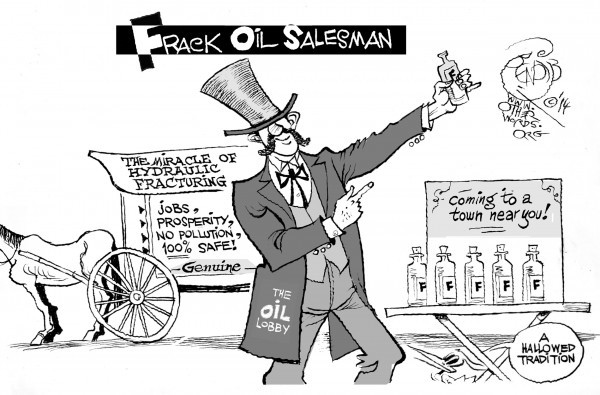
Fracking is fabulous!

Frack

Read More
Commentary Robert Whitcomb Commentary Robert Whitcomb

Giving the dictatorships a pass

Why do people defending Edward Snowden and denouncing the National Security Agency seem to have nary a word about the cyber-attacks  and physical threats by the murderous North Korean regime meant to disrupt the showing of a  Sony movie about depraved dictator Kim Jong-un? And why do they say nothing about the cyber-attacks and Internet spying by the milder but  very corrupt and bigger dictatorships Russia and China?


Maybe it's because these hypocrites fear North Korea, China and Russia but don't fear a democratic and infinitely more humane nation like the United States. The double standard remains staggering.


-- Robert Whitcomb


Read More
Commentary Robert Whitcomb Commentary Robert Whitcomb

Empty rhetoric

  Postma


'It's All Been Said Before'' (mixed media on panel), by MELODY POSTMA, in "Winter Group Show'' at Lanoue Gallery, Boston, through Jan. 31.

Read More
Commentary Robert Whitcomb Commentary Robert Whitcomb

Timothy Karr: 4 ways 2014 was big for the Internet

The death of the Internet is at hand.Sound familiar? That’s what Internet pioneer Robert Metcalfe predicted in 1995, when he wrote that spiraling demands on the fledgling network would cause the Internet to “catastrophically collapse” by 1996.

Metcalfe, of course, was dead wrong: The Internet is still chugging along, with a predicted 3 billion users by year’s end.

Still, the Internet’s fate feels distinctly uncertain as 2014 draws to a close. At stake is whether the Internet remains a democratic, user-powered network — or falls under the control of a few powerful entities.

Here are the four Internet issues that played leading roles this year:

1. Net Neutrality

Net Neutrality is hard-wired into the Internet as we know it. In a neutral network, users control their experience without their Internet service providers interfering, filtering, or censoring. This revolutionary principle is under attack from the phone and cable companies that control access in the United States.

In a court decision last January, Verizon successfully challenged the Federal Communications Commission’s ability to protect Net Neutrality, setting in motion a year-long effort to restore the agency’s authority. More than 4 million Americans, including President Barack Obama, have contacted the FCC, with the overwhelming majority demanding real Net Neutrality protections.

Watch for a decision on the matter as early as January 2015. Momentum is now swinging in favor of keeping the Internet open — thanks in large part to the forceful public response.


2. Consolidation

The Internet is designed to function as a decentralized network — meaning that control over information doesn’t fall into the hands of a few gatekeepers, but instead rests with everyone who goes online.

This has enabled diverse voices to flourish. It’s amplified the concerns of protesters from Ferguson to Hong Kong, given underrepresented communities a platform, and allowed startup businesses to reach millions of new customers.

What’s missing is choice among Internet-access providers: Too many communities can choose from only one or two. We need policies that will foster competition, which in turn would lower costs, improve services, and ensure that no single company gains too much control over content.

This year, Comcast and AT&T are attempting to consolidate their control over all-things-Internet. Comcast, the largest U.S. cable company, wants to gobble up the second largest, Time Warner Cable. If regulators approve the Comcast merger, the company would become the only traditional cable provider available to nearly two-thirds of Americans.

Meanwhile, AT&T wants to take over DIRECTV.

It’s up to the FCC and the Justice Department to block these mergers, which would create colossal, monopoly-minded behemoths. The government’s blessing of these deals would teleport us back to a time when just a few media moguls controlled most public discourse.

3. Online Privacy

In 2013, former NSA contractor Edward Snowden exposed mass spying programs that violate our civil liberties. This wholesale invasion of privacy has chilled free expression online.

There were signs of hope that 2014 would bring new legislation to rein in these government snooping powers. The USA Freedom Act, while imperfect, would have curtailed the NSA’s bulk collection of our phone records and required more oversight and transparency of its surveillance programs.

The Senate, however, voted not to consider the bill in November, leaving everyone at the mercy of an agency with a voracious appetite for data.

4. Community Networks

With big Internet providers like Comcast gaining notoriety for dismal customer service, municipal broadband networks have gained traction everywhere from New York City to Monmouth, Oregon.

It’s easy to see why: The big providers often refuse to build networks in low-income or rural communities where potential customers can’t afford to pay their sky-high rates.

The rise of homegrown Internet infrastructure has prompted industry lobbyists to introduce state-level legislation to smother such efforts. There are at least 20 such statutes on the books. But in June, the FCC stepped in with a plan to preempt these state laws, giving communities the support they need to affordably connect more people.

If you value free speech, keep an eye on these four issues as 2015 gets underway. To ensure an Internet that’s open, fast, secure, and affordable, contact the FCC, call your members of Congress, and support efforts to build a network that works for everyone.

Timothy Karr is the senior director of strategy for Free Press (FreePress.net). This piece is distributed by OtherWords.org

Read More
Commentary Robert Whitcomb Commentary Robert Whitcomb

Chris Powell: Of Newtown and Coltsville National Park

MANCHESTER, Conn. 
Horrible as the massacre at the school in Newtown, Conn., two years ago was, it is not 
justification for whatever its survivors and allied politicians want to make of 
it. Indeed, they have gone too far with their class-action lawsuit against the 
manufacturer of the military-style rifle used in the massacre, the AR-15. 

The rifle is legally sold throughout most of the country and was legal in 
Connecticut at the time of the massacre. So the lawsuit claims that the rifle is 
beyond proper operation by civilians and thus should not have been made 
available to them -- a claim of "negligent entrustment." 

While the lawsuit asserts that the AR-15 "has little utility for legitimate 
civilian purposes," it has been sold to civilians in the United States for 50 
years, about 3 million are in civilian hands, and, because of its light weight 
and accuracy, it is the most popular rifle in shooting competitions. Further, 
federal law exempts firearms makers from liability for criminal use of their 
products. 

Maybe the lawsuit still will win damages, through settlement or trial. It has 
been filed in state court in Bridgeport, just a few miles from Newtown, to 
exploit local sympathies. But victory for the plaintiffs could put the 
manufacturer out of business and effectively outlaw the AR-15's manufacture 
through risk of more liability. 

That seems to be the plaintiffs' objective, and then the lawsuit's theory could 
be applied against  any gun manufacturing. Something that 
big should be accomplished democratically, by repeal of the Second Amendment, 
not by a mere state court verdict in a damage case. The Newtown people already 
have intimidated state government into weakening Connecticut's 
freedom-of-information law. 

Of course, the country has an appalling problem with gun violence. But it's not 
really a gun problem at all, and even if it was and the Second Amendment could 
be repealed, there would be no way of confiscating enough guns to make a 
difference, since about 300 million are estimated to be in civilian hands. 

No, most gun violence arises from the financial premium bestowed on drugs by 
futile criminalization and by the welfare system's subsidies for childbearing 
outside marriage, which deprives young men of the parenting they need to become 
civilized. Those issues remain largely beyond political discussion in 
Connecticut. 

Meanwhile, even as they advocate curtailing gun ownership, Connecticut 
politicians this week were congratulating themselves on the approval of federal 
legislation to designate the Colt Manufacturing Co. buildings in Hartford as a 
national park, Coltsville. 

Colt wasn't just the developer of repeating guns. A half century ago Colt was 
the first to manufacture AR-15s for civilian use. But the national park's 
advocates never mention guns at all. No, the Coltsville National Park is said to 
be a tribute to Connecticut's leadership with "technology." 

* * * 

Former Connecticut House Speaker Christopher G. Donovan (D-Meriden), is following 
Senate President Donald E. Williams Jr. (D-Thompson), into the employ of the 
state's largest teachers union, the Connecticut Education Association. Now if 
the CEA can hire a former governor and a former chief justice, it can claim 
ownership of the whole of government in a state whose subservience to special 
interests has become shameless. 
 
* * * 

Having refused a couple of weeks ago to explain the firing of the longtime 
director of the state Office of Labor Relations, insisting that "we don't 
comment on personnel matters,"  Connecticut Gov. Dan Malloy's communications director, Andrew 
Doba, this week somehow managed to distribute a dozen detailed announcements 
about personnel changes in the Malloy administration -- including one about his 
own departure. Former Malloy campaign aide Mark Bergman will take charge of the 
non sequiturs and contradictions. Now that they won't have Doba to kick around 
anymore, Connecticut political writers may hope that Bergman is as good a sport. 

Chris Powell is managing editor of the Journal Inquirer in Manchester, Conn. 
Read More
Commentary Robert Whitcomb Commentary Robert Whitcomb

The great healthcare tension

Adam D. Reich’s new book, Selling Our Souls: The Commodification of Hospital Care in the United States (Princeton University Press, $39.50), is one of the best descriptions/explanations I’ve read of the tension between moneymaking and altruism in America’s hugely complicated healthcare sector. For that matter, it speaks to the tension between the drive for profit and the drive to do good that characterizes U.S. society in general. The life-and-death aspects of healthcare intensify this tension and the contradictions that go with it.  

America, more than any other great country, hosts a confusing mix of materialism and spirituality. Great greed and great charity.


Mr. Reich, a sociologist at Columbia, looks at the histories and current status of three very different California hospitals – one devoted to the needs of the poor, another with a Catholic mission (but tending to market itself to affluent individuals) and a third with a managed-care, population-health emphasis (wave of the future?). He uses reporting on these institutions to look at the vivid paradoxes, hypocrisies, heroism and hopes of our healthcare ‘’system,’’ with its huge disparities of access and practice. Mr. Reich analyzes how they respond differently to economic, regulatory, political and other pressures over the years.


He sums up his findings thus:


“(T} lesson of this book is that markets do not inevitably eviscerate our social values or inexorably lead to disorganization and chaos; but neither do we easily reconcile our values with markets or bring markets under control.’’


This observation would apply to much of American society.


Read More
Commentary Robert Whitcomb Commentary Robert Whitcomb

Tim Faulkner: Will Baker embrace solar power?

By TIM FAULKNER/ecoRI News staff Municipal official across Massachusetts want Gov.-elect Charlie Baker to keep solar energy a priority when he takes office next month. Last week, the environmental advocacy group Environment Massachusetts released a letter signed by 340 officials from 135 cities and towns asking Baker to support solar energy, a sector they say improved dramatically under outgoing-Gov. Deval Patrick.


The letter, dated Dec. 9, was signed by officials from 18 of the 20 largest cities in the state, including mayors Jonathan F. Mitchell of New Bedford and William A. Flanagan of Fall River.

Baker hasn’t yet responded to the letter, nor did he respond to an ecoRI News inquiry, but Environment Massachusetts is upbeat. “We delivered the letter to Baker's transition team and had a positive conversation about the benefits that solar has brought to Massachusetts,” said Ben Hellerstein, campaign organizer for Environment Massachusetts.

On the energy front, Baker has so far selected Rep. Matthew Beaton (R-Shrewsbury), as the secretary of the Executive Office of Energy and Environmental Affairs, the top environmental post in the state. Beaton will oversee six state agencies, including the Department of Energy Resources and the Department of Environmental Protection. He owns a green-design and energy-efficiency consulting business for home construction.

The trade journal Solar Industry recently reported on the high praise Patrick has received for increasing the state’s solar capacity from 3.7 megawatts in 2007 to 580 megawatts today. Massachusetts now generates the fifth-most solar power in the country.

The Green Communities Act and the Global Warming Solutions Act, both passed in 2008, are credited for creating the programs and incentives that propelled the state's solar industry. In fact, according to Environment Massachusetts, the state's solar-energy capacity has grown 127 percent in the past three years. The sector employees about 12,000 workers, according to the Massachusetts Clean Energy Center. Southeastern Massachusetts has experienced the most significant growth — 22 percent — since 2010.

Environment Massachusetts wants the new governor to embrace the goal of generating 20 percent of state power from solar energy by 2025. Currently, less than 2 percent of the state’s power comes from solar. The organization estimates the state has some 700,000 rooftops suited for solar panels. Combined with landfills and other sites, solar power has the potential to double the state’s electricity demand, according to the group.

The federal National Renewable Energy Lab (NREL) says falling prices will help solar continue its popularity. Photovoltaic (PV) system prices dropped 12 percent to 19 percent nationally in 2013 and are expected to fall as much as 12 percent this year. NREL projects that if pricing trends continue, PV prices may soon reach grid parity, or even pricing, without federal or state subsidies.

Read More