







A_map_of_New_England,_being_the_first_that_ever_was_here_cut_..._places_(2675732378).jpg

Vox clamantis in deserto

Commentary Robert Whitcomb Commentary Robert Whitcomb

Charles Chieppo: Teacher education in a bad way, but there's hope

BOSTON Both a national nonprofit organization and the U.S. Department of Education have recently turned their attention to education schools that long have failed to produce teachers equipped to improve student achievement. The same focus that highlights just how grim the current situation is will be needed on an ongoing basis if we are to solve the stubborn teacher-preparation problem.

A new report from the National Council on Teacher Quality (NCTQ) rates 1,668 elementary and secondary teacher-preparation programs at 836 colleges and universities using criteria including content preparation, practice teaching and student-admission requirements. Sadly, a majority of the programs fall into the lowest of four categories.

The report places only 26 elementary and 81 secondary programs in its top grouping. Programs that prepare elementary teachers are 1.7 times more likely to fall into the failing category than their secondary-education counterparts. One reason, according to NCTQ, is that so many of them continue to disregard scientifically based reading-instruction methods.

Teacher-prep programs have long fallen short in science, technology, engineering and math. Nearly half the programs NCTQ reviewed failed to ensure that their teacher candidates were capable of STEM instruction. Many of the programs require little or no elementary-school math coursework and don't mandate a single science class.

NCTQ said that just 5 percent of the programs it reviewed have all the components in place for a strong student-teaching experience.

The academic strength of incoming teacher candidates is another longstanding problem. NCTQ found that three-quarters of the programs it reviewed don't insist that applicants fall in the top half of the college-going population.

In 2010, the SAT scores of students intending to pursue undergraduate education degrees ranked 25th out of 29 majors generally associated with four-year degree programs. On average, the credentials of candidates for graduate education programs also were dismal, and among those candidates undergraduate education majors score the lowest.

Rules proposed last month by the Department of Education are a step in the right direction. They would require teacher-preparation programs to either show proof that their graduates have the skills to advance student learning or lose the ability to offer prospective teachers federal financial aid. "This is nothing short of a moral issue," Education Secretary Arne Duncan told Education Week.

The 1998 version of the Higher Education Act directed states to identify poor-performing teacher-prep programs, but 34 states have never identified a single one. The new proposed rules would require states to place each program in one of four categories ranging from "low performing" to "exceptional." Those rated below "effective" for two of the three previous years would be blocked from offering students federal Teacher Education Assistance for College and Higher Education grants. The problem with the proposed rules is the timeline: There would be no withholding of grants until the 2020-21 academic year at the earliest.

For decades, public education in general and education schools in particular have been permeated by a Lake Wobegon culture in which everyone is assumed to be above average and mediocrity is the norm. But education consumes a huge part of state and local budgets, and many teacher-preparation programs are part of publicly funded colleges and universities. Fixing those programs is imperative if we are to improve the return on our education investment.


Charles Chieppo   is a research fellow at the Ash Center of the Harvard Kennedy School. His email address is:

charlie_chieppo@hks. harvard.edu


Read More
Commentary Robert Whitcomb Commentary Robert Whitcomb

Conn. regulation too much for Tenet Healthcare

Read More
Commentary Robert Whitcomb Commentary Robert Whitcomb

But without the mill

coleman  

"Mill Hill'' (pastel), by Vermont painter Ann Coleman.

Read More
Commentary Robert Whitcomb Commentary Robert Whitcomb

William Allen's 'poem-paintings'

Rhody  

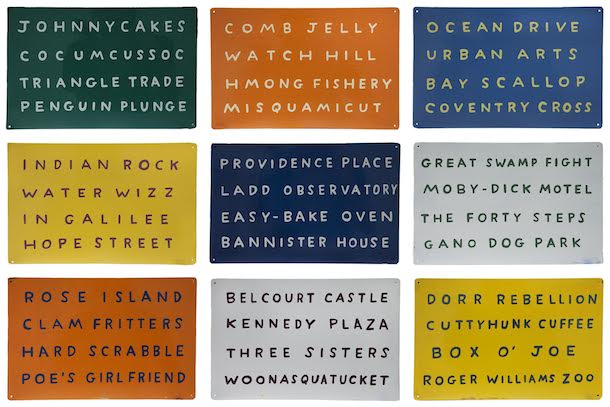
Some of the work of  WILLIAM ALLEN, in his "Here Today...'' show  at Cade Tompkins Projects, in Providence.

The gallery tells us that he ''has been working in the world of words and interpretation of visual language and literal language for the past three decades. Allen brings together his wide view of the meaning of words and bright colorful paint to create signs that remind the viewer of the relationship between words and images.  Bringing words to the forefront has been Allen’s longtime focus and fascination.''

In the package above, he  uses  words associated with Rhode Island. (Yes, we know that Cuttyhunk (Island) is in Massachusetts.)

The gallery calls  Mr. Allen's  work in the show ''poem-paintings.''

Read More
Commentary Robert Whitcomb Commentary Robert Whitcomb

Sleep tight

"We sleep soundly in our beds, because rough men stand ready in the dark to do violence to those who would hurt us.''  

--- George Orwell.

Read More
Commentary Robert Whitcomb Commentary Robert Whitcomb

Pre Columbia sportswear

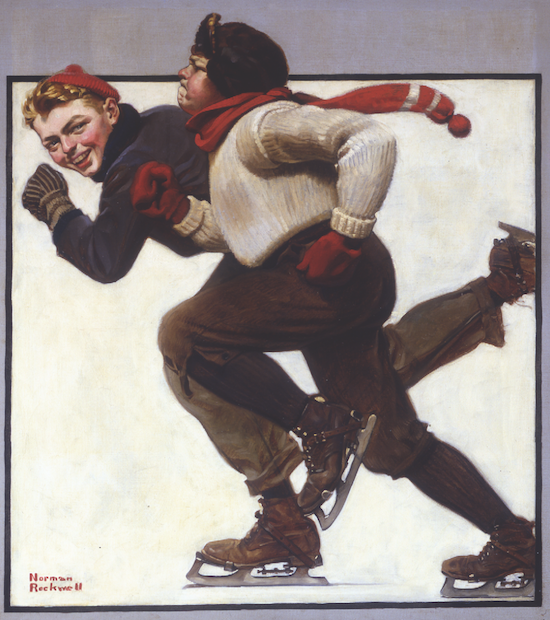
  • 5-Rockwell_skating raceN
  • "The Skating Race'' (1920, oil on canvas,)   by NORMAN ROCKWELL, on the cover of   the Feb. 28, 1920 "The Country Gentleman'' magazine.

           (c) Copyright 2014 by The National Museum of American Illustration, Newport, R.I.

            Photo courtesy Archives of American Illustrators Gallery, New York, N.Y.

 
Read More
Commentary Robert Whitcomb Commentary Robert Whitcomb

5 happy and 5 unhappy ACA elements

Read More
Commentary Robert Whitcomb Commentary Robert Whitcomb

Form over function

  lang


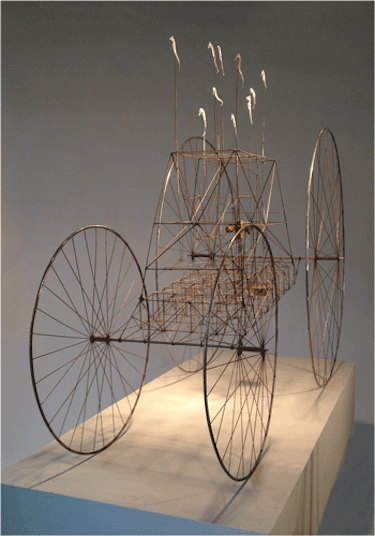
"Horse Play'' (kinetic mixed media), by DAVID A. LANG, in the show "Kinetic Sculpture by David A. Lang,'' at the Art Complex Museum, Duxbury, Mass., through Feb. 15.


Read More
Commentary Robert Whitcomb Commentary Robert Whitcomb

Llewellyn King: Bad news for climate: U.S. nuclear plants closing


This will be a bleak Christmas for the small Vermont community of Vernon. It is losing its economic mainstay. Entergy, the owner of the midsize nuclear plant there, which has sustained the community for 42 years,  is closing the plant. Next year the only people working at the plant will be those shuttering it, taking out its fuel, securing it and beginning the process of turning it into a kind of tomb, a burial place for the hopes of a small town.

What may be a tragedy for Vernon may also be a harbinger of a larger, multilayered tragedy for the United States.

Nuclear – Big Green – is one of the most potent tools we have in our battle to clean the air and arrest or slow climate change over time. I've named it Big Green because that is what it is: Nuclear-power plants produce huge quantities of absolutely carbon-free electricity.

But many nuclear plants are in danger of being closed. Next year, for the first time in decades, there will be fewer than 100 making electricity. The principal culprit: cheap natural gas.

In today’s market, nuclear is not always the lowest-cost producer. Electricity was deregulated in much of the country in the 1990s, and today electricity is sold at the lowest cost, unless it is designated as “renewable” -- effectively wind and solar, whose use is often mandated by a “renewable portfolio standard,” which varies from state to state.

Nuclear falls into the crevasse, which bedevils so much planning in markets, that favors the short term over the long term.

Today’s nuclear-power plants operate with extraordinary efficiency, day in day out for decades, for 60 or more years with license extensions and with outages only for refueling. They were built for a market where long-lived, fixed-cost supplies were rolled in with those of variable cost. Social utility was a factor.

For 20 years nuclear might be the cheapest electricity. Then for another 20 years, coal or some other fuel might win the price war. But that old paradigm is shattered and nuclear, in some markets, is no longer the cheapest fuel -- and it may be quite few years before it is again.

Markets are great equalizers, but they're also cruel exterminators. Nuclear- power plants need to run full-out all the time. They can’t be revved up for peak load in the afternoon and idled in the night. Nuclear plants make power 24/7.

Nowadays, solar makes power at given times of day and wind, by its very nature, varies in its ability to make power. Natural gas is cheap and for now abundant, and its turbines can follow electric demand. It will probably have a price edge for 20 years until supply tightens. The American Petroleum Institute won't give a calculation of future supply, saying that the supply depends on future technology and government regulation.

Natural gas burns cleaner than coal, and is favored over coal for that reason. But it still pumps greenhouse gases into the atmosphere, though just about half of the assault on the atmosphere of coal.

The fate of nuclear depends on whether the supporters of Big Green can convince politicians that it has enough social value to mitigate its temporary price disadvantage against gas.

China and India are very mindful of the environmental superiority of nuclear. China has 22 power plants operating, 26 under construction, and more  where construction is about  to start. If there is validity to the recent agreement between Chinese President Xi Jinping and President Obama, it is because China is worried about its own choking pollution and a fear of climate change on its long coastline, as well as its ever-increasing need for electricity.

Five nuclear-power plants, if you count Vermont Yankee, will have closed this year, and five more are under construction in Tennessee, South Carolina and Georgia. After that the new plant pipeline is empty, but the number of plants in danger is growing. Even the mighty Exelon, the largest nuclear operator, is talking about closing three plants, and pessimists say as many as 15 plants could go in the next few years.

I'd note that the decisions now being made on nuclear closures are being made on economic grounds, not  on any of the controversies that have attended nuclear over the years.

Current and temporary market conditions are dictating environmental and energy policy. Money is more important than climate, for now.

Llewellyn King (lking@kingpublishing.com) is executive producer and host of “White House Chronicle” on PBS.

Read More
Commentary Robert Whitcomb Commentary Robert Whitcomb

Re-energize U.S. public health

Read More
Commentary Robert Whitcomb Commentary Robert Whitcomb

Pushing back against 'homogenized medicine'

Read More
Commentary Robert Whitcomb Commentary Robert Whitcomb

Boston Medical Center and Tufts may merge

Read More
Commentary Robert Whitcomb Commentary Robert Whitcomb

'Now how are we related?'

bandes  

"Cousins'' (mixed media), by ARLENE BANDES, at the Wedeman Gallery at Lasell College, Newton.

In my family, we can figure out our connections to the level of the children of our parents' cousins; beyond that, "family'' disappears into the great swamp of history.

I have often been told, especially on Cape Cod where my father's family has deep connections, that such and such  person walking down the road is a cousin but when I ask how, rarely get a clear answer -- certainly not a clear enough answer to go and introduce myself to the alleged cousin.

Maybe it should be along the lines of a friend of ours from Laurel, Miss., who said, when I asked him if he would like to meet somebody:  "I'm no longer takin' applications.''


-- Robert Whitcomb


Read More
Commentary Robert Whitcomb Commentary Robert Whitcomb

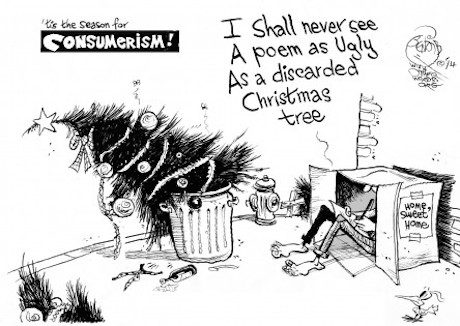
Drag it in, drag it out

xmass

Read More
Commentary Robert Whitcomb Commentary Robert Whitcomb

Melissa Tuckey: Friends don't let friends frack

All my life, I’ve been a good citizen. I vote. I volunteer. I know my neighbors.

Moreover, I take care of my property. I garden. I make jams and jellies to give away for Christmas. In short, I fulfill my obligations as a rural homeowner.

Still, there’s one additional step I’ve taken to be a good neighbor: I’ve signed a pledge to resist fracking in New York State.

I moved with my family to the small city of Ithaca in upstate New York five years ago. We were drawn to the natural beauty here and the innovative local economy, which has one of the fastest growing organic and family farming sectors in the country.

Here in Ithaca, crop mobs — large groups of volunteers — show up at local farms to plant and harvest alongside our hardest working neighbors: the farmers. A network is growing, too, to provide low-income residents with access to locally grown, healthy, organic produce.

We’re on the cutting edge of a new economy: one that uses renewable energy, leaves a small carbon footprint, and invests in local businesses. This emerging economy is more livable and prosperous than older models, which are failing everywhere.

Fracking threatens all of this.

Fracking, or “hydraulic fracturing,” is a controversial method used in drilling for oil and gas. It turns rural communities into industrial zones, complete with all the problems that come with heavy industry: blazing flares, loud noise, light pollution, heavy truck traffic, and air and water contamination.

Although you might not choose to buy property next to an industrial waste site, if your neighbor wants to frack, you’re out of luck.

Residents living near fracking sites complain of a wide range health problems related to pollution of their property — from nosebleeds to asthma, cancer, and kidney disease.

To make matters worse, gas companies and lawmakers have teamed up in states like Pennsylvania to pass gag rules that block doctors and nurses from discussing the health effects of fracking-related chemical exposures with their patients.

A recent study published in the peer-reviewed Environmental Health journal shows that not only does fracking pollute water sources — more than 687 million gallons of fracking waste laden with radioactive materials and heavy metals were injected in deep wells in Ohio alone last year — it also threatens our air quality.

The study of six communities in Arkansas, Colorado, Ohio, Pennsylvania, New York and Wyoming found high levels of air pollution at multiple fracking and oil-production and -storage sites. More than one third of study air samples contained concentrations of dangerous chemicals exceeding federal standards for health and safety.

Among the chemicals that most often exceeded limits, the study found formaldehyde, a known human carcinogen, and hydrogen sulfide, a potent nerve and organ toxin that smells like rotten eggs. In Wyoming, the air sample contained hydrogen sulfide in concentrations ranging from twice to 660 times the level classified by the EPA as immediately dangerous to human life.

These facilities are  near schools, farms, and homes. Our regulatory system is failing these families while increasing profits for the fossil-fuel and chemical industries.

This is why a dear neighbor of mine recently spent the night in jail, and why 83 people in recent weeks — including the baker who makes our bread each week, and the owner of my favorite restaurant — have peacefully blocked the entrance at a proposed gas storage site beneath Seneca Lake.

And it’s why I’ve joined thousands of New Yorkers in signing a pledge to resist fracking. Because if we poison this land, we’ll never get it back.
Melissa Tuckey is a  poet and author of the book ''Tenuous Chapel''. She’s a co-founder of the national poetry organization Split This Rock. She wrote this for OtherWords.org.


Read More
Commentary Robert Whitcomb Commentary Robert Whitcomb

Senate CIA report cover for brutal dictators

Perhaps the worst thing about the Senate's report on CIA interrogation methods is that it will provide cover for the many regimes that have engaged in, and will continue to engage in, vastly worse practices  every day but do not have the open, democratic system we have to monitor and if need be punish bad behavior by government agents.

Read More
Commentary Robert Whitcomb Commentary Robert Whitcomb

Always near the breaking point

weisbergconundrum  

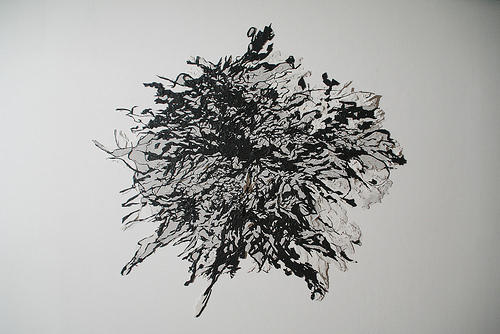
"Conundrum'' (black and white tape on paper), by DEBRA WEISBERG, in the ''Somatic (e)Scapes show,'' at Nesto Gallery, Milton, Mass.

Her works, says the gallery, ''are inspired by the delicate tension between chaos and order in nature''.

Read More
Commentary Robert Whitcomb Commentary Robert Whitcomb

Don Pesci: Of Gruber, abortion and crime rates


VERNON, Conn.

As many students of politics know, there are two kinds of truth: political truth and all other varieties. Political truth, unlike scientific truth, need not be connected verifiably with objective reality. Political truth sometimes dresses up in the robes of science, but bad science also leaves objective reality behind at the altar.
Jonathan Gruber of the Massachusetts Institute of Technology (MIT), the Cassandra of Obamabots, was one of the architects of Obamacare who, unlike many proponents of President Obama’s “Affordable Care Act,” went off script and, in venues he may have thought were off record, simply laid out the truth about Obamacare in such unvarnished terms that even those over-friendly to President  Obama in the media could not easily misunderstand Mr. Gruber’s essential message – which was: Obamacare, right from the get-go, was intentionally misleading. More importantly, he noted, it was of necessity misleading. The sales pitch of the used car salesman who wants you to buy the lemon on his lot, likewise and for much the same reasons, is misleading.
The press spotlight having been focused on Mr. Gruber and the Obamacare warts, media sleuths have now discovered that Mr. Gruber has also told the inconvenient truth about abortion. In a paper co-written during the Clinton administration and printed in the National Bureau of Economic Research (NBER), “Abortion, Legalization and Child Living Circumstances,” Mr. Gruber, along with two other co-authors, wrote:
“Legalization of abortion in five states around 1970, followed by legalization nationwide due to the 1973 Roe v. Wade decision, generates natural variation which can be used to estimate the effect of abortion access. We find that cohorts born after abortion was legalized experienced a significant reduction in a number of adverse outcomes. Our estimates imply that the marginal child who was not born due to legalization would have been 70% more likely to live in a single parent family, 40% more likely to live in poverty, 50% more likely to receive welfare, and 35% more likely to die as an infant. These selection effects imply that the legalization of abortion saved the government over $14 billion in welfare expenditures through 1994.”
Mr. Gruber also touted a positive link between abortion and a precipitous drop in crime rates among “cohorts,” by which term Mr. Gruber means to indicate single parents, the poor and welfare recipients – or, to put the matter bluntly, the underclass, mostly African American and Latino city dwellers, all of whom are fortunate enough to live in close proximity to abortion mills.
A more recent report published in the National Bureau of Economic Research in 2000, “NBER Working Paper No. 8004, probes the connection between legalized abortion and recent crime reductions:
“We offer evidence that legalized abortion has contributed significantly to recent crime reductions. Crime began to fall roughly 18 years after abortion legalization. The 5 states that allowed abortion in 1970 experienced declines earlier than the rest of the nation, which legalized in 1973 with Roe v. Wade. States with high abortion rates in the 1970s and 1980s experienced greater crime reductions in the 1990s. In high abortion states, only arrests of those born after abortion legalization fall relative to low abortion states. Legalized abortion appears to account for as much as 50 percent of the recent drop in crime.”
The  Center for Disease Control and Prevention's Abortion Surveillance report has found that between 2007 and 2010, nearly 36 percent of all abortions in the U.S. were performed on black children, even though blacks make up only 12.8 percent of the population. Another 21 percent of abortions were performed on Hispanics, and an additional  7 percent on other minority races. More than half of all babies killed by abortion between 2007 and 2010 were minorities.


Note that both  Connecticut Gov.  Dannel Malloy and his prison czar, Mike Lawlor, the architect of a bill that awards early-release credits to violent prisoners, have claimed responsibility for a reduction of crime in Connecticut that parallels a national reduction in crime attributed by Mr. Gruber and other economists to abortion. This is the kind of pseudo-science that leaves objective reality waiting impatiently at the altar for a marriage that never occurs. Neither Mr. Lawlor nor Mr. Malloy has yet been so brash to claim credit for the drop in crime rate that has occurred nationwide.


Don Pesci (donpesci@att.net) is a writer who lives in Vernon
Read More
Commentary Robert Whitcomb Commentary Robert Whitcomb

Lila Sapinsley, RIP

We were very sorry to just hear that Lila Sapinsley, a very  kindly, droll, smart and civic-minded Rhode Islander,  has died.

Read More
Commentary Robert Whitcomb Commentary Robert Whitcomb

David Warsh: Globe arts revival and my migration

SOMERVILLE, Mass. Boston is slated to regain a battered badge of its identity next month, when arts coverage is expected to return to the daily broadsheet editions of The Boston Globe. To be sure, the return of a “Living/Arts” section is apparently a consequence of an expanding business coverage. Details are still unclear. It is a heartening development nevertheless.

Distinctive criticism has been a hallmark of Boston’s newspapers since 1830, when the Boston Evening Transcript opened for business. (It closed in 1941.) Thirteen years ago, to save some money in production costs, at a time when the paper was still highly profitable, The Globe banished its critics, along with its coverage of food and personal health, to a tab section it called “G,” printed a day in advance.


That robbed dignity and immediacy from criticism by such distinguished contributors as Mark Feeney, Robert Campbell, Richard Dyer, Gail Caldwell, Ed Siegel, Sebastian Smee, Jeremy Eichler, Wesley Morris and Ty Burr. (Five Pulitzer Prize winners are on that list.) Dyer, Caldwell, Siegel and Morris have left the paper. The tab was among the worst of a long series of bad ideas from the New York Times Co., which bought The Globe for $1.13 billion in 1993 and sold it last year for $70 million.


Google didn’t do that. New York did.


Another mistake, not on the same scale, was shutting down my column "Economic Principals'' {since transformed into www.economic principals.com}. Editor Martin Baron said he wanted technical economics only, no politics. But even if economists sought to strip their discipline of its inevitable political overtones (and most no longer bother to try), it was a terrible idea for newspapers to go along. So EP quit and moved to the Web.  (On the other hand, Baron subsequently hired the last four of those critics.)


Thirteen years later, EP has amply proved its point.  Its coverage of Harvard’s Russia scandal ran circles around that of The Globe, The Times  and The Washington Post (where Baron is now editor). Its reporting on trends in growth economics was praised in  The Times by columnist Paul Krugman (and, a few years later, dismissed on his blog!). Its coverage of the financial crisis has been more penetrating than that of The Times; of the fortunes of the Obama economic team, more realistic; of  U.S.  policy toward Russia, more skeptical; of the competitive situation of print newspapers, less panicky. Like  The Times,  EP made a  dreadful mistake in supporting the U.S. invasion of Iraq,


Moreover, EP’s public broadcasting model has proved out. A relative handful of readers support the enterprise with an annual subscription of $50, in return for an early email version on Sunday morning (Eastern Standard Time), with another 20,000 or so reading, over the course of a quarter, the online version for free.


How many pay? From year to year, it’s hard to know, renewal rates being hard to predict – somewhere between 250 and 500, fewer, perhaps, than had been hoped, but enough to keep EP in business.  Subscribers include civic-minded citizens from all walks of life in the four corners of the world.


Others who left The Globe have founded successful public radio talk radio shows: former foreign editor Tom Ashbrook started “On Point;” Steve Curwood, “Fresh Air.”  Bruce Mohl edits Commonwealth magazine.  EP goes it alone, with only its surpassingly loyal copy editor to correct infelicities and, occasionally, restrain enthusiasms. The payroll consists of vegetables, fruit and ice cream

The Times is in the throes of change, but it remains a great newspaper (as do the Financial Times and the The Wall Street Journal, the other papers to whose print editions EP subscribes). You can learn a million things from  The Times that you’ll never see here.


But EP regularly provides a parallax view of developments in economics and politics, as seen from Boston, much the same as it once did at the newspaper itself.

I look forward to many more years of doing the same.


I expect, too, to write slightly more frequently about Boston. The New York Times Co. occupation is ended, but  The Globe  is damaged and the Herald is a shadow of its former self.  The sphere of news-gathering and discussion is considerably attenuated.  The conversation about Boston needs to include many voices.


David Warsh is proprietor of www. economicprincipals.com and an economic historian and longtime financial journalist -- so longtime,  indeed, that he worked at The Wall Street Journal back  in the early '70's, when the overseer of newenglanddiary.com, Robert Whitcomb, was there.


Read More