








A_map_of_New_England,_being_the_first_that_ever_was_here_cut_..._places_(2675732378).jpg

Vox clamantis in deserto

Commentary Robert Whitcomb Commentary Robert Whitcomb

November plant death

  klein


"Yellow, Black and  Blue (acrylic on canvas),  by LINDA KLEIN, in the "Renewal and Incongruities Inform Paintings'' show, at the Bromfield Gallery, Nov. 5-29.

Read More
Commentary Robert Whitcomb Commentary Robert Whitcomb

Hospitals must help create new community networks

  Health-system markets are being pushed toward a volume vs. value-payment tipping point. This is driven by the confluence of states’ moving Medicaid and state-employee health benefits to value-based (risk) contracts, corporations’  securing national contracts for high-cost care episodes and commercial payers’ creating tiered health insurance. Successful population-health (value-payment) programs, whether fixed-price bundled services for individual patients or comprehensive services for a specific population, as with ACO’s, require action based on these insights:

  • Outcomes depend on patients’ behaviors over their lifetimes. Thus, patient and family participation must be increased. Success depends on getting “upstream” of medical-care needs.


  • Broad local and regional communities, not individual institutions, can best allocate resources to improve the social determinants of health.

Indeed, improving community health depends more on the interactions among the parts than on individually optimizing the parts themselves. Hospitals and health systems have a time-limited opportunity to help develop community-health networks, the backbone organizations for improving population health.

To get started, leaders of hospitals, public- and private-sector social-service organizations, payers and representatives of the broader community must first frame the discussion from a policy perspective and then map linkages across the community.

Our experience with community health networks underscores the importance of social determinants of health, teamwork within/across collaborating organizations and accepting risk within global budgets. Sustained system thinking across the community’s health assets, shared insights, and much generosity and patience from every sector are critical factors for success and flow from visionary hospital leadership and community/political leaders. Case studies from Oregon and Connecticut, among others, show what can be done.

To get started, leaders would do well to convene a perspective-and-policy-setting discussion to frame context and mutual dependencies. Complex, foundational change is emotionally and organizationally disruptive. Thus establishing a fact-driven and respectful dialogue is an essential first step. We recommend that community leaders, especially hospital leaders, convene a community conversation and use linkage mapping as way to structure the conversation for progress. Based on readiness, one or more work streams would be selected to explore and improve the interactions between the parts.


This  is a summary of an Oct. 13 presentation developed by a Cambridge Management Group team led by Marc Pierson, M.D., Annie Merkle and Bob Harrington for the Society for Healthcare Strategy & Market Development's Connections conference. Oregon State Sen. Alan Bates, D.O., provided invaluable information and insights from his work as both a primary-care physician and community/political leader enlisting colleagues in all sectors.

Read More
Commentary Robert Whitcomb Commentary Robert Whitcomb

Newport to star in January

Read More
Commentary Robert Whitcomb Commentary Robert Whitcomb

Tim Faulkner: Big money, confusion confront bottle-bill backers

By TIM FAULKNER/ecoRI News staff Expanding Massachusetts' existing bottle-redemption law to include bottled water, juices and other noncarbonated drinks seems like a simple proposition. But interviews with voters and business owners reveal that there is considerable confusion about what Question 2 will and won’t do.

The intent of Question 2 is to expand the 5-cent deposit program to include beverages that weren't around when the state's bottle bill began 32 years ago. This includes bottled water, fruit juices, teas and sports drinks. If approved by voters on Nov. 4, an expanded bottle bill would still exempt all milk containers and wine and liquor bottles. Juice boxes, juice pouches and infant formula also would be exempt.

Every five years, the 5-cent deposit would be indexed to inflation so that the financial incentive remains. A greater share of the deposit (3.5 cents) would go to redemption centers. The fee bottlers pay distributors and dealers for empties would increase to 3.5 cents. These fees would also be reviewed every five years to reflect inflation and the cost of doing business.

The expanded bill would restart the state's Clean Environmental Fund, which supports parks, air, water and forest programs.

What it doesn’t do. Question 2 will not change existing municipal recycling programs. If voters reject Question 2, the bottle bill stays the same.

Who supports the question? If there is an environmental group in the state that doesn’t support Question 2, ecoRI News didn't find it. Of the state's 351 municipalities, 209 have endorsed the referendum. Massachusetts Sierra Club is heavily involved, and MassPIRG is canvassing and making phone calls to voters.

The supporters' main argument is that an expanded bottle bill would reduce litter, send less waste to landfills, and generate funding for parks and clean-up projects. They estimate that 1.25 billion more bottles and cans will be recycled each year.

Proponents are framing the debate as a choice between “lies” from big soda companies and the people of Massachusetts who know better. They note that 80 percent of bottles and cans in the current deposit system get recycled, while only 23 percent of containers without a deposit are recycled, according to the Container Recycling Institute. They point to a Massachusetts Department of Environmental Protection (DEP) study that says an expanded program would save cities and towns $7 million annually in clean-up costs.

Who is against it? The “No” camp includes industry groups, grocery stores and big beverage corporations, all of which typically oppose new environmental regulations. Opponents include 7-Eleven, Coca-Cola, Nestlé Waters, Ocean Spray, Stop & Shop, the makers of Nantucket Nectars, the Retailers Association of Massachusetts, 21 chambers of commerce and 14 craft brewers.

The big money has come from the American Beverage Association, which represents small- and major-brand beverages, as well as bottlers and distributors. The association recently pumped $5 million into TV ads; Stop & Shop donated $300,000 to fight the question.

The opponents' main argument is that costs would go up for the entire beverage industry and the amount of red tape would increase.

Opponents are using antagonistic terms such as "forced deposit” and “forced redemption” to imply that changes would be a financial burden and an inconvenience foisted on them by government. One of the most controversial statements from the No on Question 2 campaign implies that 90 percent of the state already has municipal curbside recycling. Opponents claim an expanded program would be an expensive hassle, requiring new curbside containers at a cost of $60 million to cities and towns.

No on Question 2 didn't respond to repeated inquiries to verify these claims. According to the DEP, 47 percent of cities and towns offer curbside recycling, serving 64 percent of state residents.

Opponents also state that "Question 2 would raise your nickel deposit and additional fees every five years—without your vote." In reality, the Secretary of Energy and Environmental Affairs would review the 5-cent deposit every five years and adjust it to stay current with inflation. Using the current inflation rate, the deposit would reach 10 cents in 2050.

In all, the claims that multinational beverage companies are behind the No on Question 2 initiative appear accurate, as most of the $8 million raised to stop the measure has come from outside the state. Proponents have raised $300,000, most of which came from the Massachusetts Sierra Club.

Mass. bottle use* 3.5 billion beverages are sold annually in Massachusetts.

Of those, 39 percent are non-carbonated and not covered by the bottle bill.

Water bottles account for 72 percent of the noncarbonated bottles.

983 million water bottles are sold in Massachusetts every year.

*Source: Container Recycling Institute.

Read More
Commentary Robert Whitcomb Commentary Robert Whitcomb

Llewellyn King: Europe faces a disastrous winter

  BURGENLAND, Austria

There is another world crisis brewing – and one for which President Obama cannot be blamed. The Europeans and have made a mess of things, and now the wolves are at the door.

The first snarling wolf is deflation. Europe’s economies are so weak, so close to recession, that the very real danger of deflation – falling prices – has its economists petrified. It ought also to have its politicians in anguish, but whether it does is less clear.

Europe’s big-driver economy, Germany, as well as France and Italy, are on the edge. The German miracle is ailing, and Berlin may have been writing the wrong prescriptions for the rest of the 18 countries that share the euro as their currency. It has been aided in this effort by the International Monetary Fund.

That prescription, which often seems to harm the patient, as in Greece and Spain, is for austerity – which appears to work better on paper than in the real world. Germany worries about profligate borrowing throughout the European Union. But if the German economy is to escape recession, Chancellor Angela Merkel may have to borrow some money herself and inject it into infrastructure spending to keep Germany competitive and its workers on the job.

The European Central Bank (ECB) has been slow to institute a badly needed program of buying qualified bonds, known as quantitative easing. In the United States, the Federal Reserve, in a program that is now ending, has pumped more than $1 trillion into the economy and helped pull the economy out of recession. But ECB has been timid because it has no clear direction from the European political establishment — pointing up how cumbersome and directionless the European Union structure has become. It has a parliament, which has no power, and is increasingly attracting members who are actually opposed to the European project.

The European Commission has arguably too much power centered in the bureaucracy in Brussels, but no clear direction form its controller, the Council of Ministers. Trouble is the ministers can disagree and veto needed courses of action.

The economic crisis points up the ungovernable nature of Europe and its present institutions. If Washington is gridlocked, Europe is by structures that cannot deal with crisis and what often appear to reflect as many policies as there are members (28) in the EU.

But it is not just the economic wolf that is at Europe’s door. The Russian bear is there, too. Already there is an undeclared war raging in Ukraine.

At the Association of European Journalists' meeting here, a spokesman from the Ukrainian government, who asked not to be identified by name, expressed the sense in Ukraine that it has been betrayed by E.U. bungling.

Europe sees Ukraine as its European neighborhood partner. But in Ukraine, the truth is different: Ukraine’s view is that Europe let us down. We are hurt, bleeding. We have been betrayed by a neighbor that, six months ago, we saw as a brotherly nation,” he said.

What was not said was that Europe may freeze this winter if the Putin regime -- a growling wolf -- wants to punish Ukraine and its neighbors. Europe is hopelessly dependent on Russian gas, which is used mostly for heating. Germany gets 40 percent of its gas from Russia, and Finland, Estonia, Latvia and Slovakia get 90 percent. Russian gas makes its way -- largely through Ukraine -- down into Italy, and even the United Kingdom has some small exposure.

If the gas goes off, Europe freezes and its economies go south in an avalanche. The most hopeful thing for Europe this winter is that with the world oil price falling, Russia’s own fragile economy may dictate that it keeps the gas flowing -- but it will force up the price where it can.

Washington, with a new Congress, might want to brace for Europe’s winter of crisis and disaster. If Europe goes into severe recession, can the U.S. economy escape major harm? The new Congress will be on a sharp learning curve.

Llewellyn King (lking@kingpublishing.com) is executive producer and host of “White House Chronicle” on PBS and a longtime international publisher, editor, writer and business consultant.

Read More
Commentary Robert Whitcomb Commentary Robert Whitcomb

The horror, the horror

pumpkinbobbybaker  

"Seaside Jack O'Lantern, Rye, N.H., by BOBBY BAKER

Read More
Commentary Robert Whitcomb Commentary Robert Whitcomb

Providence needs this psychiatrist

I'm glad that psychiatrist Dan Harrop is staying in the nationally entertaining Providence mayoral race. For one thing, the Republican/conservative position deserves a voice.

For another, he is right that the best thing for the city's finances would be for it to go into receivership and start all over with a cleaner deck, cleansed of assorted dubious contracts.

For another, having a psychiatrist in the race is necessary in a city where at last count  38 percent of those polled said they favored Buddy Cianci as mayor. An historian would  also have been handy  in the race to  help address the mass amnesia about who did what to and for the city during the Cianci years in City Hall.

(I remember fondly Oscar Levant's superb book The Memoirs of an Amnesiac.)

Finally, Dr. Harrop should stay in because he is so funny and good-humored. He reminds me of  conservative writer, editor and talk-show host William F. Buckley Jr., who, while running for mayor of New York in 1965, was asked what he would do if he were  actually elected.

He famously responded:

"Demand a recount.''

--- Robert Whitcomb

Read More
Commentary Robert Whitcomb Commentary Robert Whitcomb

Prep work

faust  

"The Before Part of What I Do #34'' (mixed media), by JEMISON FAUST, in  her show with NELSON SMITH, "In the Eye of the Beholder,''   at the Krause Gallery at the Moses Brown School, Providence, Nov. 11-Dec. 5.

Read More
Commentary Robert Whitcomb Commentary Robert Whitcomb

Jill Richardson: Love them for their flaws, too

My brother would have turned 29 the other day. Thus begins the season of difficult anniversaries.

Six years ago, my baby bro turned 23. It was 2008, a week before Barack Obama’s first presidential election. Hope and change were in the air. I had a new job and a new car, and life was good. Through a misunderstanding, a distant cousin gave me the news. It felt like an eternity as the words came out of his mouth. “I have bad news,” he said. “It’s your family.”Then, just a few weeks later, all the hope died. But boy, did I get some change.

“Not my brother,” I thought.

“It’s your brother.”

“Not dead,” I thought.

“He died.”

And that was it. No explanation why, nothing. I called my mother and got little more information. She couldn’t reach him for several days and finally they sent the landlord to check on him and, well…he’d already been dead several days. That was all they knew.

I found out the cause of death years later — something that respectable people in the upper-middle class suburb where I grow up “just don’t do.” So we don’t talk about it.

My little brother Adam was my best friend in the world. He was my only sibling. While we were different in so many ways, in other ways we were like one soul in two bodies.

My brother was no saint. He had a heart of gold, but in the years before his death he suffered failures and disappointment. At age 22, he told the family that he suffered from anxiety and he sought treatment for it. But two decades of anxiety aren’t cured quickly.

Most of his difficulties in life probably stemmed from his severe anxiety, but nobody realized that until the end. And in America, when you fail, it’s your fault. Bad grades? Work harder. Too fat? Eat less and work out, you lazy bum.

Adam was the smartest person I ever knew. He had no plausible deniability that any bad grades were because of a lack of intelligence. This kid sat home and read Faulkner and Shakespeare for fun during high school. Who does that? So the label that stuck on my brother — at least in his own mind — was lazy.

I’m not blaming my family here. These are messages our culture sends us and we internalize them. One generation passes them on to the next. We mistake our grades and our salaries for our self worth instead of measuring our lives in joy and love.

After Adam died, I sat at the computer writing his eulogy. I process my thoughts by writing, and only by writing could I begin to thaw my numb emotions. I didn’t even know what I was feeling until I saw the words I had written on the page:

“If you’ve been close to Adam these past few years, you know that life dealt him a few curveballs. He struggled at times, but he was a fighter. It challenged each of us to try and help him move ahead while simultaneously accepting his limitations and helping him accept them too.

I am sorry for all of the anguish these problems caused him, but I want to say this: I would not wish away Adam’s shortcomings. They made him who he was, and that is the brother I love.

Please, in honor of Adam, love the important people in your life not in spite of their flaws but because of them. Shame is toxic. Empathy and love are the cure.

Our flaws cause us pain, but they also make us who we are. By overcoming them, we grow stronger and deepen our understanding of the human experience.

Jill Richardson is the author of ''Recipe for America: Why Our Food System Is Broken and What We Can Do to Fix It''. This originated at OthersWords.org.


Read More
Commentary Robert Whitcomb Commentary Robert Whitcomb

Emory sets pace on defeating Ebola

As a healthcare consultancy whose members also sometimes help run hospitals,  we at Cambridge Management Group (cmg625.com) have been watching intently how various parts of the U.S. healthcare system address the Ebola crisis.

Emory University Hospital shows how Ebola can be defeated with good hospital practices, as Kaiser Health News reports.

Its fast learning in addressing the disease also suggests that Ebola may be far less fearsome in this country than many Americans think because of the quality of our healthcare infrastructure. It is quite another  matter for people living in West Africa, which has a very thin and fragile infrastructure.

Kaiser Health News notes that “Emory’s plan to treat patients who have diseases like Ebola actually began 12 years ago. That’s when the Atlanta-based Centers for Disease Control and Prevention started working with the hospital to create a special isolation unit.Emory’s plan to treat patients who have diseases like Ebola actually began 12 years ago. ”

The hospital learned that  curing Ebola means  keeping the patient alive long enough to develop the antibodies that will end the infection.

Read More
Commentary Robert Whitcomb Commentary Robert Whitcomb

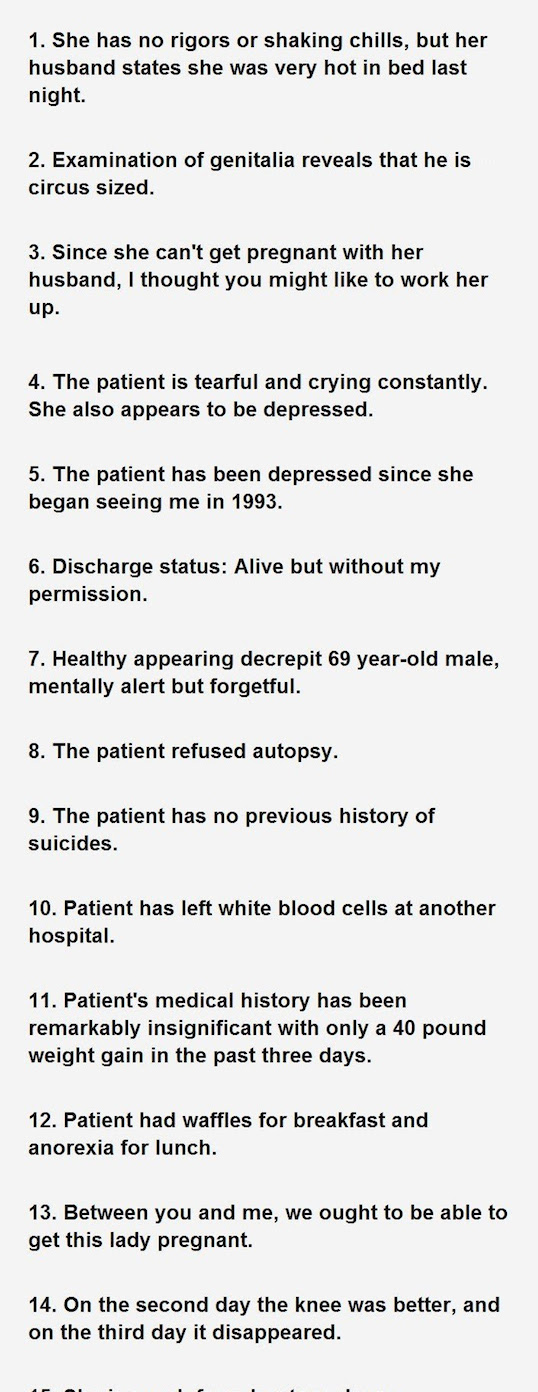
Going viral: Alleged real quotes from medical charts

weird3

Read More
Commentary Robert Whitcomb Commentary Robert Whitcomb

Ebola and the future of West Africa

I'm very interested in hearing what Jennifer Yanco, who is U.S. director of the West African Research Association and has lived for long stretches  in West Africa, has to say about the outlook for that region in light of the Ebola epidemic.  Ms. Yanco, with a master of public health degree from Harvard, will be speaking to the Providence Committee on Foreign Relations (thepcfr.org) about it next Tuesday, Nov. 4. -- Robert Whitcomb

Read More
Commentary Robert Whitcomb Commentary Robert Whitcomb

Chris Powell: 'Indigenous people' were pretty nasty, too

  MANCHESTER, Conn.

Because some of Yale University's most politically correct students prevailed on  New Haven Mayor Toni Harp,   this Oct. 13 wasn't just Columbus Day throughout Connecticut. In New Haven it was also Indigenous People's Day, a protest against the traditional honoring of the Italian seafarer, who, in his less well known career as Spanish colonial governor in the Caribbean, was pretty nasty.

With all the trouble in the world, the Yalies might have found something a little more compelling to get agitated about. After all, while New Haven has many residents of Italian descent and is the headquarters of the great Catholic charitable order, the Knights of Columbus, whose clamor accomplished the federalization of the holiday in 1934, ethnic loyalty to Columbus faded away decades ago, and even the knights themselves now do little celebrating of their patron.

Besides, the celebration of "indigenous" people is in general as ridiculous as celebration of Columbus. For these days everyone in the country is indigenous, belonging to the place where he lives, except the illegal aliens cultivated by New Haven and other politically correct "sanctuary cities." And while they are often romanticized as noble savages, few aboriginal people -- a better term, signifying the earliest known inhabitants of a territory -- were much better than those who arrived later to compete for the land.

Connecticut's history is typical. The Indian tribe famously associated with the state, the Pequots, was no more "indigenous" to the area than other tribes, and its aggressiveness (its name is thought to have been an Algonquin word for "destroyers") prompted the other tribes to appeal to English settlers in Massachusetts to settle in Connecticut as potential allies. Eventually the Pequots indeed were wiped out by an alliance of those other tribes and the English settlers, the only remnant of the Pequots today being a gambling casino, a political contrivance arising from misplaced but cleverly exploited guilt.

Most Americans today likely would acknowledge and regret the often genocidal treatment of the Indian tribes as European settlement of the country expanded westward. Indeed, there would be far more justice in eliminating Columbus Day than in changing the racial name of the professional football team in Washington, D.C., which somehow has become an objective even dearer to political correctness.

But Columbus Day is a legal holiday for which state employees are paid to stay home contemplating their other extravagant fringe benefits, and repealing it would have to be negotiated with their unions. It's one thing to indulge a few politically correct Yalies with a mayoral proclamation, quite another to curtail the privileges of Connecticut's government class.

* * *

President Obama and Governor Malloy are touting the usual pre-election decline in the heavily manipulated unemployment rate. The national and state rates are said to have fallen below 6 percent.

What the president and governor don't tout is that the labor-participation rate, the share of the adult population gainfully employed, has been falling steadily along with the unemployment rate -- to less than 63 percent, the lowest labor-participation rate in 37 years.

That is, unemployment is falling only because people are giving up on finding a job and are settling for life on government stipends like Food Stamps and disability pensions. Further, most of the gain in employment lately has involved workers 55 and older who have taken service jobs, many remaining in the workforce because they can't afford to retire, the Federal Reserve having driven interest rates down to zero, rescuing big banks only by destroying savers.

Inflation-adjusted wages have fallen for decades, signifying a long decline in living standards. Both major political parties share the blame for this but it's always the incumbents who lie most about it.

Chris Powell is managing editor of the Journal Inquirer, in Manchester, Conn.


Read More
Commentary Robert Whitcomb Commentary Robert Whitcomb

New England Diary with WADK's Bruce Newbury

The overseer of www.newenglanddiary.com, Robert Whitcomb, chats about the news with Bruce Newbury on Newport's  WADK, at 1540 on your AM dial  in southeastern New England,  on  Tuesdays from 9:30 to 10. The talk can also be found, even if you're in New Zealand, on www.wadk.com  

Read More
Commentary Robert Whitcomb Commentary Robert Whitcomb

Avian amour

  flirt-moerlin


"Flirt'' (wood, ceramic, feathers), by ANDY MOERLEIN, at  the "Landscapes'' show in the Lakes Gallery, in Meredith, N.H., through Nov. 30.

Read More
Commentary Robert Whitcomb Commentary Robert Whitcomb

James P. Freeman: Miracle on Cape Cod?

Congressional candidate John Chapman bristles at the suggestion that the most exciting electoral race in Massachusetts is somehow unexplainable, unexpected, surprising and not “exactly clear.” Rather, to him, it is fundamentally explainable, expected, unsurprising and crystal clear. After all, Chapman, from often foggy Chatham, is only attempting to be the first Republican elected to Congress in the commonwealth since Peter Torkildsen and Peter Blute both won seats in 1994. That campaign—also a mid-term, like 2014—was a national referendum on presidential imperialism and unpopularity.

A Chapman triumph would be redundant evidence in refuting Tip O’Neill’s long held axiom:  All politics is local. Except every breaking wave election, which 2014 may just prove to be (interestingly, a second Republican, Richard Tisei, is also competitive in a Massachusetts congressional race). Chapman hopes history will repeat itself and that this year will mirror 1994.

A lawyer, moderate and mollifying, Chapman is aiming to synthesize his executive experience in fields as diverse as labor, healthcare and finance.

Sitting down with him after an event on a brisk autumn Sunday on Cape Cod recently, he explained quite simply why he is seriously challenging a two-term incumbent Democrat, William Keating. “The people here are starved for representation,” he said. His opponent is “invisible and ineffective.” Chapman—who cannot remember the last time he had a day off since announcing his candidacy last January—recalled meeting a number of residents in the 9th District who did not know who their Congressman was or that they had a choice in this election.

Chapman is a political start-up in a district that perennially is a permutable start-over. The 9th is a creation (in 2012) of the redistricting of the 10th, which was a creation of the redistricting of the 12th, which had roots from the former 4th and 14th districts… as population fled the state.

In Massachusetts, the political hip bone is tightly connected to the thigh bone in the Democrat skeleton. Registered Democrats still outnumber Republicans 3-1; the entire Congressional delegation is of a single party. The last Republican to occupy a seat in this district, and its legacy districts, was Margaret Heckler, who left office in January 1983. Chapman seems unfazed by any perceived structural disadvantage. As do voters.

An unknown and novice to electoral politics, his campaign—which began principally in direct reaction to the Affordable Care Act—received attention, and ultimately national recognition, earlier this month when an Emerson College/WGBH New Poll showed Chapman with a five-point (45 percent to 40 percent) lead over Keating. A seat once considered nearly uncontestable, suddenly seems in jeopardy.

Emerging from the poll’s results are indicators that should alarm Keating. President Obama has only a 37 percent favorable rating and 58 percent unfavorable rating in the 9th District. Chapman is tied with Keating (39 percent) among females. He is less well known but more well liked than Keating. And of supreme consequence, Chapman holds a solid lead (54 percent to Keating’s 28 percent) among unaffiliated voters.

He may also be the beneficiary of a rare phenomenon in Massachusetts politics: A strong top-of-the-ballot Republican (Charlie Baker) may draw votes for down-ballot Republicans. With no Deval Patrick, Elizabeth Warren or Barack Obama on the ticket, disgruntled Democrats are left with Martha Coakley, proving to be uninspiring to unenthusiastic supporters.

This election is also notable for what is conspicuously absent: the potency of progressivism (and, for that matter, the Tea Party). Everywhere in Massachusetts progressives believe in—expect, even--diversity of everything, except political thought and political party. But this election seems more about issues than identity. And issues appear to be propelling Chapman and retarding Keating as Election Day approaches.

The Emerson/WBGH poll showed that those who believe that taxes and jobs are the critical issues prefer Baker while those who prioritize education and healthcare prefer Coakley. Chapman lists jobs and spending (related to taxes) as those issues most in need of addressing but also senses that the Ebola and ISIS concerns tie into immigration. The latter, immigration, is a new third-rail for Democrats in the Commonwealth; it speaks directly to competency of government in general and the unpopularity of Obama (and Patrick) in particular. Which, in turn, feed into national moodiness and uneasiness.

According to the poll, Chapman shows his greatest support to be, unsurprisingly, in Barnstable County. The region’s largest paper, The Cape Cod Times—which recently endorsed two moderate Republicans for the state legislature—actually endorsed Keating, citing the role of small businesses and healthcare. Those issues, however, favor the Republican.

Chapman retold a story that will undoubtedly resonate with the 1,200 National Federation of Independent Business members in the district: Owners of a bakery on the Cape could not hire an additional employee precisely because their healthcare costs rose threefold.

For Chapman, judicious journeyman, that very clear revelation may be looking into the crystal ball of victory.


James P. Freeman is a former Cape Cod Times columnist

Read More
Commentary Robert Whitcomb Commentary Robert Whitcomb

Man's most skeptical friend

~-Images-263-KielyCo_1  

"Beau,'' by COLLEEN KIELY, at South Shore Art Center, Cohasset, Mass., in a national juried exhibition "Works on Paper '' in the Bancroft Gallery through Dec. 21.


Read More
Commentary Robert Whitcomb Commentary Robert Whitcomb

Film about the arts vs. Alzheimer's to be on PBS

hildy boat  

Watercolor by HILDA GORENSTEIN (aka Hilgos), part of a series she did after developing Alzheimer's disease.


Note to  southeastern New England readers: This movie  discussed below will be shown at 10 p.m., Friday, Nov. 7, on Rhode Island PBS. 

I Remember Better When I Paint shows how the creative arts can enhance the quality of life for people with Alzheimer’s. The film will be shown  on public television stations nationwide during November, which is National Alzheimer’s Awareness Month in the U.S.

Narrated by Academy award-winning actress Olivia de Havilland, this international documentary includes visits to a variety of care facilities, as well as leading art museums in North America and Europe, to demonstrate how creative activities such as drawing, painting and museum visits can reawaken a sense of identity, dignity and engagement among those with severe memory impairment.

Leading doctors and neurologists explain how parts of the brain can be spared and discuss the life-enriching benefits of these new approaches. Among these experts are Dr. Robert Butler, M.D.,  founding director of the National Institutes on Aging (NIH) and a Pulitzer Prize-winning author; Dr. Samuel Gandy, M.D., of Mt. Sinai School of Medicine; Dr. Robert Green, M.D., of Brigham and Women’s Hospital and Harvard Medical School,  and Dr. Robert Stern, M.D. professor of neurology at Boston University.

Inspiring personal stories are featured, including that of Rita Hayworth, as told by her daughter, Yasmin Aga Khan, to highlight the transformative impact of art and other creative therapies and how they are changing the way we look at Alzheimer’s.

The inspiration for the film came from the artist Hilgos, who had severe memory loss. When her daughter, Berna Huebner, asked: “Mom, do you want to paint?” She unexpectedly responded, “Yes, I remember better when I paint.” Art students helped her regain a capacity for exchange and communication through painting.

The movie was written and directed by Eric Ellena and Berna Huebner, and is a French Connection Films and Hilgos Foundation production. The program is a presentation of WTTW National Productions in Chicago, and is distributed nationally by American Public Television (APT).


I have been following  the saga  of this movie for years, even before I wrote about it in an article  in a fine magazine then called Miller-McCune and now called Pacific Standard.

-- Robert Whitcomb

Read More
Commentary Robert Whitcomb Commentary Robert Whitcomb

The nays have it

The people who benefit most from the Affordable Care Act -- the poor and the young -- tend not to vote. Those who benefited from the pre-ACA system (including such things as low co-pays that camouflage the rest cost of care)  -- the older and richer -- tend to vote heavily. Thus the GOP should do well in the election on Nov. 4 and cut back on the health programs for the poor. It easier to vote than ever. So the low-income people who will face cutbacks after the election will have no one to blame than themselves.

Read More
Commentary Robert Whitcomb Commentary Robert Whitcomb

Or your lying eyes?

It's sad when timidity wins out. Thus it seems with East Side Monthly, the Providence shopper pub. Apparently to make sure that the pub can safely deal with Buddy Cianci if he is elected mayor of Providence,  the monthly condemns The Providence Journal for ''vitriolic, over-the-top Buddy bashing'' that, East Side Monthly says "has destroyed any possibility of anyone seeing their reporting as useful or objective.''

Oh, come on. We can understand that East Side Monthly would want to curry favor with this tough guy, but what The Journal has done is simply report the facts of just how corrupt Cianci is -- with information from people in all walks of city and state life,  most notably  former federal prosecutors.

As  Chico Marx put it:

"Well, who you gonna believe, me or your own eyes?"


--- Robert Whitcomb


Read More