
Vox clamantis in deserto




Community networks for transforming health care
Video: Marc Pierson, M.D., a senior adviser at Cambridge Management Group West, sets forth a practical program for creating networks of community health workers to help transform American healthcare. Dr. Pierson, a former emergency department physician and hospital executive, has a national reputation for innovation aimed at improving care while reducing per-patient costs. He discusses how real healthcare reform must encompass far more than just the medical sector.
--- Robert Whitcomb (a colleague of Dr. Pierson)
Fete's New Orleans feeling

This shows some of the extraordinary aesthetics within the gorgeous Fete Music complex, in Providence's Olneyville section.
Autumn in New York, or Boston

This painting, in a recent show by VINCENT GIARRANO, seen at Susan Powell Fine Art, in the pretty town of Madison, Conn., on Long Island Sound, creates (for me anyway) a particularly evocative sense of being in a Northeast city as the weather turns cool and blustery at this time of year. There's an autumn busyness tinctured with sadness. I think of Vernon Duke's wan song "Autumn in New York,'' whose lyrics and melody convey in turns, joyful anticipation and a deepening melancholy.
But maybe Mr. Giarrano got the idea from a scene in the spring.
Love the bridge connecting the buildings -- old city.
-- Robert Whitcomb
There's a system here

Untitled work by SAM GILLIAM (original color monotype with hand-painting on heavy handmade ), at Spaightwood Galleries, in Upton, Mass.
This gallery in little Upton has some terrific stuff.
Charles Chieppo: The wrong person to head Boston schools
BOSTON
Massachusetts Education Secretary Matthew Malone has made no secret about wanting to become the next superintendent of Boston Public Schools.
“I’ve been training for this job all my life,” Malone told The Boston Globe. “It’s my calling.”
But there is precious little in Malone’s background to support that claim.
Before becoming secretary of education, Malone was superintendent in Brockton, the commonwealth’s fourth-largest school district. During his 2009-2012 tenure, the percentage of elementary- and secondary- school students scoring proficient or advanced on MCAS fell at every grade level but one. Eighteen months before his contract expired, the city’s school committee informed him that he would not be rehired.
Malone, who is no shrinking violet, also told The Globe that he’s “in the arena and willing to fight and die for these kids.” Not only is there little to support that claim, but there is extensive evidence indicating it is blatantly false.
Brockton is the largest city in Massachusetts that doesn’t have a charter school. Toward the end of his tenure there, Malone’s primary focus seemed to be on ensuring the rejection of a charter school that had been proposed for the city.
The school was to be operated by Sabis, a charter-school-management company that operates two inner-city schools recently opened in Holyoke and Lowell, and a third in Springfield that has been operating for nearly 20 years. Every graduate in the history of the Springfield school has been accepted to college and it has repeatedly been recognized by Newsweek and U.S. News & World Report as one of the nation’s best high schools.
Sabis Springfield has a four-year graduation rate of more than 90 percent compared to less than 70 percent at Brockton High. On 2012 MCAS English tests, two-thirds of Sabis Springfield students scored advanced or proficient; less than half did so in Brockton. On math MCAS tests, the majority of Sabis students scored advanced or proficient compared to just over one-third in Brockton.
So did Malone “fight and die” for Brockton’s kids?
Hardly. Emails obtained by Pioneer Institute (which I am affiliated with as a senior fellow) show that he used his office and city resources to do things like craft a less-than-clever “$ABIS” logo and use his political contacts to kill the charter proposal. As Malone wrote in an email to the Brockton School Committee and several of his staff members, “It helps to have friends at [the state Department of Elementary and Secondary Education].”
It worked. The Brockton charter school proposal was rejected, and the city is worse off as a result.
Perhaps Matthew Malone’s application to be superintendent of Boston Public Schools should read that he is “willing to fight and die for these kids” — once it’s clear that the status quo is protected and the jobs of every adult in the system are secure.
Charles Chieppo is the principal of Chieppo Strategies, a public-policy writing and communication firm.
Use everything

"Tangle'' (300-foot-long rope made with acorn caps), by BETH GALSTON, in the show "Branching Out: Trees as Art,'' at the Peabody Essex Museum, in Salem, Mass., through Sept. 20, 2015.
She collected the acorn caps under a single red oak in Boston's Arnold Arboretum.
"The capitalists will sell us the rope with which we'll hang them.''
-- Lenin
An early legal experience
Former Providence Mayor Buddy ("Vincent'') Cianci has much legal experience that can only strengthen his public service.
'Big Data' and docs
How much of future medical decisions will be made by individual physicians mostly using their experience and intuition and how much by an analysis of "Big Data,'' via medical-data companies such as MediQuire, with which I have been working a bit?
-- Robert Whitcomb
Chief Ricci's suicide and other Cianci regime history
“'During the screenings outside of RI, in New York for instance, there were more gasps and audible reactions where people who didn’t know Buddy’s story were, I think, shocked by some of what happens, like the police chief [Robert E. Ricci] committing suicide [in 1978] and the assault details,' she notes. “'Outside of RI, lots of people ask during the Q&A why he was able to run for mayor again as a convicted felon. They’re very curious about that.”'
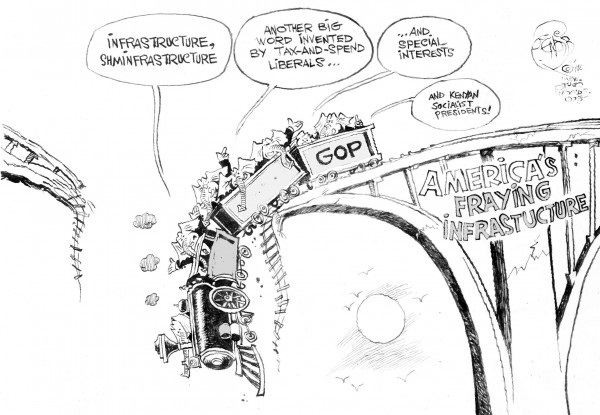
Then there are the sweetheart pension deals and running City Hall as a criminal operation. But, hey!, nobody's perfect! The heavy price of statesmanship!
As H.L. Mencken's line goes:
David Holahan: Past time to lower the minimum wage!
If raising the minimum wage would hurt business, as the Republican Party insists, then it stands to reason that lowering it from $7.25 an hour would help business. And since the business of America, as President Calvin Coolidge said, is business. What are we waiting for?
How about $5, perchance $3? That would be like a steroid injection for our sluggish economy. As a college student in 1970 I spent one summer working for a vegetable farmer and earned the base pay of $1.45 an hour. The minimum wage for farm workers then was lower than that for the rest of the workforce ($1.60), presumably because we could nibble fresh produce while we worked in the blazing sun or driving rain.
Business has taken so many big hits over the years it’s a wonder there are any entrepreneurs left. The compulsory six-day, 12-hour a day workweek is long gone. One of the first strikes in American history advocated for the 10-hour workday. Good times!
Child labor is now taboo, too, at least in this country. My fraternal grandfather began earning his keep at the age of ten in a Pennsylvania coal mine. Little people worked cheap and their tiny bodies and nimble hands allowed them to get into tight places where grownups couldn’t go.
Once the minimum wage was zero, zilch, nada, nil. For centuries slavery greased the wheels of commerce here and abroad. It wasn’t simply that free labor was good for plantation owners. Enslaved people represented collateral for commercial investment, profits for insurance companies, a lucrative market for New England beef and dried cod, and a potent stimulus to expanding global trade.
As hard as it will be for some readers to believe, it was the Republican Party that brought this business-friendly era to a screeching halt. To be fair, the “Grand Old Party” was in its infancy back then and wasn’t nearly so Grand. It has come a long way, blindly siding with business over labor in almost every instance since, fighting tooth and nail against most of the provisions that have shaped modern labor practices.
And the GOP is still fighting – and not just against increasing the federal minimum wage for the first time since 2009. In Maine, Republicans recently tried to loosen restrictions on longstanding child-labor laws so teenagers could work longer and later on school nights (11 p.m.) and for considerably less than the minimum wage. Talk about progress!
But mainly, Republicans are pushing back against Obama et al., who are arguing that it is time to raise the minimum wage. The Democrats anti-business rant goes something like this:
- Inflation has effectively decreased the current minimum wage (which is not indexed to the cost of living as Social Security payments are) by more than 11 percent since 2009.
- To equal the purchasing power of the federal minimum wage circa 1968 would mean a current figure of $10.69, according to the Congressional Research Service.
- Lowest-wage Americans need the extra money just to survive and will spend every penny of it on goods and services, thereby stimulating the economy more than tax breaks for the rich, who already have everything money can buy.
Republicans reply pithily that businesses are people, too. If you don’t believe them just ask the U.S. Supreme Court.
My grandfather and I survived the coal mines and the farm. I went back to college. Michael Holahan was rescued from a life underground by an uncle who was a priest and put him to work for the parish.
In my grandfather’s day things were simpler and regulations were few and far between. There were states that didn’t require children to attend school but let them be put to work in mines and factories. Was that so bad?
David Holahan is a freelance writer who lives in East Haddam, Conn.
William Morgan: A license plate worthy of Liberace
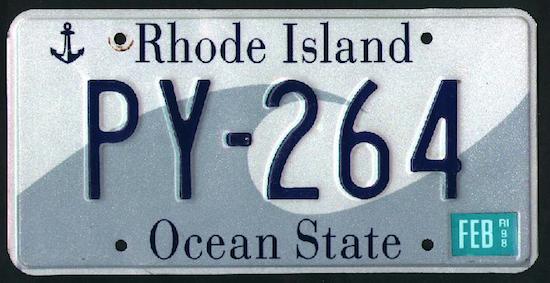
Photos (below) and comment by WILLIAM MORGAN The State of Rhode Island and Providence Plantations has blessedly not joined the rush to offer dozens of specialty and charity license plates. And not least of all, the base Rhode Island tag was designed by a noted graphic designer, Tyler Smith, and is quite handsome.
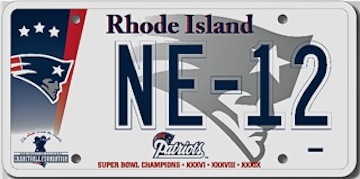
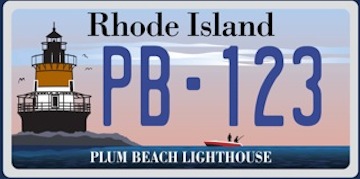
States such as Florida have scores, even hundreds, of affinity plates available for an extra fee. Rhode Island's paltry offering is only eight, including the Patriots and the Plum Island Lighthouse.
So far, Rhode Island has avoided any of the overtly religious, political and downright dumb plates that have made a mockery of the idea that a license plate is a nothing more than a way of identifying a vehicle–and not an opportunity to raise money for athletic leagues, Pro-Choice activists, or a big despoiling industry. Or as a Montana State Police captain said recently, "I need to see your number, not know what you favorite flavor of coffee is."
While one would not wish to discourage a few good charities from trying to raise money, I wonder if crowding a license plate with too much information and appalling design is really the most appropriate way to raise funds.
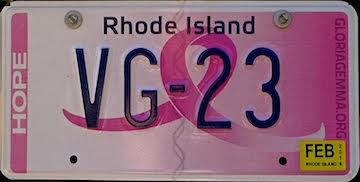
The Ocean State's latest affinity plate is for a noble aim – to fight breast cancer. $20 for each tag goes to the state's women's cancer-screening program. Marvelous. But is not then the next logical specialty plate one that would raise money for prostate-cancer research? What color would the ribbon be? The image of a little walnut-sized gland gracing the plate?
Hats off to the Gloria Gemma Breast Cancer Resources Foundation. But as an example of design from the "Creative Capital," this plate is a graphic disaster. The font for Rhode Island is too bland, for starters. Worst of all is the fading horizontal pink color scheme, as if the plate had been dipped halfway into a bucket of Pepto-Bismol. It looks like something Liberace ordered over the telephone.


New England's most interesting music venue
See /hear New England's most interesting music venue.
Follow Fete at http://twitter.com/fetemusic
The square deal

"Homage to the Square'' (screenprint), by JOSEF ALBERS, at the Museum of Art at the University of New Hampshire, in Durham.
Sun on the sink
 ''Kitchen in Sunlight'' (oil on plexy), by MICHAEL DOYLE, via Patricia Ladd Carega Gallery, Center Sandwich, N.H. At this time of year, the light slants in beautifully if painfully, especially for drivers.
Waterfront casino in Newport?
I wish my friend Bruce Newberry and I had known about the sale of the Newport Yachting Center to developers. We could have talked about it this morning on his "Talk of the Town'' show on WADK (1540 A.M.). Would the new owners like to put a nice, quiet casino there?
The Yatchting Center has been plagued with complaints about noise from concerts and other events there. Perhaps obsessive-compulsive gamblers would be better neighbors. They, after all, have to concentrate.
A streetcar named reasonable
People like to call most new large public projects boondoggles, but if politicians followed such negativism religiously,very few useful public projects would be built and the public would find life much more difficult. Yes, even Boston's Big Dig was worth it.
So it is with the idea of putting in a streetcar line in Providence. With the city's thick downtown density, large numbers of college students without cars and an aging population not driving as much these days, I think that the line would do very well in improving the city's economy and quality of life. The rich cities to our north (Boston) and south (New York) owe much of their prosperity to mass transit.
Raise minimum wage and strengthen economy
It stands to reason that raising the minimum wage, by putting more money in the hands of consumers who are more likely to spend their money than are members of the rich people in the investment class would improve the still weak (for most people) U.S. economy.
-- Robert Whitcomb
Peter Baker: Illegal N.E. fishing hurts future stocks
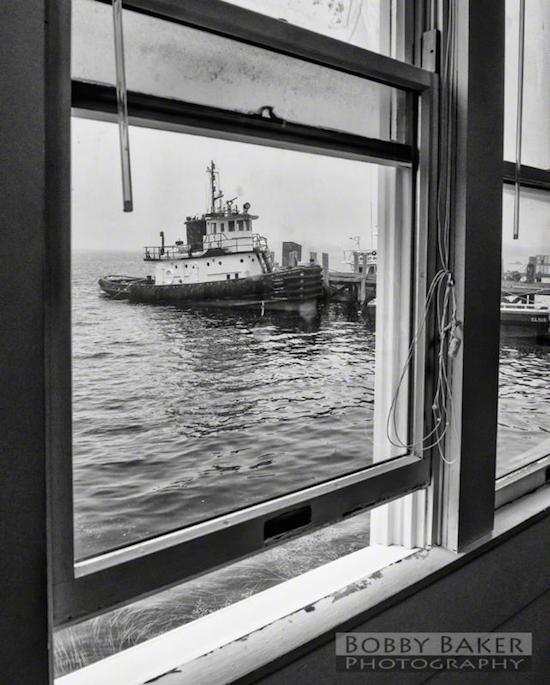
"Outside My Window'' (Woods Hole, Mass.), copyright Bobby Baker Photography.
An aromatic site.
This article comes courtesy of ecoRI News
BOSTON
We’ve seen a rash of stories recently on illegal fishing in the Northeast, as enforcement officials take action on unreported catch. Some of the numbers are eye-popping. One bust involved 56,000 pounds of illegally caught and unreported summer flounder, also known as fluke. Another charge alleged 86,000 unreported pounds of the same fish over three years.
Research indicates that those figures are no fluke — pardon the pun. In fact, these recent incidents represent only a small fraction of illegal and unreported catch. Studies show that most illegal fishing in the region involves cheating on rules regarding the amount, type or size of fish allowed to be caught, misreporting in dealer reports, or fishing in places set aside to protect fish habitat and spawning areas. Few people realize the extent of illegal fishing, the harm it can do to ocean resources, and the ways in which this cheating undermines efforts to measure and sustainably manage fisheries.
For example, a study published in the journal Marine Policy in 2010 estimated that 12-24 percent of New England’s total catch of groundfish — bottom-dwelling fish such as cod, flounder and haddock — was taken illegally. How much fish is that? Well, when the authors took the midpoint of that estimate (18 percent) and applied it to the actual landings from the time the study was conducted, they found that the illegal catch would amount to more than 11 million pounds of fish, worth about $13 million.
And what if those illegally caught fish had instead been left in the water where they could grow and reproduce? The researchers give an estimate of that loss, too. Over five years those fish could have contributed some 65 million pounds to the overall biomass of the groundfish stock. That extra supply would be a welcome bounty today, when many groundfish populations are so low that the fishery has been declared a federal disaster, requiring tens of millions of dollars in taxpayer assistance.
Fisheries managers are responding to some problem areas. In the mid-Atlantic, for example, officials recently suspended use of a controversial “set-aside” program that had allegedly been exploited to hide catch that exceeded quotas. New England’s fishery managers have started looking into reports of vessels employing net-liners and other fishing-gear modifications that result in fish being caught under the legal size limit.
This “missing catch” from illegal fishing also complicates the work of scientists and managers who need an accurate picture of what’s really happening on the water. The actual mortality, or amount of fish killed, is a key piece of information for estimating fish populations and setting sustainable fishing levels.
The Marine Policy study found that even commercial fishermen assume that about 10 percent to 15 percent of their colleagues are routinely breaking the law. The researchers say that the odds of getting caught are slim, while the payoff from cheating is “nearly five times the economic value of expected penalties.”
All this illicit activity takes a toll on those fishermen who do follow the rules. The researchers surveyed fishermen and discovered that many believe that illegal fishing “will prevent them from ever benefiting from stock rebuilding programs.” This finding underscores one of the greatest damages. Hardworking fishermen who do the right thing as stewards of the public resource are cheated of their just reward of higher catches in the future. Although enforcement may be unpopular to some, it is critical for any well-managed fishery.
Peter Baker directs The Pew Charitable Trusts’ U.S. ocean-conservation efforts in the Northeast and Mid-Atlantic.
James P. Freeman: Baker, Beacon Hill and Banacek
During the introductory credits of “The Three Million Dollar Piracy,” from a 1973 episode of television’s Boston-based series Banacek, there is a forgotten moment of morbid foreshadowing: Under a blue sky, as the camera pans across the golden dome of the Federalist-style statehouse, at 24 Beacon St., there looms a dark, steel skeletal structure, One Ashburton Place. More than metaphorically, it marked the time when state government as a bastion of ideas would start to be overshadowed by a bureaucracy of idols.
The 2014 Massachusetts gubernatorial election is about the very role of Beacon Hill.
Sitting down with Charlie Baker, the Republican gubernatorial candidate, at the Pilot House, after remarks he gave to the Sandwich Chamber of Commerce recently, you suddenly realize his candidacy is about balancing and restoring the role of limited government from today’s oppressive one. It is a change of approach, rethinking what government does and how it does it. Or, as one political scientist describes it, “affirming certain values and discouraging certain vices.”
One is struck with what Baker is not: a purveyor of identity politics--so carefully crafted by Democrats — where feeling is substituted for function. Instead, Baker is properly defined by action: “This is what I will do” as opposed to “This is who I am.” It is a marked contrast after eight years of Deval Patrick’s form of leadership; governor as emoticon not manager.
A theme of restoration and repair seems to be supported by residents. In polling results released earlier this month by wbur.org, primary voters overwhelmingly (89 percent of Republicans and 81 percent Democrats) indicated that managing state government effectively is a top priority. Perhaps tellingly, this “ranked higher than likability or progressive/conservative attitudes.”
Democrats display unintentional humor, therefore, when speaking of “change.” Surely, upon hearing this, sensible residents echo the sentiments of Guildenstern: “I have lost all capacity for disbelief.” Beyond, as he said, a “gentle scepticism.”
Martha Coakley, Baker’s principal challenger, has been state attorney general for nearly eight years and running for the fourth time for state-wide office. She would spend $500 million for economic recovery -- a plan modeled after Patrick’s 10-year, $1 billion life-sciences initiative, reports the AP. That's ironic, if anything, as she and fellow party members have run on a platform of change from eight years of Patrick’s grisly governance. Baker is relying upon public skepticism about Coakley’s ability to inspire and effect change.
He rightly believes his election would create a “constructive friction” between him and a de facto Democrat legislature (82 percent in the House and 90 percent in Senate) that would revive public accountability. He says that the one-party government is “more pronounced” now and hears even dissatisfied Democrats whispering about the definitive lack of leadership. Is that when the ghost of John Adams would reappear to haunt the hallowed ground on The Hill with “checks and balances” and instill discipline?
For most voters, such issues as runaway taxes, uncontrolled spending, unfunded pension obligations, massive debt burdens and assorted scandals — exacerbated by single-party politics--are accumulated barnacles below the surface of the ship of state; a seaworthy vessel, nevertheless, but slowly submerging. Baker would bring an immediacy to those issues.
Some will immediately greet the new governor.
Just 11 days after the election, on Nov. 4, 400,000 residents will begin —a gain!--enrolling for healthcare on the new Connector Web site. Its predecessor, unable to conform to myriad rules and regulations of Obamacare, was, Baker says, “an astonishing breakdown.” When, and if, fully implemented, costs may exceed $500 million. A Pioneer Institute healthcare expert called it “irresponsible to taxpayers” and described it a “‘Big Dig’ IT project.” Like its national step-cousin, it will likely not be free from trouble and require comprehensive executive engagement of the next governor.
Is this Patrick’s idea of “innovation” and “infrastructure?” It is a supreme example, certainly one of many, of the legacy migraines left over from his administration.
A considerable amount of Baker’s time was spent on the economy. Because of the saturation of codes, rules and regulations, “this is a complicated place to do business,” he asserts. Adding, the state “needs to think differently about economic development.”
Baker may be a beneficiary of a development not yet largely discernible. With Patrick and his party so aggressively progressive, the Democratic base may actually be more moderate, as evident from a Boston Globe poll conducted last July on immigration. Only 36 percent of respondents supported state spending on unaccompanied immigrant children compared to 57 percent who opposed it. The poll’s numbers overall were consistent with national poll results.
Conceivably, then, those children are not on commonwealth soil because residents questioned the veracity and competency of government supervision, not its compassion. If voters look at such factors surrounding other issues — immediate and intermediate -- it would further affirm the results of the wbur.org poll and would ensure a Baker victory.
Forty one years after George Peppard’s leisurely Beacon Hill drive inBanacek, Charlie Baker would reimagine the scenery.
James P. Freeman is a former Cape Cod Times columnist.