
Vox clamantis in deserto




Quieter commerce
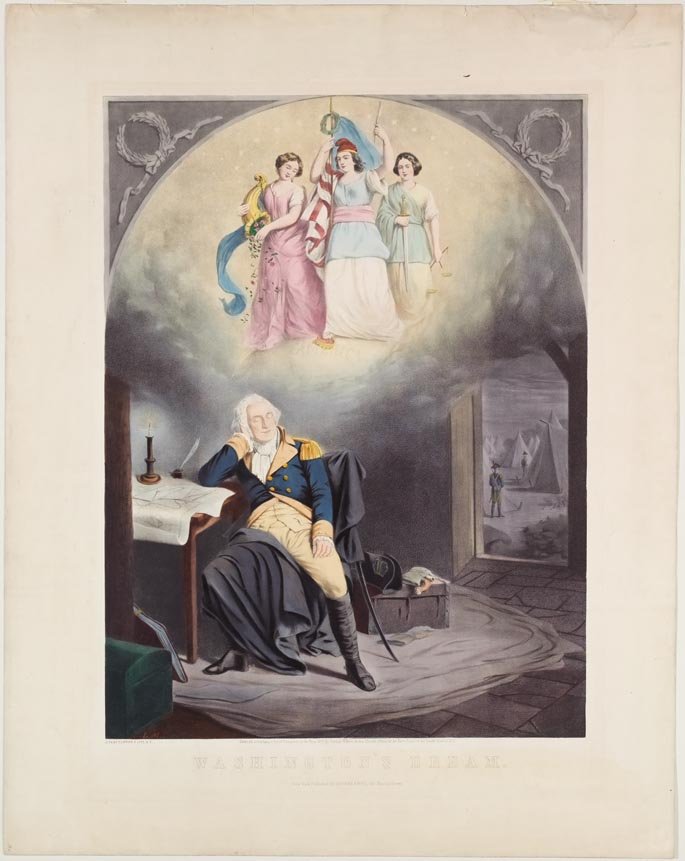
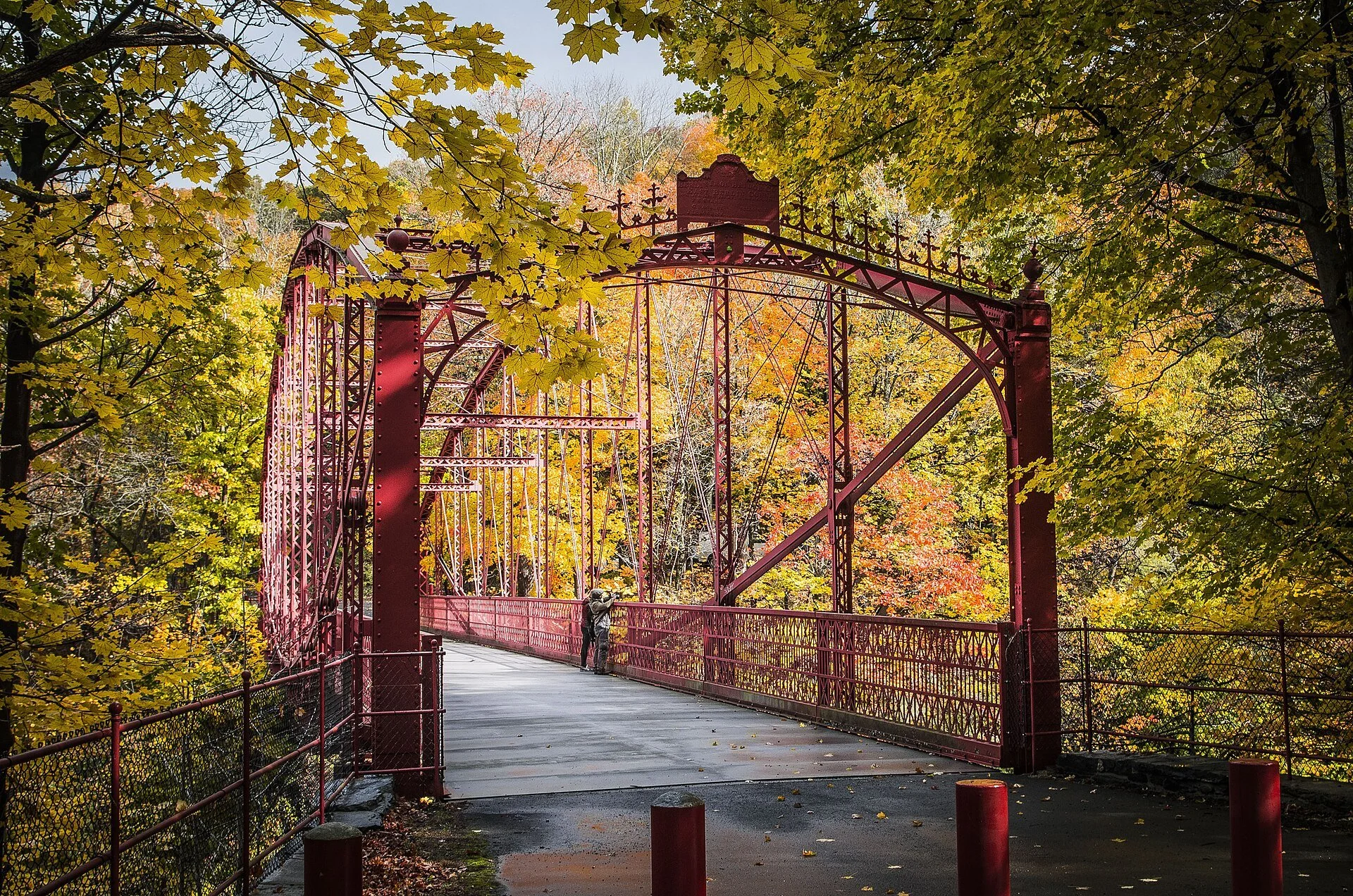
A beautiful fallish morning today. I noticed that many stores normally open on Saturdays were closed for the long holiday weekend. The quiet was inviting. The old "Blue Laws'' that kept stores closed on Sundays and holidays had the benefit of encouraging a weekly stretch of reflection beyond the allure and demands of commerce.
-- Robert Whitcomb
Charles Pinning: Looking for independence on Independence Day
We found the prodigious piece of driftwood on the shore, bleached bone white and tumbled smooth, once a stout tree of more than 6 feet, now our proud possession.“We can burn it at the Fourth of July fireworks party,” said Jessie. Jessie lived in Little Compton, R.I., and I lived in Newport, 45 minutes away, and we had just completed the ninth grade. We’d known each other since the fifth grade, when Jessie started taking the bus into Newport to attend the same grade school as I did, St. Michael’s. She was quiet and shy and my height. She had long, dark hair and hazel eyes, and when she opened her mouth she always said something worth listening to, in my opinion. Even my sarcastic older brother gave her the thumbs up. “Still waters run deep,” he said knowingly. She was the only girl I’d ever kissed on the lips, with intent, and she had been my girlfriend ever since. My mother approved of Jessie, which was rare, because my mother didn’t approve of any girls, especially Irish girls who lived in the Fifth Ward. She thought the Irish were big boozers. Back then, the Fifth Ward in Newport was a poor section of town and my mother felt superior, even though she was the daughter of Portuguese immigrants and had grown up on a farm. Jessie was half-Irish, but she didn’t live in the Fifth Ward and her family was old and prominent in Rhode Island. To visit Jessie, I took the bus to Portsmouth and got off before it veered toward the Mount Hope Bridge and Bristol. Her mother picked me up, Jessie waving from the passenger seat of their blue and white Ford station wagon. The three of us packed in tight on the bench seat listened to the radio that was hopefully playing a good song (Beatles, Rolling Stones, etc.), and sang along with it. Way out on West Main Road in Little Compton, we stopped at Walker’s vegetable stand for some fresh-picked strawberries and then continued out to Jessie’s big shingled house on Sakonnet Point. On Sunday, we went to church together, but it was Episcopalian and not nearly as repressive as going to a Catholic church. On the Fourth, we played catch on the broad front lawn in front of Jessie’s house, then we bicycled down along the edge of Round Pond ringed with grasses and cattails, and up the narrow road between the honeysuckle and wild roses and rosa rugosa, coasting down the packed gravel hill to Tappen’s Beach. We checked to make sure our log was okay, then we walked down to Warren’s Point where we went behind our favorite rock and made out for a while. As usual, I started coughing. “Your Catholic guilt cough” said Jessie. “Do you think you’re going to Hell when we finally have sex?” “Probably,” I laughed. “Unless we’re married.” “I really hope you don’t believe that,” she said. I smiled, as if to say of course I didn’t. But the truth was that my brain was a tangle of my parents’ fears and the thought control-power madness of the Catholic Church, corkscrewed into me from early childhood. After dunking, we gathered smaller sticks and pieces of driftwood to put under the log, which we encircled with big stones. We climbed up on a lifeguard stand and the light turned rosy on Jessie’s face. We held hands and our hands glowed. I kissed her hand upon which she wore a ring that matched mine. A flotilla of brown ducks bobbed in the light surf near the shore. Some of them were just ducklings the size of little rubber ducks. “Are they trying to make a beachhead?” I asked. “Or do you think they are feeding? Or training the babies?” “Look at the little one that’s behind. Here comes the mama to bring it back in line,” said Jess. Families began showing up and some of our friends. Picnic food and drinks were put out on folding tables and barbecues were set up. We lit the fire under the log. I wished my parents were here, but the truth was, it would be less fun. My father couldn’t relax. He was forever critical of too much noise and running around and people not doing things correctly, and my mother wanted to know where I was all the time. Honestly, Jessie’s parents didn’t ride herd on her at all. They just let her be. Our driftwood log burned impressively, snapping and sparkling and we stood with others, silhouettes in the wavering orange light of its flames. In the shorelit darkness, we drifted up into the dunes. Lying down we looked up at a skyful of stars. I wondered if God was watching us, when suddenly there was a long hissing whistle followed by a loud boom! Red and then white and then blue fireworks began exploding and lighting up the sky. I felt Jessie’s hand. “Happy Independence Day,” she whispered.
Charles Pinning, an occasional contributor, is the author of the Rhode Island-based novel “Irreplaceable.”
Llewellyn King: The rise and fading of 'The New Class'
"The New Class” was a concept in the 1970s that various writers and commentators, led by Irving Kristol, used to describe an important social and political phenomenon of the time. It represented a kind of Fifth Estate, or extra-curricular branch of government. The new class in the context of the time had nothing to do with the use of the same term (sometimes employed to describe the elite of communist-run nations), but had everything to do with what had happened in the turbulent 1960s.
Most especially, it was a manifestation of the opposition to the Vietnam War by young professionals in the United States. By the time Kristol used the phrase, he had already taken his epic journey from the left to the right and was already ensconced as the godfather of neo-conservatism. As I remember, he used his column in The Wall Street Journal to identify the New Class and to attack it. I, too, was writing about it and was leery of its effect on energy supply, but intrigued as to whether a whole new social strata was going to change things; whether we were going to see policy by the young, for the young.
The new class was a rump of disassociated and unaffiliated professionals who had been impacted by the draft and were sensitized to the other social issues of the 1960s – the civil rights, the environmental and the women’s liberation movements. The New Class was important because it was smart and it knew how to use power effectively. It did this by co-opting journalism and using – and perhaps abusing -- the court system.
They were people who had either served in Vietnam or had avoided doing so by fleeing the country, seeking deferments, or, actually rejecting the draft and going to prison. The latter, predictably, produced a surge of interest in prison reform. The draft-avoiders were drawn into the other social issues of the time. Their most profound impact was probably on the environmental movement. To this day, the environmental organizations influence public policy by the use of media and selective litigation -- tactics perfected by the new class.
The New Class was in many ways a non-political movement, leaning to the left but not exclusively. It was the result of comfortable, middle-class kids waking up to what was wrong with the society they lived in. Because they had, in their view, felt the heavy hand of government, they were appalled by conditions in black America, the criminal-justice system and the state of environmental degradation. Of course, they were appalled by the war and the institutions that supported it, including corporations, government, universities and the military. With the end of the war, came the end of the New Class; not immediately, but surprisingly fast.
Its lasting legacy is in tactics, not policy. Its members morphed into a generation of self-interested professionals; its idealism, like the war, a fading memory. As a social pressure group, the New Class has left its mark. It showed how effective a few people with literary and legal skills could redirect policy. As it was not affiliated with a political party, or even a defined philosophy, it could pick its targets. In today’s world of rigid left and right, the power of unaffiliated movements is abridged, if it exists at all. I used the term "New Class'' contemporaneously with Kristol, but I am not sure whether I had just heard it and it had seeped into my consciousness.
At the time, I thought the use of the courts was excessive and I wrote and criticized the new class. But I was fascinated by how they had gotten their hands on the levers of power outside of Congress and the presidency but powerfully affected those institutions. Looking back, one wishes the New Class were still a force: upset about the wanton cruelty of the immigration standoff, angry about income inadequacy, appalled by the surging power that mergers and acquisitions are handing to a small number of supra-national organizations, and worried about unfettered money in politics. Global warming would be a classic issue.
The New Class drew its strength from being indignant but without an organization -- just a few good writers and propagandists here and a few sharp lawyers there. They were amorphous and effective. Would they could be reprised.
Llewellyn King is executive producer and host of "White House Chronicle, ''on PBS. His e-mail is lking@kingpublishing.com.
Face mirrors the soul?
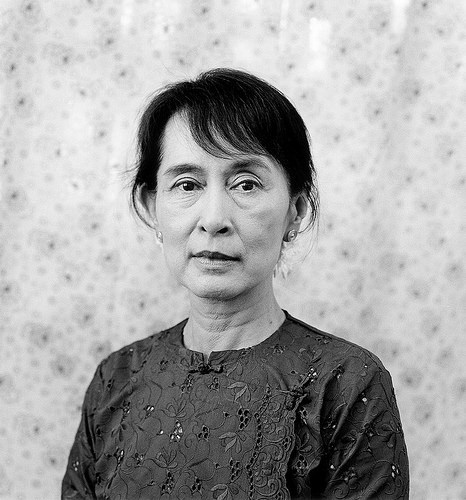
"Ang San Suu Kyi,'' by MARIANA COOK, in the show "Justice: Faces of the Human Rights Revolution,'' at the Lamont Gallery, at Phillips Exeter Academy, in Exeter, N.H., through July 31.
The Burmese human-rights advocate has a kindly face but then so have many murderous dictators, such as Stalin and Mao. Others, such as Syrian dictator/mass murderer Bashar Assad, simply look bland.
Less light, more heat; 'masterful inaction' in health care
Hot, humid and mid-summery today, with the water condensing on the windows with air conditioners sticking out of them. But I already notice that it's getting darker earlier in the evening. The older you get, the more you seem to notice such things. Meanwhile, the heat is wilting some plants that were exploding with growth a few weeks ago. They have reached their maximum prosperity for the year. And the southwest wind makes its summer sounds through the tall trees.
xxx
Effective health care depends on self-care; this fact is currently heralded as if it were a discovery....The medicalization of early diagnoses not only hampers and discourages preventive healthcare but also trains the patient-to-be to function in the meantime as an acolyte to his doctor. He learns to depend on the physician in sickness and in health. He turns into a life-long patient.
--- Ivan Illich
I was at a conference in Hanover, N.H., called the Summer Institute for Informed Patient Choice last week. It was about getting the healthcare system to help patients make better choices on their health care through encouraging and formalizing shared clinician-patient decision making. SDM, as it's called, emphasizes "evidence-based medicine'' over the more anecdotal kind that's still popular. The rise of "Big Data'' is giving a huge boost to evidence-based medicine.
The choice will often involve a patient not having a course of treatment or specific individual procedure or medication but working on lifestyle changes (or maintenance) while the clinician and patient engage in ''watchful waiting'' for problems that tests or genetics might suggest will appear.
Not quite "benign neglect'', but a relative.
Moving toward this less procedure-driven approach is an uphill battle. For one thing, doctors and hospitals are still overwhelmingly paid by volume of procedures. The more they do, the more they get paid. For another, Americans are people who traditionally seek out solutions; they are activists, or at least they want their professionals to be.
Many will find inaction frustrating, even if inaction is the healthiest way to go. (J.P. Morgan had a great phrase for avoiding bad decisions in the stock market: "Masterful inaction''. ) And too many will miss the clarity and authoritativeness of the old way -- in which the doctor would set out treatment with little give or take. Many patients will find it very difficult to take more responsibility for their own health.
-- Robert Whitcomb
Primordial wax
 "Refluence #6'' (encaustic wax, mixed media and vintage found objects on birch panel), by ROBIN LUCIANO BEATY, in a July 11-Aug. 9 show at Lanoue Gallery, Boston.
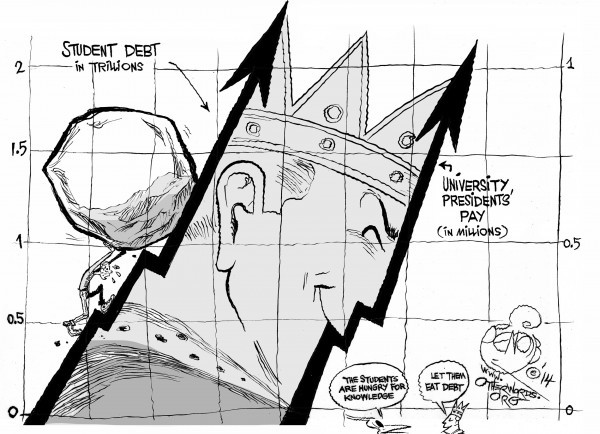
All you need is ammo

Photo by WILLIAM MORGAN
Car the other day in the parking lot of the Dunkin' Donuts in Newtown, Conn.
Basis of oneness

"Frequencies Rising'' (acrylic on panel), by LYNDA SCHLOSBERG, in her show "Lynda Schlosberg: Zero Point Field,'' at Kingston Gallery, Boston, through July 11.
She says that in these paintings she mediates on the idea that nothing ever dies and that everything is connected through a never-ending unified field of energy.
John O. Harney: Colleges and the 'Innovation Imperative'
BOSTON
"I was just thinking" was columnist Mike Barnicle's lazy motif in The Boston Globe. Still, it's hard not to copy a lazy motif. So … I was just thinking ...
Business leaders confirmed for the record this spring what they’ve been grousing about for years: Too few recent graduates have the skills to be good workers. That was the key finding in Northeastern University’s third annual survey on the “Innovation Imperative.” And it formed the base of a recent "summit" sponsored by Northeastern, WGBH and the New England Council.
Northeastern President Joseph E. Aoun opened the summit saying he doesn’t like using the term “customer” in higher education, but that the poll aimed to find out how CEOs, students and faculty view the university and higher ed's roles. (Infected myself by the cost-consciousness disease, I couldn’t help noticing that the handouts were on very heavy stock—relatively expensive.) The polled CEOs emphasized soft skills including communication and interpersonal skills over tech skills. They also emphasized entrepreneurship skills—not to launch a business necessarily but to think on a different level about creating an ecosystem and to learn how to fail.
Jeff Selingo of The Chronicle of Higher Education said he has wondered why more higher education institutions—HEIs as we abbreviate them now—hadn’t adopted Northeastern’s famous co-op model.
Aoun noted that during the recession, the number of co-ops actually grew because employers wanted to be sure to have a pipeline for talent.
So why not encourage dramatic expansion of the co-op idea as some in the Obama administration have suggested? One reason, worried Selingo, is that slews of new co-ops and internships might replace full-time jobs—the economy may not be able to absorb them.
Also working against co-ops, many students and parents today are looking for ways to cut a year off the overworked four-year bachelor's degree; co-ops sometimes add time to graduation. It's not a bad thing, but it could be grounds for penalties under the government’s controversial plan to introduce a new college scorecard. HEIs like Lesley University could also suffer under the new scorecard system because the university specializes in educating teachers, who still don’t earn that much money—one of the scorecard’s potential key measures of a worthwhile college.
Selingo injected a bit of sanity, noting that many faculty do not see higher ed as preparing people for jobs, but for life. Then the obligatory, but ever-shorter, tributes to the liberal arts all around.
On a different aspect of innovation, Partners HealthCare President Gary Gottlieb lamented underfunding of the National Institutes of Health, the federal research program that has played a central role in setting U.S. higher ed apart from the rest of the world. The combined effect of budget cuts and the increasing cost of biomedical research have resulted in a 12% cut between 2010 and 2013. That means less for researchers and breakthroughs in treating diseases ranging from HIV to Alzheimer’s.
All the panelists talked about the transformation of higher education and hiring. The moderator Kara Miller, host of WGBH’s Innovation Hub, quipped that if you interview to be an engineer at Facebook, they sit you down for a four-hour test to do some coding and other tasks, not to talk about your Columbia degree.
Selingo added that as more focus is directed to “outcomes” rather than “inputs,” rankings such as U.S. News and World Report will be turned on their heads.
He also mentioned that more older students are accessing education they need when they need it, not enrolling in degree programs. You'll have a foundation that may not be a four-year degree, but every couple of years, you'll access more from MOOCs and other new models.
Someone from the audience asked about a finding noted at the summit’s beginning in which more than 70% of CEOs attributed their success to their personal drive. She wanted to know, understandably, is that because higher ed is now so cast as a private good that you can attribute your success at the HEI to your own grit and determination? The answer should have been, “You didn’t build that.”
****
At the summit, Aoun briefly cited the rise of "competency-based education" as a new way to show what you’ve learned, rather than how long you’ve been in a class. CBE, as it’s called, may soon be all the rage. It seems to fit the times, offering higher-quality learning at lower prices. But I learned at a recent webinar that the concept has been around since the 70s. More than 130 institutions do it. Most of the students are in their 30s or 40s. It was noted that "academic success coaches" follow an “intrusive advising model” and can activate students who seem to be just lurking. Also that it's important for HEIs to enlist their library staffs so the students in the self-paced learning environment can find the resources they need.
One proponent of Wisconsin's CBE program says the chancellor told them they had permission to fail, which faculty don’t usually feel they have. Speaking of faculty, they tend to suffer the bruises in this larger conversation about transformation—especially tenured ones and their unions, and this while NCAA football players start using the U-word.
****
The Massachusetts Board of Higher Education approved America’s first statewide policy to make civics part of the curriculum at state colleges. Commissioner Richard Freeland, a historian, is concerned that public college graduates are focusing too much on job training and not learning the history of their own country. "For example, what is the history of our involvement in Asia, or the Middle East, or in Europe or in Latin America, and therefore not really having a context to evaluate what is going on in those regions as the United States tries to interact with them," Freeland told WGBH.
Just 21 states required a state-designed social studies test in the 2012-13 school year, down from 34 in 2001, according to a study released by the Center for Information and Research on Civic Learning & Engagement (CIRCLE), at Tufts University. To make matters worse, assessments have shifted from a combination of multiple-choice questions, essay questions, and other assignments to almost exclusively multiple-choice exams since 2000, meaning that the material tested tends to be relatively simple facts rather than the ability to apply information and skills to complex situations." That runs counter to the Common Core State Standards movement. Yet social studies as a subject has become a poor cousin, and there's little agreement on what makes sense to teach in the way of civics.
****
Gallup is always asking questions. When they asked people to rate their state as a place to live, 77% of Montanans pick theirs as good as do 77% of Alaskans. But just 18% of residents of Rhode Island did. A friend who writes in the Ocean State once unfairly and politically incorrectly damned the state as New England’s “slum.”
Another Gallup poll makes more sense though. It asked college graduates whether they're "engaged" with their work or "thriving" in all aspects of their lives. The big finding: Responses don't vary based on the prestige of their alma mater.
****
Mike Barnicle, it turns out, stole some of his “I was just thinking” material from George Carlin. The key in these gimmicky columns—as in higher education—is to think for yourself because George won’t be there with you.
John O. Harney is executive editor of The New England Journal of Higher Education (nebhe.org), where this piece originated. The editor of New England Diary is a former member of NEBHE's editorial advisory board.
Summer's 'full glow and luxuriance'
In the depth of winter, I finally learned that within me there lay an invincible summer.
-- Albert Camus
Summer has set in with its usual severity.
-- Samuel Taylor Coleridge
Summer is the time when one sheds one’s tensions with one’s clothes, and the right kind of day is jeweled balm for the battered spirit. A few of those days and you can become drunk with the belief that all’s right with the world.
-- Ada Louise Huxtable
Spring flew swiftly by, and summer came; and if the village had been beautiful at first, it was now in the full glow and luxuriance of its richness. The great trees, which had looked shrunken and bare in the earlier months, had now burst into strong life and health; and stretching forth their green arms over the thirsty ground, converted open and naked spots into choice nooks, where was a deep and pleasant shade from which to look upon the wide prospect, steeped in sunshine, which lay stretched out beyond. The earth had donned her mantle of brightest green; and shed her richest perfumes abroad. It was the prime and vigour of the year; all things were glad and flourishing.
-- Charles Dickens, in Oliver Twist
Don Pesci: Cianci, Rowland, et al., and the politics of salvation
Don Pesci is a writer who lives in Vernon.
David Warsh: Too bad the NYT sold The Globe to Henry
BOSTON
I feel a continuing sadness at the fate of The Boston Globe. I had high hopes that the New York Times Co., after two decades of maladroit management that saw the value of its investment in New England newspaper decline from around $1.5 billion to $73 million, would sell the Globe and the Worcester Telegram & Gazette to the group of investors headed by Stephen and Benjamin Taylor, of the family that used to control The Globe. That wasn’t going to change anything I did, but I spent close to 25 years at The Globe and I love the paper and its staff. To have it and the Worcester paper back in knowledgeable local hands would have been deeply reassuring -- a happy ending to one episode and the promising beginning of another.
Instead, The Times sold the papers for cash on the barrelhead to sports magnate John Henry, its former business partner (the company made good money on its minority interest in Henry’s Red Sox). Henry replaced veteran chief executive and publisher Christopher Mayer, who had restored the paper to a reasonable semblance of its former self, with Mike Sheehan, a Boston advertising executive, and named himself publisher.
One of Henry’s first moves was to hire a prominent reporter from the National Catholic Reporter, based in Kansas City, Mo., John Allen, to write about the Vatican and Roman Catholic Church. That’s the job I used to have, except I covered economics, and more than just one sect of it!. Much as I appreciate the style of Allen’s reporting, the sheer shallowness of the paper’s play to regain readers lost during the New York ascendency irritates the hell out of me. But my moving to the Web in 2002 was the right decision and I am more than grateful to subscribers for keeping me here ever since.
David Warsh, an economic historian, is a longtime financial journalist and proprietor of economic principals.com.
david warsh
1.617.666.3365
The interior life of Mr. Cianci
I have always wondered about the interior life of people like former Providence Mayor Vincent Cianci whose self identity seems to only consist of being a celebrity -- who become husks if they don't think that the public is watching and hearing them. They get publicity; therefore, they exist.
-- Robert Whitcomb
Outside in
 From the show "Bringing the Outside In,'' by JULY WHITE and KYLE NILAN, at the White-Ellery House, in Gloucester, Mass., July 5, from 11 a.m. to 3 p.m. Through a collection of audio and visual art, White and Nilan investigate “the outside” and their relationship to it as visitors, inhabitants and collectors.
Beth Salerno: History: The public option
MANCHESTER, N.H. If you ask Americans what is studied in history classrooms, many will answer “facts and dates.” If you ask them what people can do with a history degree, they answer “teach.”
Yet those same Americans acknowledge the power and practical relevance of history as they flock to national parks, historic sites, museums and cultural heritage sites; buy nationally best-selling biographies; see history-infused films like Twelve Years a Slave or any of documentarian Ken Burns’s epics; or research their family history within a larger context of national trends.
Among the humanities disciplines, history has a broad and positive public profile, even as the number of majors rises and falls with economic indicators. History programs are increasingly taking advantage of that public enthusiasm for the past to strengthen the discipline’s academic reach and successfully compete for majors and funding when much of the federal and institutional attention is on STEM programs or career preparation.
Public history courses and programs encourage students to take the deep content knowledge provided by traditional history classes and apply it to public problems or in public locations. It takes advantage of the increased higher- education focus on experiential or applied learning and an emphasis on practical experience and outcomes. At the national graduate level, the American Historical Association (AHA) has recognized the need to expand even traditional history graduate experience to include exposure to public history theory, methodology and areas of practice.
With a $1.6 million grant from the Mellon Foundation, the AHA will partner with four universities to broaden both the career prospects for and the impact of history PhDs. According to the AHA, “Expanding the employment horizons and qualifications of history PhDs is not just a matter of finding jobs for our students. We are also interested in widening the presence and influence of humanistic thinking in business, government, and nonprofits. Implicit assumptions about historical context inform thousands of decisions made every day in nearly every institutional context, and we believe that a substantial proportion of those decisions are made without recognition of those historical assumptions, and certainly with very little actual historical knowledge.”
Programs that prepare history master’s students for active engagement in the public application of history are not new, particularly in New England. The University of Massachusetts at Amherst has had a thriving graduate public history program since 1986. Northeastern University’s public history master’s program claims to be one of the oldest in the United States. The National Council on Public History lists 15 public history programs in New England, with nine in Massachusetts, two in New Hampshire, two Rhode Island and one each in Vermont and Connecticut, but none in Maine.
The majority of these programs offer only graduate-level courses. However a half dozen have more recently developed public history minors or concentrations within the major. For Franklin Pierce University in Rindge, N.H., a new concentration in public history stresses that “planning and completing historical research projects are also part of the curriculum.”
Project management skills are one of the most valuable job skills public history programs can provide to students. Salem State University has a public history concentration that benefits from public history projects on campus including one that is mapping the area’s Franco-American heritage and linking older Franco-American immigrants with the Dominican immigrants that now dominate the previously Franco-American neighborhoods. Public history programs make clear the powerful impact historical knowledge can have when applied to public issues, discussions and needs. Studies by scholars also suggest that public history courses increase student engagement and can increase the number of students who declare history majors.
My course at Saint Anselm College is one such recent development. It was created in 2006 in response to requests for a course that “prepared students to explore history options other than teaching.” Of course, history, like many humanities disciplines, prepares students for the widest array of careers by teaching high-quality writing, respect for detail and causation, awareness of the impact of diverse viewpoints, and the ability to make logical and careful argument. However neither students nor parents always see that, particularly in periods of economic downturn as we have experienced for half a decade.
Therefore this course introduces students to specific career paths in public history such as museum curation, the national park service or archival work. Each student completes three “history labs” getting hands-on experience completing a nomination for the historic register, or designing a museum exhibit. These practical labs serve as the training ground for their final project, a tangible public product that serves an existing need—whether for an oral history, a museum education lesson plan to accompany an exhibit, or an archival inventory of an area cemetery with walking tour brochure available on the web.
Public history courses drive collaboration between history departments and community cultural heritage institutions. They give organizations an infusion of excited, apprentice labor to complete public projects made difficult by budget cuts, while the students gain real-world experience, workplace orientation, and a chance to produce a signature project that can anchor a budding professional portfolio. Institutions of higher education generally, and history programs in particular, will continue to face pressures to produce return on investment.
Public history programs enable a humanities discipline to capitalize on engaged learning, hands-on praxis, student research and community collaborations to produce students who have, and are perceived by employers to have, employable skills, without sacrificing the deep knowledge and clear thinking that mark the best history graduates.
Beth Salerno is an associate professor of U.S. history at Saint Anselm College. This first ran on the New England Board of Higher Education's news and opinion Web site, nebhe.org.
No diving
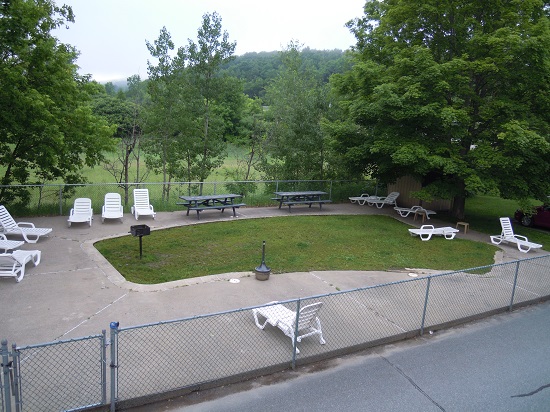
Dashed aquatic ambitions: Perhaps discouraged by the shortness of summer in those parts or by liability-insurance rates, the owners of a motel with what had been a swimming pool behind it decided to give up and fill it in. Most of the lawn furniture seemed to refuse to accept the change.
Bridge of the fallen
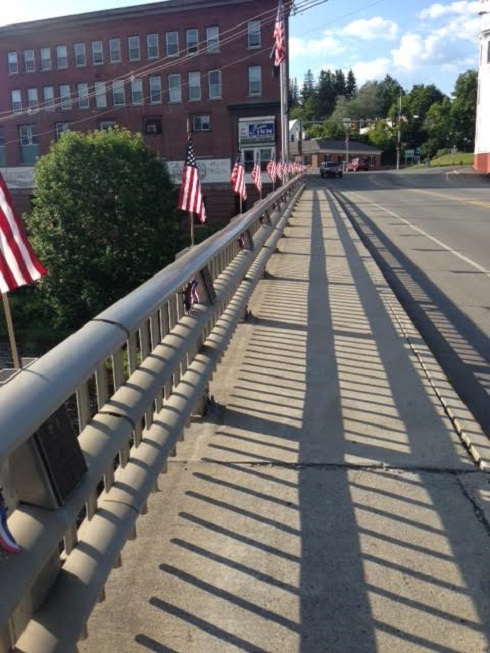
This bridge in Littleton, N.H., to the west of the main White Mountains, has plaque every few feet to memorialize war dead.
More than a summer cold

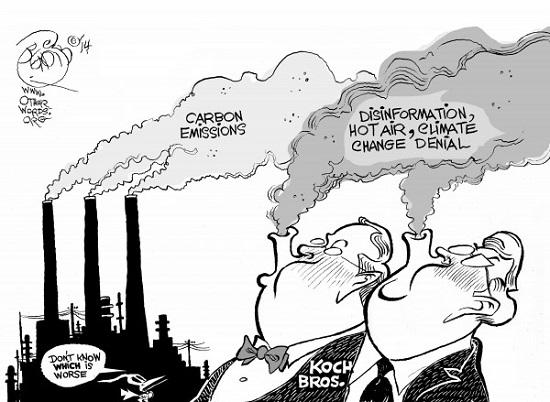
"Plague'' (mixed media), by PHYLLIS EWEN, in"Hot Spot,'' a summer exhibition at the Brickbottom Gallery, Somerville, Mass., July 10-Aug. 16.