A_map_of_New_England,_being_the_first_that_ever_was_here_cut_..._places_(2675732378).jpg

Vox clamantis in deserto

Commentary Robert Whitcomb Commentary Robert Whitcomb

Extending the run of the mills

Kennells-Mills-PoP Mill, with waterwheel, in Kennells Mills, Pa.

Check out the Mills Alliance, which is trying to make more use of old textile and other mills as part of the sustainability movement.


Read More
Commentary Robert Whitcomb Commentary Robert Whitcomb

Llewellyn King: The U.S. cancer-research crisis

By LLEWELLYN KING  

No diagnosis strikes fear into people as thoroughly as cancer. It is the sum of all fears when it comes to health.

My mother died in 1961, when treatments were few, in great pain from cancer of the uterus. Four treasured friends died of cancer more recently, but in equally awful ways; Barbara of bone cancer, Grant of colon cancer, Ian of brain cancer, and JoAnn of melanoma.

Cancer deserves its position as the most feared disease, even if it is not as lethal as it once was and many cancers can be treated. To know someone in the throes of cancer is to know something terrible. Heart disease kills more of us, but cancer is enthroned as the ultimate horror.

Yet we are, in some measure, winning the war on cancer; to medical science, it is less mysterious and more conquerable. But it has been a long battle against an implacable enemy.

The war on cancer is war with many theaters; cancer itself being a misnomer, as there are many cancers with very different profiles, rates metastasis and treatments.

So it is both puzzling and appalling that Congress has allowed funding for government biomedical research to languish and has made it subject to the blunt tool of sequestration. Less money means everything slows down; research projects are drawn out or cancelled, and scientists are discouraged.

Nothing is as fatal for research as uncertain funding. You cannot shut down a line of research and start it up again as funds become available: It blunts the picks.

Scientists at the hard-rock face of research cannot be expected to sustain commitment when they do not know if their research grants will be renewed in the next budget cycle. Lawyers can anticipate steady work, why not can cancer researchers? When we implore young people to study biomedicine, we are asking them to take up a career of uncertainty.

Enter the non-government funders, from giants like the American Cancer Society to small but determined outfits like the National Foundation for Cancer Research (NFCR).

This organization, according to its president, Franklin Salisbury Jr., believes in “adventure funding.” Although he eschews the description, Salisbury’s efforts might be called seed funding at the genomic and molecular level; understanding the role of genes in cancers and finding the mechanisms that control cells. He emphasizes the gap between science and medicine, and the need to provide funding to bridge that gap.

Salisbury also underscores the need for regular funding, rather than large periodic and unpredictable infusions. His organization, founded in 1973 by his father, Franklin Sr., a creative entrepreneur, and Albert Szent-Györgyi, a Hungarian-born physiologist and biochemist who won the Nobel Prize 1937, has been keeping research alive for some researchers, such as Dr. Curt Civin, of the University of Maryland Medical Center, and Dr. Harold Dvorak, of Beth Israel Deaconess Medical Center, in Boston.

NFCR is just one — and a small one, with a $15 million annual budget — of hundreds of cancer-related charities. Its uniqueness and what it portends for the whole future of research is its willing support, within the research community, of disruptive biomedical technologies as well as its appreciation for long-term support for particular scientists. These scientists are part of establishment teaching hospitals like Massachusetts General, as well as an honors list of top universities from Harvard to Oxford and across the Pacific to China.

Increasingly, China is becoming more important in biomedical research. American dollars are finding their way into Chinese research Institutions, as a new wave of collaboration outside of traditional channels is being established. These are sometimes housed in open medicine centers, six of which NFCR supports.

With the pressure here on government funding, researchers fear the government will fund only the safe and sure projects. This is being felt across the broad range of biomedical research in the, as scientists are turned away in larger and larger numbers from the National Institutes of Health empty handed. Respected researchers are turning to innovative funding sources, including crowd-sourcing. A renowned virus researcher at Columbia, Dr. Ian Lipkin, is trying to raise $1.27 million, having been turned down by NIH, by crowdsourcing

Llewellyn King is a national columnist and a longtime publisher, and the co-host of White House Chronicle, which appears on many PBS stations.

Read More
oped Robert Whitcomb oped Robert Whitcomb

The arts, Alzheimer's and Boomers


By BERNA HUEBNER

A way to help Boomers who get dementia does exist. The power of the arts to improve the quality of life of people with Alzheimer’s  disease and to help them connect and reconnect with their families is just beginning to be understood.
A film, which has been described by people in the field as groundbreaking, describes how the worlds of art, science and medicine intersect. It addresses the critical discourse on Alzheimer’s care with far-reaching implications for Baby Boomers, who are reaching the age when they might develop Alzheimer’s.
The documentary is called I Remember Better When I Paint (the trailer is at irememberbetterwhenipaint.com). It is narrated by Olivia de Havilland and provides powerful examples, including that of Rita Hayworth as told by her daughter Yasmin Aga Khan, of how families and other caregivers can use the creative arts to help people with Alzheimer’s. It also includes interviews with neurologists who explain the science behind these hopeful stories. Neurologists in the film explain that parts of the brain related to emotions and creative expression are spared to a large extent. These areas can be stimulated through exposure to the arts.
We hope that this film will help change the way people look at Alzheimer’s.
In her review Gail Sheehy says “It shows an entirely new pathway for engaging with a loved one you thought was lost.”
Berna G Huebner
Director, The Hilgos Foundation, Highland Park, Illinois
Co-Directors of the Film: Eric Ellena and Berna G. Huebner
Read More
oped Robert Whitcomb oped Robert Whitcomb

Help the caregivers

Here's a new social media approach, called 2nd Circle, to helping friends and family help those taking care of the chronically ill. As the population ages, we'll need much more of this sort of approach.  


Read More
oped Robert Whitcomb oped Robert Whitcomb

David Warsh: Maybe next big NYT exit will be Sulzberger

By DAVID WARSH BOSTON

For all the reporting about the unceremonious manner in which Arthur O. Sulzberger Jr. replaced executive editor Jill Abramson with Dean Baquet, the strongest evidence that the needle on his tenure as publisher of The New York Times has reached the danger zone is the company’s internal “Innovation Report” that someone at the New York Times Co. leaked last week, perhaps in hopes of offsetting the bad publicity.

Prepared by an eight-person newsroom team led by Sulzberger’s son, Arthur Gregg Sulzberger, the glossy 96-page report is likely to have the opposite effect. It amounts to a clarion call to blow up the 163-year-old business in order to go into competition with BuzzFeed, Vox, Business Insider, First Look Media, and Huffington Post.

Astoundingly, the report doesn’t so much as mention the Times's’ much more menacing digital competitors, Bloomberg News and Reuters, breakthrough innovators in the news business whose news-gathering resources are far greater than those of the newspaper company. On every page, the “Innovation Report” betrays its authors’ failure to understand what the fundamental business of The Times is about.

Naturally the digital community loved the report.  “One of the key documents of this media age,” declared Harvard University’s Nieman Journalism Lab. “The End of the Print New York Times,” headlined a Buzzfeed story. “…[P]aints a dark picture of a newsroom struggling more dramatically than is immediately visible to adjust to the digital world, a newsroom that is hampered primarily by its own storied culture,” wrote Myles Tanzer, the BuzzFeed reporter who first got hold of the document.

And, naturally, the document is well written, handsomely designed, and full of informative reflections on reputation-building in the age of social media.  But the framing is off, in a way that is dangerous to the enterprise. Sprinkled throughout are various facts intended to be alarming:  Huffington Post.com has already eclipsed The Times in total readership; Vox.com surpassed the WSJ in total digital readership in 2013.  Yahoo News has signed up Katie Couric as its “global anchor.”

There are two “chapters,” the first about ways of growing the audience for what the Times produces, the second about persuading newsroom staffers that audience-growing is more important than anything else today. Janine Gibson, the former U.S. editor of The Guardian.com, whom the Times unsuccessfully sought to hire, put it this way.

The hardest part for me has been the realization that you don’t automatically get an audience. For someone with a print background, you’re accustomed to the fact that if it makes the editor’s cut – gets into the paper – you’re going to find an audience. It’s entirely the other way around as a digital journalist. The realization that you have to go to find your audience – they’re not going to just come and read it—has been transformative.

And just in case that’s not clear, a couple of paragraphs later, Paul Berry, a Huffington Post founder,

At The New York Times, far too often for writers and editors the story is done when you hit publish. At Huffington Post, the article begins its life when you publish.

So it is all about marketing and “audience engagement.”  That makes sense, up to a point:  the world of social media has greatly changed the way that news spreads. But for all its enthusiasm, the report is not a convincing document. The framing is wrong.

There is no thought in it about what is being amplified:  about what “news” is, where it comes from, whence arises the authority of its producer.  There are none of the standard fact-based arguments from history about how the news business has evolved over 150 years: no note taken of the serial threats posed to print newspapers by magazines, radio, television, cable and now the Web. Least of all is there anything in it about the print editions that make newspapers different from Web sites, especially Bloomberg and Reuters. That is the arena in which the real contest will take place.

Instead there are a couple of pages of business school mumbo jumbo about disruptive innovators, stylized charts and allusions to Kodak and digital cameras, Toyota and Detroit. If you are a fan of “Snowfall,” the book-length multimedia story of an avalanche The Times published as a special section in December 2012, of its series of cooking videos  (now discontinued), or its tchotchkes store, you’ll find this report far-sighted.

If, on the other hand,  you want to know what’s going on in Ukraine, what central bankers are thinking around the world, or any of a hundred other pressing questions, you’ll be left scratching your head. Why are Bloomberg and Reuters reports so good on these topics? (Each employs roughly twice as many journalists as The Times, The WSJ around half again as many.) And how significant is it that Bloomberg and Reuters don’t need to print their news to remain highly profitable? An advantage over time?  Or a disadvantage?

I suppose it is unrealistic to expect The Times to be frank about its real vulnerabilities. Perhaps the innovation report is intended mainly as a diversion, to distract from the real changes that are taking place somewhere else. But that is, I think, where the dismissal of Abramson comes in.

The other key player in the drama is Mark Thompson, the man Sulzberger hired in 2012 to be New York Times Co. chief executive.  He arrived under something of a cloud: Had he, as director general of the British Broadcasting Co., ignored reports that a retired on-screen personality had been a sexual predator?  There was, however, no doubt that Thompson had led the BBC through a highly successful adaptation to the digital environment. He’s since shown himself to be a capable executive at The Times.

But, thanks to the British system, under which the owner of every television set, no   matter whether the signal arrives via terrestrial or satellite broadcast, cable or Internet, pays a government fee, which then is used mainly to support the BBC. (ITV and Sky Channel make their way with advertising).  Thus the BBC had a dependable and stable source of income in the years when Thompson engineered its build-out to the Web. Nobody was talking about “the end of British television.”

The Times, which still gets most of it revenues from its print edition, has no such legislatively mandated income stream. So the great schism in the business is between those who expect the paper product to continue to be its main business for many years to come, and those who are pessimistic about print’s future.  Thompson, a broadcast executive, must decide which side he is on.

Whatever the differences in newsroom management style between Abramson and Baquet, they probably pale in comparison for their shared contempt for the pure digital enthusiasm that was the motive force of last week’s “Innovation Report.”  Baquet will do better with the newsroom; his is a gentler mien. Abramson will remain a heroine to those who care about the news.

Baquet is already a hero:  he resigned from as editor of the Los Angeles Times in 2007 rather than make further newsroom cuts. Despite that, he is considered to be more business-savvy than Abramson. But Baquet’s real battle will be, like hers, with the front office, and there, I suspect, equally resolute. As he told one of his own reporters in an interview last week, “The trick of running The New York Times is that you have to keep in mind that it is a very powerful print newspaper with a very appreciative audience. You have to protect that while you go out there and get more readers through other means.”

New York Times Co.’s circulation revenues were $824 million last year. Digital editions contributed $149 million of that (up 33 percent from the year before), meaning print accounted for $675 million, according the annual report. Advertising revenues, were $667 million in 2013, The company doesn’t break out digital vs. print totals, but print advertising presumably brings in far more than digital. So figure five times more ad revenue from print than from digital, and The New York Times Co. last year gained around $1.2 billion from selling newspapers, vs. another $250 million from selling various pixel versions.  A digital-first strategy is obviously a good idea, but how quickly it can be expected to change these ratios is the crux of the matter.

There is, I think, no way The Times can grow rapidly in the years to come (though it can hope to grow steadily, once the advertising world settles down) – certainly not enough to directly challenge the media giants whose revenues are anchored in financial data – Bloomberg, Reuters and The Wall Street Journal. But The Times can certainly be a boutique newspaper, becoming more like the Financial Times (another recent convert to the digital-first strategy), appealing to those who recognize New York (and, to a lesser extent, Los Angeles) as the capital of the Republic of Fashion and the maker of political taste.

The real question is whether The Times can generate enough profits to keep together the 13 cousins, spouses and grown children of the fourth and fifth generations of the Sulzberger-Ochs clan who have pooled their resources to form a trust to maintain control. This is far above my pay-grade, but I note that as rapidly as the publisher is advancing his son, at least two family members who are alternative leaders for the next generation are working for The Times, Sam Dolnick and David Perpich.

Sulzberger’s 21-year tenure as publisher has been marred by many firings.  It started back with Boston Globe publisher Benjamin Taylor in 1999 (having bought The Globe for $1.1 billion in 1993, The Times sold it and the Worcester Telegram & Gazette last year for $70 million). He fired executive editor Howell Raines in 2003, amid the Jayson Blair scandal. (He had chosen Raines in 2001.) Sulzberger fired chief executive officer Janet Robinson in 2011, having appointed her in 2004 (her severance package, which include provisions that required her to remain silent about the matter, totaled $23 million). Last week it was Abramson, whom he appointed executive editor in 2011.

He may finally have finally found his footing. At least he moved swiftly to resolve a situation that had become untenable. My hunch is that there’s another dismissal yet to come at The Times.  The cousins who participate in that family trust may decide to ease Sulzberger into an early retirement. He is 62.  There is plenty of time for him to go into the digital business with his son and to leave running the newspaper to the rest of the family.

David Warsh is a long-time financial journalist and economic historian. He is the proprietor of economicprincipals.com.


.

Read More
oped Robert Whitcomb oped Robert Whitcomb

Don Pesci: Abe Lincoln and the trials of John Rowland

  By DON PESCI

VERNON, Conn.

Former Connecticut Gov.  John Rowland, now a former radio talk show host, may have been “guilty,” in a metaphorical sense, of using his position to advance the political interest of one particular candidate over another.  It has been said that Mr. Rowland had subjected poor Andrew Roraback, at the time a Republican Party candidate for the U.S. House in the 5th District, to a severe interrogation on his radio program, formerly called “Church And State.”

Since being appointed to Connecticut’s Superior Court by Gov. Dannel Malloy, Mr. Roraback has moved out of the political into the less contentious judicial arena. Apparently, Mr. Roraback had suffered no permanent harm, and losing a Hartford Courant endorsement to his Democratic opponent certainly cost the socially progressive Republican Party endorsed candidate more negative votes than Mr. Rowland’s barbed questions.

Mr. Rowland’s preferred candidate for the slot, it has been said, was Lisa Wilson Foley. At the time Mr. Rowland was hard grilling Mr. Roraback, the talk show host was employed as a consultant for Apple Rehab, a business owned by Mrs. Foley’s husband. Mr. Rowland implausibly claims he was assisting Mrs. Foley’s campaign on the side as an “unpaid consultant.”

Similar impostures – though news of them may shock the willfully ignorant – have been deployed in the news business from time immemorial. Abe Lincoln came very near to fighting a duel with one of his outraged political competitors when it was discovered that editorials in a Republican paper had been written on the sly by Mr. Lincoln; actually, one of two of the newspaper pieces had been written by his intended wife. Because it would have been ungentlemanly for Mr. Lincoln to involve his fiancée in the quarrel, he accepted responsibility for the satires but characteristically refused to issue an apology.

Eventually, the matter was settled outside the law courts, without either of the antagonists having used against each other the large military broadswords Mr. Lincoln had selected as his choice of weapon. Mr. Lincoln, who towered over his opponent, hacked off a tree branch with his sword while the two stood facing each other on Blood Island, and the display of superior reach led to an amicable resolution.

Charlie Morse, for many years the chief political writer  of  The Hartford Courant and an unabashed Lowell Weicker-liker, produced tons of columns favorable to then Sen. Lowell Weicker, one of the papers most pampered political pets. The Courant, during Mr. Weicker’s push for an income tax, was solidly in Mr. Weicker’s gubernatorial corner; and so was Mr. Morse, who left The Courant to work on Mr. Weicker’s campaign – even though he continued his column in the pro-Weicker Courant.

There are no laws criminalizing journalistic bad habits.  The First Amendment to the U.S. Constitution protects partisan and non-partisan journalists alike. Even if the accusation against Mr. Lincoln had been correct, he easily could have won his case in court by draping across his chest the breastplate of The First Amendment – or at least that portion of it that guarantees freedom of political speech.

The freedom-of-religious-expression clause in the very same amendment is not as hotly defended by the media because modern journalism tends to be instinctively anti-clerical.

Some of us who understand why a watchful media should resist authoritarian displays of power cannot for the life of us understand why the same media should be so willing to bed down with gray-headed incumbents whose first term in office coincided with the arrival of Noah’s Arc on Mount Ararat. Surely in our day, incumbent politicians are much more powerful than the ministers and priests who now preside over  the "Bare Ruined Choirs''.

Though Mr. Rowland’s defense attorneys have focused in a motion to dismiss on the charges brought against him, the First Amendment conceivably could be brought into play as a sleeper defense during the promised Rowland trial -- “promised” because it is always possible the trial may be ditched in favor of some plea agreement never made public between Mr. Rowland’s high priced Washington attorneys and prosecutors. Neither Mr. Rowland nor Mrs. Wilson-Foley were practicing politicians at the time Mr. Rowland, essentially a journalist, allegedly “favored” Mrs. Wilson-Foley, an aspiring politician, on his radio program. This means that no political favors either way could have been exchanged for allegedly “corrupt” money received by Mr. Rowland.

It is still very early in “the judicial process.” During Lincoln’s day, matters were adjudicated in courts of law, and instructive precedents were established. Nowadays, justice itself hangs from “process” nooses. Deals are made in private between Star Chamber prosecutors and defense lawyers, and precedence is a stranger at the hidden proceedings. Grand Juries, many political commentators understand,  are Star Chamber proceedings, and Grand Jury findings released to the media are always highly prejudicial. They should be taken by a truly non-partisan critical media with tons of salt.

 Don Pesci is a writer who lives in Vernon, Conn. He may be e-mailed atdonpesci@att.net.


Read More
oped Robert Whitcomb oped Robert Whitcomb

William A. Collins: State banks are a good idea

By WILLIAM A. COLLINS NORWALK,  Conn.

Vermonters aren’t like the rest of us: They live in a small state with a flinty history and a legendary suspicion of outsiders.

That independent streak gained luster when 15 Vermont towns voted earlier this year to reinforce this independent tradition by approving a proposal to create a state bank.

The Vermont Economic Development Authority would get a license to do what private banks normally do — only with a mandate to serve the public interest no matter what.

This isn’t unprecedented. North Dakota has enjoyed a flourishing state banking system for nearly a century.

Costa Rica set another good precedent. Its public banking dates back to 1949. As of a decade ago, its four state banks held 75 percent or more of all individual deposits.

All this is quite vexing to the World Bank and the International Monetary Fund. As elsewhere, they have muscled Costa Rica to privatize its government-owned businesses. Costa Rica has largely done this, but it won’t let go of its state-owned banks. For some reason, Costa Ricans don’t trust the commercial ones.

No, Americans don’t trust our banks either. But only North Dakota’s state bank remains under public control.

Everywhere else, banking laws have made it very profitable for old-fashioned mutual (non-profit) savings banks, once popular, to sell out their depositors and turn commercial. The executives who accomplish this switch all do very nicely for themselves.

Luckily, credit unions carry on from bygone times as a thorn in the side of the industry, but Wall Street is working hard to extinguish them too. Credit unions depend heavily on their non-profit status to protect them against taxes, so conservative outfits like the Tax Foundation are trying mightily to squash that exemption.

Theoretically, the government is our protector from the avaricious cartel of private banks. Both state and federal laws ostensibly provide us with banking watchdogs which safeguard the honesty and fairness of our saving and borrowing.

That’s really just in theory. Unfortunately, a cynical revolving door regularly sends regulators wheeling into bank jobs and bankers hot-footing it over to regulation. At the same time, lobbyists sap the rectitude of those lawmakers and oversight agencies who you might have thought had our best interests at heart.

Hence, banks feel unrestricted to manipulate credit cards, student loans, mortgages, securitizations, hedge funds, credit default swaps, currency exchanges, and all manner of rigged financial transactions. Our regulators rein them in sometimes, but in many cases not until after the damage is done.

As a result, when mortgages default, neighborhoods collapse, families are ruined, and the economy tanks, the banks go right on — perhaps with their wrists slapped.

One other savings alternative does exist: the U.S. Postal Service. In years gone by, the Postal Service doubled as a bank that had lots of branches and no securitized mortgages.

But given the general lack of trust that  most people have in commercial banks, some lawmakers are looking to bring the Post Office back into banking. That would be a new American Revolution.

 William A. Collins is a former Connecticut state representative, a former mayor of Norwalk, Conn., and a columnist for OtherWords.org, where this column originated.

Read More
art Robert Whitcomb art Robert Whitcomb

Fat, salt and sugar

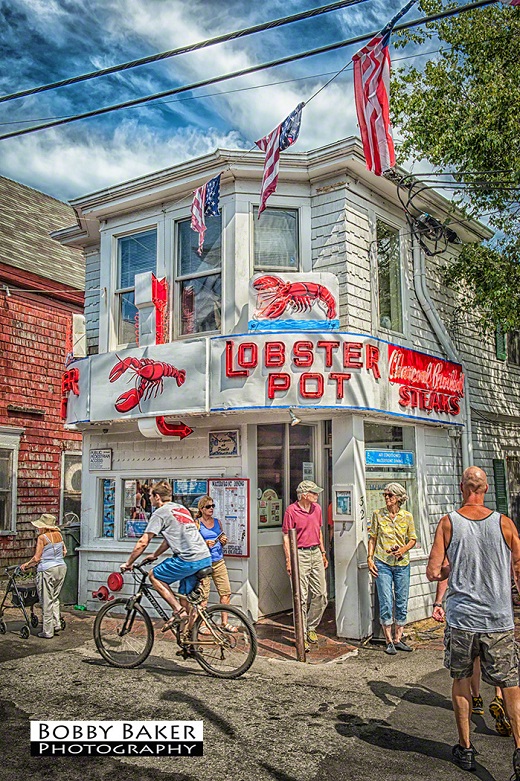
Baker-Lobsterpot           Chatham, Mass., scene by BOBBY BAKER


Read More
art Robert Whitcomb art Robert Whitcomb

Wet oblivion

water From "Waterways'' show at Heather Gaudio Fine Art, New Canaan, Conn., June 5-Sept 6.

Read More
art Robert Whitcomb art Robert Whitcomb

Prelude to pollution

Thornton 'Prelude,'' by PAT COOMEY THORNTON, AT Dedee Shattuck Gallery, Westport, Mass.

In New York City. You can feel/smell the edge of summer crud pushing at  the freshness of spring. More homeless on the street. They're usually old; everyone else seems about 25. Is the new mayor tough enough to keep this city under control?


Read More
art Robert Whitcomb art Robert Whitcomb

Summer horror

  dunbar

"Are We There Yet?'' , by Evelyn Dunbar, at the Alden Studio Gallery, at the Art Complex Museum, Duxbury, Mass.

Read More
oped Robert Whitcomb oped Robert Whitcomb

College pranks, anxiety and tricks of time

  By ROBERT WHITCOMB


(Reposting this, with minor changes, to mark commencement season.)


A few months ago, I was chatting with a Dartmouth College classmate about stuff that happened when we were students in 1966-70. I mentioned someone we knew in common and recalled that he was in a certain fraternity. The guy I was talking with, Denis O'Neil, a screenwriter who recently published a part-memoir, part-novel of that period titled Whiplash: How the Vietnam War Rolled a Hand Grenade into the Animal House, politely corrected me; in fact, this person was in another fraternity.

Time has fragmented and mingled stories in my memory and those of others from that era, now almost half a century ago. One could argue that it was a tumultuous era, and thus it's easy to get things scrambled, but most times are tumultuous and transitional. Mr. O'Neil makes much of the stress caused by the fear of being drafted and sent to Southeast Asia, but as bad as that was, it was much worse for young men in World War II. Whatever. We're all the centers of our own universes, and we create narratives to explain ourselves to ourselves and others and to place ourselves in history.

Certainly, the huge size of the Baby Boomer generation, and technological and social changes of its young times, were dramatic, though I would argue that except for improvements in the rights of racial minorities and women, the transformations caused by the Internet (which increasingly looks as if it has made things worse for most people) have been much bigger than "Sixties'' changes.


Still, it's true that in that period one had the distinct sense of living in a discrete and vivid era, which actually began about 1966 and ended about '73. People who lived in the "Roaring Twenties'' -- 1924 to the Great Crash of October 1929 -- told me in "The Sixties'' that they had had a similar sense back in the Coolidge administration.

Youth is intense, and so the memories the now-autumnal people of "The Sixties'' are intense, if sometimes erroneous. From Mr. O'Neil's book, which centers on pranks, fun,  romance (not always fun) and anxiety, you might think that 80 percent of a male undergraduate's time was spent drunk, seeking young women to have sex with and trying to get out of the draft. In fact, even for non-nerds who disliked what we then called "booking'' (has the World Wide Web come up with its own equivalent phrase?)  most of the time was spent going to class, studying and sleeping, not "raging'' (the word for partying).

After all, a lot of students wanted to get into good graduate schools and then fancy jobs. A lot did, and went on to become perhaps the greediest generation in U.S. history. Mr. O'Neil was wise to have constructed his book at least in part as a novel, letting his imagination and telescoping of events provide a better story for the movies, a business he knows very well. If they do make a film of his story, I'd be interested to see how much of it gives a sense of the more humdrum aspects of college life for middle-to-upper-class late adolescents back then.

L.P. Hartley's line "The past is a foreign country: they do things differently there'' is much quoted but people don't do things as differently as they might like to think 50 years later.


Read More
oped Robert Whitcomb oped Robert Whitcomb

'The Rule of Nobody' in American life

Citizens who have had it with America's  relentless litigation and paralyzing fear of it, and its turgid and contradictory regulations,  should read Philip K. Howard's The Rule of Nobody: Saving America From Dead Laws and Broken Government, which I (Whitcomb) review in the  latest Weekly Standard.  


Read More
art Robert Whitcomb art Robert Whitcomb

Maine food can't be main course for most

  farm

The Portland Museum of Art and the Maine Organic Farmers and Gardeners Association are promoting such activities as a Sunday, May 18, program, from 2 p.m. to 5 p.m. called "Healthy Soil, Healthy Foods'' to pump up agriculture in the Pine Tree State. All well and good, just as long as Mainers do not think that they can survive on Maine food alone.  Midwest, Southern and California agriculture will rule for many years to come.


Read More
Commentary Robert Whitcomb Commentary Robert Whitcomb

Making Google clean up your nasty past

  The overseer of this site is an admirer of White House Chronicle, a  weekly TV show that appears on many PBS and other stations around America weekly.  (Southeastern New Englanders may see it  at 11:3o a.m. Sunday on Channel 8, WSBE.)

One of the shows is about a European ruling against Google and the right to delete nasty stuff about yourself from the Internet. The other is  about what went wrong in Africa when the European colonial powers left and what is going better now, whatever outrage you may be hearing in the news.

And there's some rapid-fire art done before your eyes on one of the shows.


Read More
Commentary Robert Whitcomb Commentary Robert Whitcomb

Vana's rock

Masonstone  

Photo by STEVE MASON, to be shown in the Sept. 20-21 Arts Marketplace Pawtucket.  Is cold rock  the  central symbol of New England?

Read More
art Robert Whitcomb art Robert Whitcomb

Amusement park bad dream

  OCallogan

"Swing Low'', by SHARON O'CALLOGAN SHERO, at Brickbottom Gallery,  Somerville, Mass.

Read More
oped Robert Whitcomb oped Robert Whitcomb

Summer folks vs. a would-be oyster farmer

Poor Richard Cook, the Mashpee, Mass., fisherman who wants to put in a little (two-acre) oyster farm a quarter mile off the summer homes of rich  people in that Cape Cod town. He would seem to have gained the permits, etc., needed for the project, but..... The rich folks (who include the Krafts, who own the New England Patriots) are using every legal trick in the book and their influence in the Massachusetts legislature to  stop what would be a very quiet, low key and environmentally friendly project that speaks to the the nifty idea of expanding one of New England most lucrative (and relatively few) cash crops -- shellfish. The persistent Mr. Cook has been trying to do the oyster farm since 2011 but failed to adequately consider the ability of a few well-heeled people to use America's stuck-in-molasses civil law and legislative Christmas-treeing to stop anything they don't like by making the lawyers' fees too expensive for most people.

In fact, such oyster farms used to be all up and and down the sandy sections of southern New England's coast. They were considered charming,   a daily character-building  example of hard work and a healthy connection to Mother Nature.   They provided inspiration for many painters. Among other benefits,  such shellfish farms help filter and clean the water. Popponesset Bay would be better having the oyster farm.

The summer gentry seek  to create a bogus "marine sanctuary'' via a bill on Beacon Hill to cover the  area where Mr. Cook wants to set up his oyster farm. (I suspect that these summer folks love to eat oysters -- from somewhere!) Sadly for  Mr. Cook,  he doesn't have the cash for campaign contributions that might get the attention of  the most important solons.

Rich summer folks  increasingly throw their weight around, and not just in their  summer colonies,  and many seem willing to stop anything in their sight that might remind them that other people have to make money,  if  not from "investments,'' even if it's in as traditional and healthy sector as shellfish aquaculture. (The battles against coastal wind turbines within distant sight of mansions is a more famous war.)

I have nothing against rick folks -- some of my favorite relatives and friends are in that clan! But I don't like grossly unequal application of influence.

Mr. Cook has already moved the proposed oyster  farm a bit further away from the rich folks on, who often act as though they own everything from from their front porches to the oceanside horizon. But nothing is enough for people who think that they can buy anything.

Still, I suppose that it should be noted that town officials themselves seem to favor the farm, despite the big property taxes paid by the Krafts.


Read More
art, Commentary, Massachusetts, Photography, Rhode Island Robert Whitcomb art, Commentary, Massachusetts, Photography, Rhode Island Robert Whitcomb

Life and death in N.E.

20140513-205424.jpg

20140513-205330.jpg 20140513-205341.jpg

20140513-205356.jpg

20140513-205406.jpg

Read More
art Robert Whitcomb art Robert Whitcomb

Soothing to see if not smell

Haywood "Shimmer'' (pastel), by LIZ HAYWOOD-SULLIVAN, at the Art Complex Museum, in Duxbury, Mass.

New England's salt marshes are soothing to look at, if not necessarily to smell, especially in the summer.  In any cases they clean coastal waters and act as vast protein factories because of the fish and shellfish they nurture.

Read More