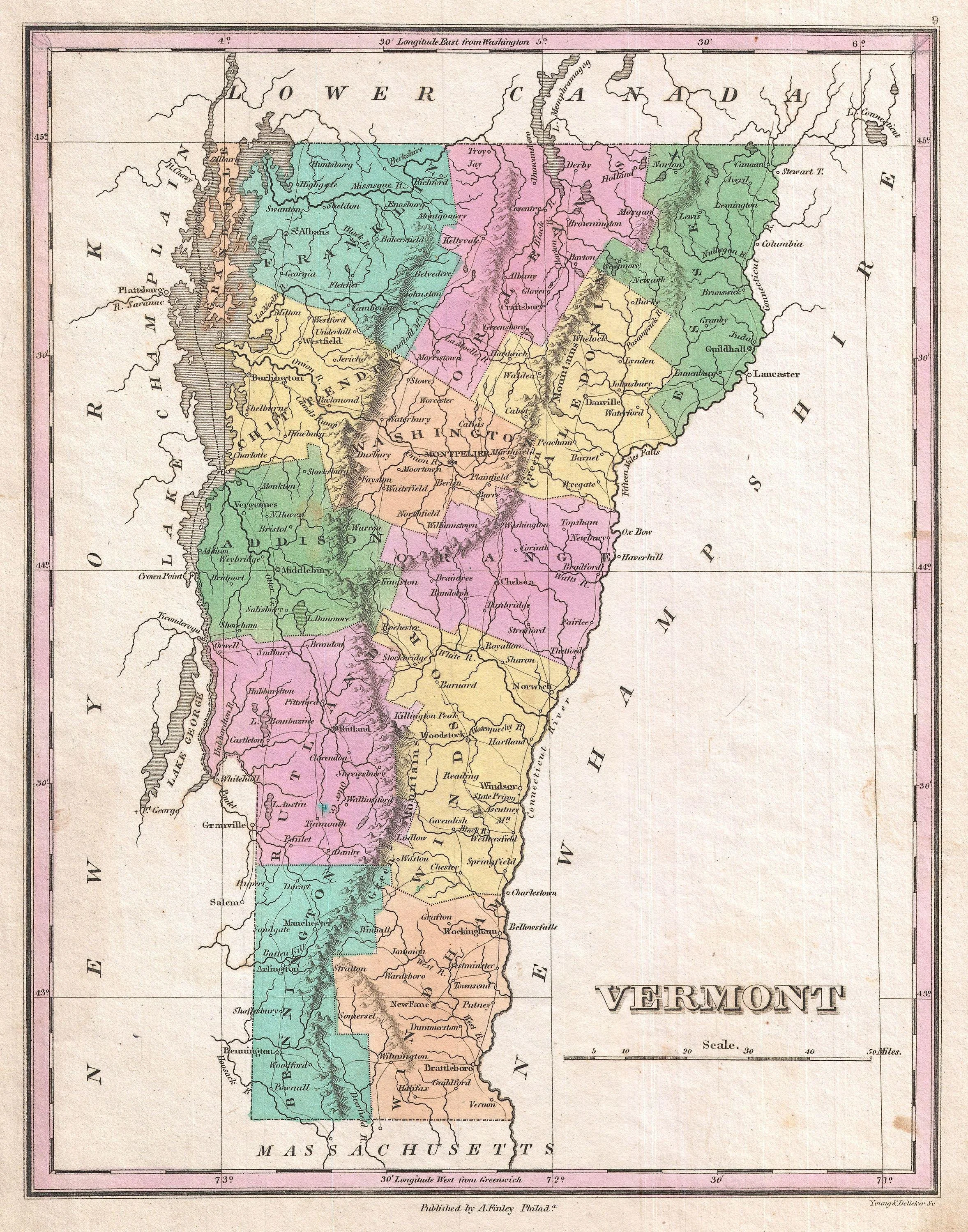
A_map_of_New_England,_being_the_first_that_ever_was_here_cut_..._places_(2675732378).jpg

Vox clamantis in deserto

Commentary Robert Whitcomb Commentary Robert Whitcomb

Charles Pinning: In '63, encountering a music legend to be

  Deep in the summer of 1963, my world consisted of two things: baseball and cars. I lived in Newport. When I was 11 years old and wasn’t playing for my Little League team, I’d wend my way up to Vernon Playground, often stopping at my friend Buddy’s house to snag him. After several hours playing pick-up ball under the blazing sun, we’d backtrack down Bliss Road and head into Koozy’s (Kuznit’s), our neighborhood corner store, for sodas and packs of baseball cards with bubble gum. If the Newport Folk or Jazz Festival was on, we’d head up to Broadway to watch the cars rolling into town. Between the Newport Hospital Nursing School and Rhode Island Avenue, there was a stone wall that rose up six feet above the sidewalk, shaded by two enormous beech trees. Buddy and I climbed the steps to the front lawn of the house and planted ourselves on the wall, our legs dangling over so we could get a good view of the cars coming down Broadway into downtown Newport. “Porsche,” intoned Buddy, making the first identification. The idea was to see how early you could tell what kind of car it was coming. “Jag, XK 120,” I jumped in. “Sting Ray ... Sunbeam Alpine.” “Healey 3000 ... Citroën.” Because of the music festivals in Newport, you got a sudden influx of foreign cars, filled with kool kats, hep cats, berets, long hair, depending on whether it was the Jazz or Folk Festival. We first spied the big-finned Cadillac as it passed DeCotis’s Barbershop, steam billowing out from under the hood, and it pulled over right below us. It had New York plates and the driver, a solid, middle-age man with glasses, stepped out and popped the hood. A skinny, college-age guy with curly hair that was almost fluffed up into a pompadour got out of the backseat. He looked up at us and then leaned against the wall, watching the steam rise out of the engine compartment. The man in front of the hood called to us: “You boys know where there’s a service station?” “Yep. You just passed a Mobil station up there,” I said pointing. “Right before that barbershop.” The man told the skinny guy that he was going up there. The skinny guy said, “OK. I’ll wait here.” Then a woman, about the skinny guy’s age, with long dark hair, got out of the back of the car. She looked up at us and said, “Hi.” She had pretty eyes and a nice smile. The skinny guy looked up at Buddy and said, “Kid, can I have a sip of your soda. I’m dying a thirst.” Buddy hesitated then said OK, and handed down the bottle of RC. The guy took a couple of  good slugs and handed it back. “That was good,” he said. “Thanks.” The woman looked at me with her big brown eyes, so I handed her my bottle and she took a swig. The skinny guy took out a pack of cigarettes and asked us if we wanted one. We glanced at each other and said, sure. The skinny guy shook the pack and out popped  a couple of Lucky Strikes. Buddy took a drag and started coughing. I held my smoke in my cheeks. The skinny guy went to the car and pulled a guitar case out of the backseat. He and the woman came up and sat down next to us on the wall. “You guys like folk music?” he asked. “It’s OK” I said. “But I prefer rock ’n’ roll.” “No kidding? Electric guitar?” he asked, and looked hard at me with his blue eyes as if he was actually thinking about what I’d said. Then he began playing a song. His guitar playing was good, but his voice was just terrible! Buddy and I looked at each other as he screeched, “The answer my friend, is blowin’ in the wind, the answer is blowin’ in the wind .... ” But when the woman chimed in, she had a voice like an angel, high and pure. Then he played “This Land is Your Land,” and we had fun singing that together. When the older guy got back with a jug of water for the radiator, the skinny guy put his guitar away and thanked us for sharing our sodas. So did the woman and she got back in the car. Before the skinny guy got in, he turned to us. “Hey, what are your names?” he asked. I told him, “I’m Chuck and that’s Buddy.” “Well, OK, Chuck and Buddy. I’m Bob, and I guess that’s about it. Good luck.” With a blast of the Caddy’s horn they pulled away and Buddy and I went back to our car spotting, making jokes about what a horrible singer Bob was. Of course, our estimation of him was destined to change over the next few years. Charles Pinning, an occasional contributor, is the author of the Rhode Island-based novel “Irreplaceable.” While he is a fiction writer, he insists that the above story is true.

Read More
Commentary Robert Whitcomb Commentary Robert Whitcomb

James P. Freeman: What is a 'living wage'?

Like the mysterious appearance of black swans and blue moons, it was bound to happen sooner or later. The Cape Cod Times recently endorsed a position held by conservative Massachusetts state rep. Randy Hunt, who agreed to an increase in the state minimum wage that became law last month. Supporters of a mandated increase in wages (which will rise to $11 an hour in the commonwealth by 2017) might reconsider their positions given today’s fragile economy and future projections of the deleterious effects of such action locally and nationally.

Hunt (R.-Sandwich) shall be forgiven for choosing, in his words, “the lesser of two evils:” one, a pesky ballot initiative—always a wildcard for passage--in this November’s elections, that called for a swift increase of $10.50 an hour and automatic increases indexed to inflation (think of the recent gasoline tax, pegged similarly in perpetuity); or two, a higher per-hour figure with a definitive cap not tied to a gyrating Consumer Price Index, to be implemented in stages. He chose the latter.

His compromise may make sense given the coercive supreme Democrat majorities in the legislature that would have thwarted more reasonable Republican proposals but it is still bad public policy. It also does little to counter  assertions that Republicans are insensitive about the working poor. More so, it is just as bad as President Obama’s $10.10 federal minimum-wage proposal.

In 1938, at the end of progressivism’s first wave and during Franklin D. Roosevelt’s second term, Congress enacted a federal minimum wage. Every president since, except Ford, Reagan and Obama, has signed into law increases, the most recent being George W. Bush in 2007; the last increase set in 2009. Last autumn, The Huffington Post reported that “progressive economists” believe that if today’s wage kept with the rate of inflation it would now be above $10 an hour.

Today’s debate centers on what Roosevelt indeed described as a “living wage.” Arguments abound on the role of government creating arbitrary and artificial adjustments. What should or should not be a floor? Given today’s prettifying pulse of progressivism, why not a ceiling? In the interests of fairness and compassion, why let market conditions  dictate such figures?

So public-policy experts now speak of a living wage that  would remove workers from poverty. Therefore, the $10.10 figure supposedly will not only lift the working poor out of poverty, but will presumably allow for continued receipt and reliance on benefits so generously distributed in today’s welfare state.

There is a fundamental flaw in this line of reasoning.

To be elevated to a lower-middle-class income bracket, a $10.10 minimum wage presupposes an hourly worker working 40 hours a week for 52 weeks a year. According to federal statistics, however, full-time hourly laborers work an average of 34.5 hours a week; 70 percent of all minimum-wage employees work fewer than 35 hours a week. Even government statisticians must concede that working every single week is wildly ambitious for purposes of actuarial calculations.

Despite having over $2 trillion in cash reserves, corporate America is unwilling to pay wages for what was once universally defined as a 40-hour week, let alone overtime. Government’s role should be to create conditions—incentives--favorable for increasing salaries. But the government continues to create uncertainty with its tax policy, regulatory overreach and, more recently, disrupting coverage and costs for healthcare (watch Massachusetts mandate paid sick-leave for small and medium-sized businesses).

What’s next, establishing a law forcing businesses to comply with a 40-hour work week?

In 2007, David Neumark and William Wascher cleared the din above the noise with a study published for National Bureau of Economic Research. Their research determined: “A sizable majority of the studies surveyed… give a relatively consistent indication of negative employment effects of minimum wages.”

The nonpartisan Congressional Budget Office estimates that raising the federal minimum wage from its current $7.25 per hour rate to the president’s preferred wage will remove only 900,000 people (or 2 percent) out of poverty from the 45 million believed in poverty. Middle-income jobs from the last recession were replaced largely with low-wage jobs.

Of greater concern should be this potentially unintended consequence of government meddling: increased income of the poorest of workers will likely make them ineligible for the full amount of benefits, such as food and energy assistance. Not to mention higher payroll taxes. Such a twist may in fact negate extra hourly pay to the point of making the very increase negligibly beneficial, all to the detriment of domestic and state economies.

A new paradox exists today: jobless rates are generally declining -- as have labor- participation rates--while benefits to Americans are increasing. James P.  Freeman, formerly in the financial-services industry, is a Cape Cod-based writer.


Read More
Commentary Robert Whitcomb Commentary Robert Whitcomb

Robert Whitcomb: Trying to corner time

As our electronic “communication” devices spin us around, we sometimes feel that we’re losing what little grasp we had of our individual pasts as they recede ever more rapidly behind us. The attention-deficit disorder intensified by mobile devices, wishful thinking about multitasking and our fear of what self-reflection can dredge up have led to a growing feeling that we’re going through life in a daze, with less and less understanding of how we came to be the people we are. (And psychoanalysis is far too expensive.)

Life is brief enough without so much of it disappearing into a false-urgency fog of text messages, and we too often confuse mere activity with achievement and progress.

In the early 20th century, Marcel Proust, in a fraught but much slower era than ours, strove to recapture, through literature, emotions, sensory perceptions and thoughts as they were experienced in the past. It was a way of justifying his life and fending off a sense of waste. It wasn’t exactly a search for immortality, but a first cousin.

And consider the new movie “Boyhood,” by director Richard Linklater, filmed in “real time” from when a boy named Mason (played by Ellar Coltrane) is 6 until he’s 18. The movie is about how time changes and doesn’t change us.

Then there’s Norwegian writer Karl Ove Knausgaard’s long autobiographical novel “My Struggle” (“Min Kamp” in Norwegian). As Simon Prosser wrote in The Guardian, Mr. Knausgaard’s book collapses “the wall between author and writer as you live his life alongside him” since his youth. He is trying to corral the horses of memory before they run off and disappear. After all, we are our memories. (That “My Struggle” is also the English name of Hitler’s hideous book, “Mein Kampf,” has aroused anger; Mr. Knausgaard seems to have merely sought to grab readers’ attention with the title.)

Another notable attempt to recapture time is the work of W.G. Sebald, the late German writer, with its eerily oblique references to World War II and the Holocaust.

Are many people pushing back against the accelerating speed and hyper-complication of modern life as they feel their histories evaporating? Will they try to live more fully in the present moment so that they have richer pasts to remember? Text me your answer ... .

A new book called “Essentialism: The Disciplined Pursuit of Less,” by Greg McKeown, might help us push back.

***

“You have been given the choice between war and dishonor. You have chosen dishonor, and you will have war.”

So said Winston Churchill, in 1938, referring to British and French attempts to appease Hitler at the Munich Conference.

The West may finally be seriously confronting revanchist Russia, run by a brutal, cynical and kleptocratic dictator. Vladimir Putin, by seizing Crimea — part of Ukraine, a large and sovereign European nation! — and continuing to attack this neighbor, has even more clearly shown himself to be a duplicitous tyrant. Ignore his regime’s Joseph Goebbels-style propaganda.

Myopic and rather decadent Western Europe, tied far too tightly to Russia’s largest industry, fossil fuel, would suffer a bit (though far less than the Kremlin) by taking strong measures against Russian aggression. But it would suffer much more if it continued its appeasement, based to no small degree on wishful thinking.

Slash trade with Russia and give all practical military and intelligence aid to Ukraine (no, not troops on the ground) so it can properly defend itself. Or wait until Putin starts terrorizing Poland and the Baltic Republics.

I’ll bet Ukrainians wish they had joined NATO.

***

The suburban office parks that started to go up in the 1950s in the golden age of the automobile and cheap gasoline, are, like suburban malls and big-box stores, generally boring and sterile places, with forgettable knock-off Modernist or Post-Modernist architecture and vast parking lots. Most have not aged well.

But as part of a growing desire, especially among young adults and Baby Boomers, to live in places with a greater sense of community and more convenience than suburban tracts, developers are turning some old office parks into mixed-used complexes with housing, retail, office and even (in few places) light manufacturing. In other words, turning them into new villages. I thought of this when driving around the Boston area lately and reading Jay Fitzgerald’s July 27 Boston Globe story, “Developers take steps to reinvent suburban office parks.”

Some of the office parks’ buildings can be fairly easily retrofitted for new uses, and some of the parking lots replaced by buildings and green space. Much of the success of this reinvention will depend on getting more public transportation, more space for bikes — and golf carts.

Robert Whitcomb oversees New England Diary.

Read More
Commentary Robert Whitcomb Commentary Robert Whitcomb

Don Pesci: Don't mess with New Britain

VERNON,  Conn.
You’ll walk the floor, the way I do
You’re cheating heart will tell on you --
-- Ray Charles
If it had been Christmas, Josh Solomon, the owner of the New Britain Rock Cats – soon to be renamed the Hartford Rock Cats – might have found a lump of coal in his stocking. But it’s August, and the fiercely patriotic mayor of New Britain, Erin Stewart, contented herself with a “Dear John” letter requesting a payment of back taxes owed and announcing the end of a once great romance.
 The back taxes in the amount of $164,569.26 actually are owed to Berlin, Conn., but the tax bill was paid by New Britain to avoid an interest accrual of $4,937.08.” The Rock Cats stadium straddles the New Britain-Berlin town line.
Ms. Stewart’s letter is a study in smoldering rage. She begins in a business-like manner by advising: “The lease agreement between New Britain and the Rock Cats is clear that they are responsible for these taxes. ... But, if the Solomons continue their refusal to pay their taxes, Berlin can hold New Britain responsible for this payment since we are the property owners. I am not about to let them rack up late fees on the backs of our taxpayers.”
Then comes the hammer: “I am deeply disturbed by the pattern of utter disrespect that this ownership group has shown to their home city over the past few months. In June, they went public with their dalliance with Hartford, which hasn’t turned out to be quite the “done deal” that some made it out to be. Since then, they have continued their radio silence with New Britain. Now they are stiffing the taxpayers of Berlin and New Britain on their tax bill.”
The breakup between New Britain and the Rock Cats, a Double-A minor league baseball club, has not been amicable. Worse, it was first a hidden then a very public divorce. And New Britain, it is clear, does not like being jilted by money grubbing baseball gigolos.
Consider the history of the Rock Cats' many “dalliances.” The franchise began in Pittsfield, Mass.,  (1965-1969)  and then moved to Pawtucket, R.I.,  where it dallied for three years. The franchise then moved to Bristol, Conn., and played at Muzzy Field for 10 seasons (1973-1982).
In 1983, owner Joe Buzas moved the team, the New Britain Red Sox, to New Britain. When Beehive Field in New Britain began to show signs of age, the owner of the franchise toyed with the idea of moving the team to Springfield, Mass., but his heart remained with New Britain; whereupon the Red Sox re-affiliated with the Trenton Thunder, in New Jersey, and owner Buzas signed a new development agreement with the Minnesota Twins. New Britain Stadium opened in 1996, and the team name changed in 1997 to the current New Britain Rock Cats.
There are, it will be noticed, lots of musical chairs on the good ship “Rock Cats” – lots of petting and pawing and romancing and cheating and broken hearts and wailing by rudely rejected politicians. Ms. Stewart is by no means the first politician to whom the owners of the Rock Cats have pledged their troth. Nor, judging from the flighty franchise record, will she be the last.
When the Rock Cats, following months of closed-door negotiations, officially announced that the team was straying from New Britain to Hartford, the good people of Hartford vented their disapproval at a town meeting.
Why was Hartford so  eager  to divert to this new venture tax money that might have been used to repair roads, improve schools, stock libraries with books, purchase the service of more police to monitor gang activity in the city and provide the amenities that any livable city should afford their citizens? A lonely rebel at the town meeting – not a politician, of course – wondered aloud whether the Hartford-Rock Cats deal ever could turn a profit.  It was a raucous meeting.
One casualty of the political crunch, lately endorsed in a Democratic primary run for the State Senate by The Hartford Courant, was Hartford City Council President Shawn Wooden, who appeared early on to approve the Rock Cats move to Hartford. Much later, after the town meeting dust-up, Mr. Wooden qualified his endorsement of the move: He still supports the relocation effort, but he’d like someone other than Hartford to assume the bulk of the resettlement costs.
At the present time, it looks like Ms. Stewart is one of the few politicians blighted by the Rock Cats’ cheating heart who still has her head above water. Most of the rest of them – with the exception of  Gov.  Dan Malloy, who wisely decided to step away from all the smooching and petting – are blowing bubbles.

 Don Pesci (donpesci@att.net)  is a writer who lives in Vernon.

Read More
Commentary Robert Whitcomb Commentary Robert Whitcomb

Llewellyn King: Motorcades display African values deficit

  Next week, Washington will seize up. Roads will be closed and traffic will be snarled in maybe the worst tie-ups the city has ever seen, except for those on Sept. 11, 2001.

This will not be because of a national security drill, but because 50 heads of state from Africa will be in town to meet with President Obama – and apparently every one of these leaders will have a motorcade. A motorcade?

The leaders of some of the poorest countries on Earth -- where starvation is common – will be riding around Washington in motorcades. This is not just appalling, it is symptomatic of the troubles of Africa.

The peoples of Africa are not monolithic: they are divided by culture, language and religion. But they are united by the throughgoing ineptitude of their leaders; those leaders' love of the trappings of power, including motorcades and grand homes; and a far-reaching sense that the wealth of the nationals they lead is  primarily their own wealth.

Whoever in the Obama administration thought that the visitors should have motorcades not only did a disservice to the workers and residents of Washington, but also to the kind of expectation he needs to instill in African leadership: service, rectitude and real care for their people.

The kleptocracy that has characterized so much post-colonial government in Africa is fed by delusional grandeur, insane egoism and a profound indifference to the people who suffer for want of food, shelter, sanitation, medicine, education and employment. The people of Africa cry out for real leadership in their need.

There is a kind of thinness that Africans suffer that one does not see in Europe or America. I am always struck by this cadaverous appearance of people in Africa; often they have had enough food to stay alive, but just.

Living as we do in a country where obesity is widespread, I shudder at what I see in Africa, which is diverse in so many ways but bound by the same awful bonds: bonds of hunger, bonds of joblessness. They are there to be seen in Senegal or Malawi, Kenya or Ghana, and even in rich South Africa.

Outside of bad government and relentless unemployment -- 80 percent, and more in some countries -- the other scourge is violence and the promiscuous spread of small arms.

To me this is the most perplexing because when I grew up roaming around what are now Malawi, Zambia and Zimbabwe, violence was virtually unknown. The prime minister of those countries, which were linked for a decade by the British administration into a federation, Roy Wilensky, drove his own car every day and gave lifts to strangers thumbing a ride. I used to ride with him to school, and later to the newspaper office where I worked.

I can tell you that in giving rides, this prime-ministerial chauffeur was color-blind and security blind. Motorcades did not exist and the prime minister lived in a suburban house without so much as a policeman on duty, so much as I am aware. He lived up the street from us.

My youth colored my view of Africa. I see it not as the Dark Continent, but rather as the Light Continent -- a place of beauty and talented people.

Obama should tell his African colleagues to forget the trappings of leadership and try the real thing. He should  convince them that Africa’s wealth is in its people, but they will not be free if they grow up in a culture of corruption that is so inhibiting, so draining and so self-defeating.

The symbol of bad government in Africa is the Mercedes-Benz automobile. Dictators and plain incompetents love them. There are jokes in local languages about the “Mercedians,” meaning politicians.

So endemic is the political class in Africa's commitment to this luxury automobile, that Mercedes-Benz is building a plant in South Africa to manufacture the most extravagant of these vehicles, the 12-cylinder S600.

Sadly there is a market in the political hierarchy of Africa as, even sadder, there always is for military equipment. “Nkosi Sikelel’ iAfrica” was the slogan of the African National Congress. It means “God Bless Africa.” Indeed.

Llewellyn King (lking@kingpublishing.com ) is executive producer and host of “White House Chronicle” on PBS and a long-time journalist, publisher and international businessman. He is a native of Zimbabwe.

Read More
Commentary Robert Whitcomb Commentary Robert Whitcomb

Charles Chieppo: Convention center follies

  BOSTON

Politically, it's almost irresistible. Revenue from hotel and other taxes, paid largely by people from other places, will be used to subsidize convention centers that lure those visitors to town to spend in hotels, stores and restaurants. But a new book demonstrates a far less appealing reality. In Convention Center Follies, Heywood Sanders, a professor at the University of Texas at San Antonio, tells the tale of projects that continue to be built and expanded at a record pace even though they almost always fail to deliver the promised benefits.

There was a little over 36 million square feet of exhibition space in the United States in 1989. By 2011, that number had nearly doubled to 70.5 million. The problem is that in the midst of a decades-long convention-space explosion, demand has remained flat at best.

Sanders describes the usual scenario in which local convention or visitor-industry officials complain that a convention center is jammed to capacity or, worse, that lucrative events want to come but are too big for an existing facility. Consultants are retained, and they invariably endorse either building a new convention facility or expanding an existing one.

The idea behind convention centers is to bolster the local economy by attracting visitors who would otherwise spend their money elsewhere. The best measure of success is the number of hotel room-nights they generate.

Sanders' s numbers tell the real story. Washington, D.C.'s new convention center was supposed to deliver nearly 730,000 room-nights by 2010; the actual number for that year was less than 275,000. Austin, Texas' expanded center was supposed to bring 314,000 room-nights by 2005 but produced just 149,000. The 2003 expansion of Portland, Ore.'s convention center was expected to yield between 280,000 and 290,000 room-nights, but the actual number was 127,000 -- far less than before the center's expansion. Atlanta, Chicago, Dallas, Milwaukee, Minneapolis, Pittsburgh and Seattle are among other cities that have had similar experiences. The challenge is to find an exception to the rule.

That's not all. When projects fail and debt service mounts, consultants routinely conclude that the center needs a "headquarters hotel," which at the very least requires a large public subsidy. Sometimes the lack of developer interest results in the hotel being publicly owned. It's a classic example of finding yourself in a hole and continuing to dig.

Many factors result in convention center feasibility studies dramatically overestimating economic impact, but one that stands out is the fact that about half of convention attendees are generally local-area residents who would still spend their money in the region if there weren't a convention to go to. Consultants generally assume that each convention attendee will stay in a hotel for three nights or more. But because of the preponderance of locals, the reality is generally about one room-night for each attendee.

The consultants don't compare their past projections against actual performance or use that performance to inform future estimates. Sanders quotes one such consultant, Charles H. Johnson, from a 2005 legal deposition: "Once the deal is done, if we're not engaged, we … give them our report, our final invoice, and wish them good luck."

And the consultants routinely use expansions that are underway in other cities (often undertaken at those same consultants' urging) as evidence of why subsequent clients need to expand to remain competitive. Another consultant, Jeff Sachs, was blunt in his comments to Forbes, saying, "You lose clients if you shoot down projects."

Sanders makes a strong case for what he believes to be the real goals behind convention-center development. Sometimes it's to increase area property values. Boston is an example of a new convention center being used to help jump-start a developing neighborhood. In other cases, the facility is seen as an anchor to insure against downtown erosion or, in such cities as  St. Louis, part of an effort to reverse neighborhood erosion.

All are worthy goals. But taxpayers deserve an honest debate about whether building or expanding a convention center is an effective way to achieve them. And the debate should be informed by realistic economic-impact projections. What we don't need is a continuation of the charade in which elected officials, local business leaders and convention consultants tout benefits that at least some of them know will never materialize.

Charles Chieppo (Charlie_Chieppo@hks.harvard.edu)  is a research fellow at the Ash Center of Harvard's Kennedy School.

Comment by Robert Whitcomb:  As for building stadiums for professional sports teams:  They're  almost always welfare for the rich and do not bring the promised economic-development benefits.


Read More
Commentary Robert Whitcomb Commentary Robert Whitcomb

Carolyn Morwick: In Conn., 'Step Up', passing/repealing Keno

  This is one of a series on this year's New England legislative sessions as prepared by Carolyn Morwick for the New England Board of Higher Education (nebhe.org).

In the second session of the biennium, Connecticut legislators approved a $19 billion budget for  fiscal 2015 that increases spending by 2.5%.

Toward the end of the session, revised revenue forecasts forced lawmakers to scale back in a number of areas. Gov. Dannel Malloy’s promise to provide Connecticut taxpayers with a $55 rebate was put on hold as projections for declining revenues came into focus. Also, plans were put off for a year to give retired teachers an income-tax break as were cuts to the sales tax on clothing and nonprescription medications.

After passing Keno in the previous session,  members of the General Assembly repealed it in the second session. Nonpartisan fiscal analysts forecast a shortfall of $1.4 billion for  fiscal 2015. Questions remain about how to address a looming budget shortfall without increasing taxes. Administration officials maintain that outstanding tax receipts will materialize to reduce the shortfall, while Republican lawmakers question the wisdom of relying on those who have yet to pay their taxes


The budget includes:

$70 million in grants to Connecticut municipalities. $50 million in additional funding for Educational Cost Sharing. $21 million for PILOT (payments in lieu of taxes) to cities, towns with private colleges, hospitals and state-owned land. $42 million in operational funding for Connecticut State Universities and Colleges. $10 million to improve remedial education. $83.5 million in bond funding as part of the Transform CSCU initiative. $9.4 million to enroll 3– and 4-year olds of low-income families in preschool. $13.5 million increase in funding for magnet schools. $12 million for past-due state and real estate conveyance tax revenues to cities and towns. $10 million in additional funding for certain outpatient mental-health services. $3 million to $4 million for mental-health services to children and adults on Medicaid. Session Highlights

Lawmakers raised the minimum wage: rising from $8.70 per hour to $9.15 in January 2015, then up $9.60 in 2016 and to $10.10 in 2017. Three other New England states have taken similar action. Massachusetts will raise the minimum wage to $11 by Jan. 1, 2017, the highest in the nation. Rhode Island increased the minimum wage to $9 beginning in January 2015. Over the next four years, the minimum wage in Vermont will increase to $10.50 in January 2018.

Building on the success of the Subsidized Training and Employment Program ('Step Up''), Connecticut lawmakers provided an additional $10 million to help small businesses hire more employees.

Lawmakers also created a “new apprentice” grant program under Step Up, which provides grants to small businesses and manufacturers to hire high school and college students.

In exchange for $400 million in tax relief, United Technologies Corp. (UTC) will invest $500 million at several of its locations, including: a new world headquarters and engineering facility in East Hartford; renovated, refurbished lab and office space in UTC’s Research Center in East Hartford; a new customer training center and engineering lab at the UTC Aerospace Systems facility in Windsor Locks; and upgrades to the engineering lab and other facilities at Sikorsky Aircraft in Stratford. Malloy suggested  that the deal will preserve an engineering knowledge base essential not only to UTC, but also to thousands of small subcontractors and suppliers.

Lawmakers enacted new consumer-protection initiatives that will make electric rates, customer accounts and billing more transparent. Suppliers will be prohibited from raising rates for the first three billing cycles of new supplier contracts entered into on or after July 1, 2014. The law requires electric suppliers to notify residential customers in advance of certain rate changes and prohibits them from charging early termination fees to residents who move within the state and do not change suppliers or residents who lack a contract with a supplier and receive month-to-month variable rates.

The legislature also prohibited hydraulic fracturing waste in Connecticut until the Connecticut Department of Energy and Environmental Protection adopts regulations to control it as a hazardous waste and imposes certain licensing and disclosure requirements.

Legislators restored the Earned Income Tax Credit to 27.5% for 2015, up from the 25% it had been lowered to in the 2013 session.

Higher Ed Legislation Enacted

An Act Making Adjustments to State Expenditures and Revenues for the Fiscal Year Ending June 30, 2015, (Sections 50-57)

In 2011, when Malloy and state legislators were confronted with an unprecedented deficit, funding for the Connecticut State Colleges and Universities was cut by 15%.

In  fiscal 2015, as part of Malloy’s Transform CSCU initiative, state lawmakers approved $42 million in new funding in the state budget, including: $24 million in new operating funds and tuition support; $1 million for Early College Program; $10.8 million for developmental education; and $6 million for Malloy's ''Go Back to Get Ahead,''  intended to encourage individuals who dropped out of a higher-education degree program to return and earn a degree. Eligible participants may receive up to three free three-credit courses required to complete an associate or bachelor’s degree program. To be eligible, the student must be a Connecticut resident, previously enrolled in an associate or bachelor’s degree program at any public or private college or university, left before completing the degree program, not attended any college or university for at least 18 months as a June 30, 2014, and enrolled in an associate or bachelor’s degree program by Sept. 30, 2016 at a Connecticut State University, Connecticut Community College or Charter Oak State College.

An Act Implementing Provisions of the State Budget for the Fiscal Year Ending June 30, 2015, (Section 68)

Requires the Connecticut Board of Regents (BoR) to report to the General Assembly and submit monthly reports on developmental education, Go Back to Get Ahead, early college/dual enrollment programs and Transform CSCU 2020. Allows the Department of Education, BOR and UConn to consult with the Connecticut Department of Banking to institute a program of financial literacy for students in high school and higher education institutions.

An Act Authorizing and Adjusting Bonds of the State for Capital Improvements, Transportation and Other Purposes, and Concerning Miscellaneous Programs, including the Smart Start Program, the Water Improvement System Program, School Security Grants, the Regenerative Medicine Research Fund, the Connecticut Manufacturing Innovation Fund and the BOR for Higher Education Infrastructure Act.

Changes the name of the Connecticut State University System (CSUS) 2020 program to the Connecticut State Colleges and Universities (CSCU) 2020 program to include Connecticut Community Colleges and Charter Oak State College. Adds $83.5 million in new funding and $20 million in reauthorization of community college bonds for the system. Requires the BOR to report to the General Assembly’s Finance and Higher Education Committees the details of allocating the funds in a timely fashion.

An Act Concerning the English Language Learner Educator Incentive Program

Redesigns a loan-reimbursement program for teachers that is administered by the Office of Higher Education (OHE) as an incentive grant and loan program for college and university students studying to be teachers of English language learners.

An Act Establishing Uniform State Academic Degree Standards

Requires the University of Connecticut Board of Trustees to follow certain statutory requirements concerning standards set by the OHE when approving academic programs. Also eliminates the BOR authority to impose penalties on public institutions for violating program approval and licensure and accreditation requirements.

An Act Implementing the Recommendations of the Legislative Program Review and Investigations Committee on the Reemployment of Older Workers as They Relate to the Labor Department.

Requires the BOR to explore expansion of the advanced manufacturing center model to create centers of excellence in other career areas. Requires institutions to implement the Plus 50 initiative (based on national American Association of Community Colleges project to assess innovative college programs that engage workers ages 50 or older). By Jan. 1, 2015, the BOR must establish consistent parameters for noncredit vocational courses and programs recognized by each institution. Makes information available about financial aid.

An Act Concerning Sexual Assault, Stalking and Intimate Partner Violence on Campus, as amended by Sec. 163 of HB 5597 PA 14-217)

Expands the scope of the law requiring public and independent higher education institutions to adopt and disclose one or more policies on sexual assault and intimate partner violence and offer sexual assault and intimate partner violence primary prevention and awareness programming and campaigns. Specifically, the act applies to stalking and all institutions' employees and requires for-profit institutions licensed to operate in Connecticut to comply with these requirements. It also requires all public, independent, and for-profit institutions to immediately provide concise written notification to each victim regarding his or her rights and options under the institution's policies after a reported incident, and allows all institutions to permit anonymous reporting.

Requires all higher-education institutions to report annually to the Higher Education Committee concerning their policies, prevention and awareness programming and campaigns, and the number of incidents and disciplinary cases involving sexual assault, stalking and intimate partner violence. It also requires institutions to include information about stalking and family violence in their annual uniform campus crime reports.

All higher-education institutions must establish a campus resource team to review their policies and recommend protocols for providing support and services to students and employees who report being victims. The act establishes: 1) membership and education requirements for the team; 2) education requirements for the institution's Title IX coordinator and special police force, campus police force or campus safety personnel; and 3) training requirements for members of the state or local police who respond to campus incidents.

Requires all higher-education institutions to enter into a memorandum of understanding (MOU) with at least one community-based sexual assault crisis service center and one community-based domestic violence agency. The MOU must establish a partnership with the service center and agency and ensure that victims can access free and confidential counseling and advocacy services, either on or off campus.

Exempts Charter Oak State College from several of this act's requirements.

An Act Conforming Higher-Education Purchasing Statutes with Department of Administrative Services Purchasing Statutes and Practice.

Allows the president of an institution to join with federal agencies, other states, Connecticut political subdivisions or private or nonprofit organizations in cooperative purchasing plans when it is in the state’s best interests to do so.

An Act Concerning Revisions to the Higher-Education Statutes and Military Occupational Licensing Data.

Amends a law requiring various governmental licensing authorities to certify, waive, grant or award licenses, registrations, examinations, training or credit to veterans or armed forces or National Guard members with military experience or qualifications similar to those otherwise required. It limits the circumstances under which licensing authorities must inquire about applicants' service member status and information authorities must annually report to the Department of Labor (DOL) and the Veterans' Affairs Committee.

Requires the BOR and the UConn Board of Trustees to submit separate reports containing information that differs from the other licensing authorities' and extends their first annual reporting deadline.

Changes reporting requirements for the Planning Commission for Higher Education, which by law must develop and ensure implementation of a strategic master plan for higher education in the state.

An Act Concerning the Findings of the Military Occupational Specialty Task Force as mended by House Bill 5028—An Act Concerning Revisions to the Higher Education Statutes and Military Occupational Licensing Data.

Section 11 requires higher education institutions to award college credit for military occupational specialty training to service members enrolled at the institution. The applicant must have experience in a military occupation recognized as substituting or meeting requirements of a course of study.

By July 1, 2016, the BOR must develop and adopt guidelines for awarding college credit for a student’s military training, coursework and education which must include course-equivalency recommendations adopted by the American Council on Education and other institutions deemed reputable by the BOR and the University of Connecticut Board.

An Act Concerning a Plan for Participation in a State Authorization Reciprocity Agreement Regarding Distance Learning Programs

Requires OHE to report to the Higher Education and Cultural Affairs Committee in January 2015 with a plan to enter into a multistate or regional reciprocity agreement that will allow for participation by the state and Connecticut institutions of higher education in a nationwide state authorization reciprocity agreement establishing uniform standards for distance-learning programs across states and eliminating the need for a participating state to assess the quality of a distance-learning program offered by an out-of-state institution of higher education through such the participating state’s traditional authorization licensing and accreditation process.

K-12 Legislation Enacted

An Act Establishing the Office of Early Childhood, Expanding Opportunities for Early Childhood Education and Concerning Dyslexia and Special Education

Creates the Office of Early Childhood (OEC) as the lead agency for the early care and education of young children. OEC will be responsible for administering early childhood programs previously administered by departments of Education, Social Services and Public Health. Also requires that all teacher-preparation programs that lead to teacher certification include instruction on detection and recognition of and evidence-based interventions for students with dyslexia.

An Act Establishing the Connecticut Smart Start Program

Creates the Connecticut Smart Start competitive grant program to be administered by the OEC with assistance from the Department of Education to reimburse boards of education with capital and operating grants to establish or expand a preschool program.

An Act Concerning a Plan for Career Readiness and Manufacturing Apprenticeship Preparation Programs at the Technical High Schools.

Requires the technical high school system to collaborate with the departments of Labor and Education and the BOR to develop a plan that would use technical high school manufacturing centers during off-hours for career readiness programs and DOL-approved apprenticeship training.

An Act Concerning the Recommendations of the Uniform Regional School Calendar Task Force, Licensure Exemptions for Certain After-School Programs and Expanding Opportunities Under the Subsidized Training and Employment Program.

Creates “new apprentice” grant program under the Step Up to provide grants for small businesses and manufacturers to hire high school and college students. A “new apprentice” is defined as a student in a public or private high school, preparatory school or higher education institution.

Click here for public higher education summary of the 2014 Connecticut Legislative Session and here for a private higher education summary of the session.

Carolyn Morwick handles government and community relations at the New England Board of Higher Education and is former director of the Caucus of New England State Legislatures.


 

Read More
Commentary Robert Whitcomb Commentary Robert Whitcomb

Floss daily and keep hoping

Siemering resize-1  


"Captain America Suit'' (found lottery tickets, dental floss. man's suit), by REBECCA SIERMERING,  in the traveling Fiberart International show, which will be at the American Textile History Museum, in Lowell, Mass., through Oct. 26.  The museum say she says that the work ''reflects our yearning for a quick path to 'the good life.'''

Making textiles and the clothes that are are made of them used to be a very big deal in New England, especially in such old mill towns as Lowell. Now little of that stuff is made in our six states, but we still appreciate the art associated with it. Lowell, with its beautiful mills, canals and other reminders of its glory as a textile town,  much preserved in the Lowell National Historical Park, is well worth a visit.  It's  a way of understanding the ingenuity and dynamism that marked the American Industrial Revolution. (Then there were the horrors of child labor....)


Read More
Commentary Robert Whitcomb Commentary Robert Whitcomb

'Blue States' blues?


An article in The American Spectator predictably touts Texas and other Red States and whomps the New England states for their economic slow growth and fiscal problems, and, by implication,  all other "Blue States''.


It is an entertaining article, but it conveniently fails to note that the  major indices of  public well being and prosperity are higher in New England than the Sunbelt.  After all the years of hype about the economic glories of the Sunbelt,  the richest states in per-capita income continue to be those old lefty states in the Northeast. Also, health, education, public infrastructure (though that's decaying most everywhere). family stability and so on are better in commie New England.

Also, the writer is a bit behind the times on lefty California's economic woes vs.  righty Texas. In fact California' s  (land of Silicon Valley) economy and fiscal condition have been improving.

Read More
Commentary Robert Whitcomb Commentary Robert Whitcomb

In the Red Sea

underwater  

"Waterscape Series #47'' (oil on linen), by BARBARA WAGNER, in the"Renascence '' show at Furchgott Sourdiffe Gallery, in Shelburne, Vt., through Aug. 5.

Read More
Commentary Robert Whitcomb Commentary Robert Whitcomb

Paul Steven Stone: The Mass. speaker saga

CAMBRIDGESo here’s the question:  Does the position of speaker of the Massachusetts House invite corruption or does it merely attract corrupt politicians?

Or put another way: would former speakers and convicted felons Charles Flaherty, Thomas Finneran and Salvatore DiMasi have put their careers and reputations on the line, risking prison and disbarment, had they not been inebriated on the hubris of Absolute Power that comes with the speaker’s job?

As  Lord Acton's saying goes: "Power corrupts and absolute power corrupts absolutely''!

And now, over the last few weeks, we have witnessed our current speaker, Robert DeLeo, appearing as a shadow figure, or unindicted co-conspirator, in the corruption trial of the cabal formerly in charge of that criminal enterprise known as the Massachusetts Probation Department.

In addition to helping his godson become the youngest acting chief probation officer in the commonwealth’s history, Speaker DeLeo was cited by prosecutors for allegedly using the promise of lucrative patronage jobs to help win the speakership in a tight race with Norwood Rep. John Rogers.

Not surprisingly, many of DeLeo’s colleagues and leadership team immediately stepped up to defend the speaker and denounce federal prosecutors. Also no surprise, not a single legislator who voted for DeLeo as speaker after receiving access to Probation Department jobs, saw those jobs as a quid pro quo for their vote. Without any question, they would have voted for DeLeo as speaker in any case. That they’d been given Probation jobs for their friends, relatives and supporters played no role whatsoever.

I believe them. But then again I also believe in Santa Claus and an unbiased U.S. Supreme Court.

Of course, if there’s a legislator dumb enough to admit that he or she sold his vote, according to Massachusetts custom they’d be impeached on the grounds of criminal stupidity rather than for any ethical lapse.

That legislators are so quick and vocal in defending DeLeo merely provides further evidence of the power and privilege accrued to the House speaker. Whether you have legislative goals or a leadership position (and salary) to protect, none of that will be possible without the blessing, support, or good opinion, of the speaker. Those shouting loudest in DeLeo’s support can expect to receive their just rewards in the old familiar ways of Massachusetts politics. Perhaps no longer with jobs for unemployed relatives, but you can bet there’ll be something under the House Xmas tree with their name on the box.

Of course, those defending DeLeo the loudest are probably the same legislators who stood up in 2011 to give a rousing round of applause to visiting former Speakers Flaherty, Finneran and DiMasi.

Apparently, in Massachusetts politics, nothing deserves a standing ovation like heaping shame upon your office.

Paul Steven Stone, a Cambridge-based writer, runs the paulstonesthrow.com site.

Read More
Commentary Robert Whitcomb Commentary Robert Whitcomb

Carolyn Morwick: Record gubernatorial vetoes in Maine

  This is from one in a series of reports on New England states' legislative sessions as reported by the New England Board of Higher Education.

Maine lawmakers on April 16 finished the second session of the 126th Maine Legislature. The session was marked by a record number of vetoes by Gov. Paul LePage, who in many instances broke with his own party in rejecting legislation. Lawmakers returned on May 1 to take up 48 vetoes cast by the governor. They sustained 33 of the 48 vetoes, and overrode 15. Many of the bills vetoed by the governor were supported by both chambers of the Legislature, but failed to get a two/thirds required to override.

In the first session, lawmakers had repeatedly tried to pass a bill to extend Medicaid benefits to 70,000 low-income Maine residents. In the second session, three bills to extend coverage to Mainers were vetoed by the governor. A compromise included an attempt to reduce the waitlist for service in Medicaid and added two new fraud investigators in the attorney general’s office. It also would have allowed the state to contract with private companies to operate a managed-care program and to withdraw from the expansion after three years. In the first year, the federal government would reimburse states 100%, which would be reduced to 90% or more after three years.

That Medicaid expansion bill received a majority in both chambers, but failed to get the two-thirds required to override LePage’s veto.

Budget

Lawmakers passed several bills to address shortfalls in the state budget, including LD 1843, a supplemental appropriations bill to close a $40 million shortfall in the FY14. The measure became law without the governor’s signature.

In other budget action, lawmakers took issue with LePage’s veto of $32 million to address a gap in the FY15 budget. The Senate voted unanimously to override the governor’s veto, while the House took similar action to override by a 133-to-8 margin.

The budget:

addresses a shortfall in the MaineCare program ($17 million) increases reimbursement rates for nursing homes ($5 million) provides home care services for the developmentally disabled ($5 million) provides additional funding for Riverview Psychiatric Center and Dorothea Dix Psychiatric Center invests in key education and workforce training programs including $650,000 for the Bridge Year program, $300,000 for Maine’s Graduates and $750,000 for Head Start programs. Revenue Funds Passed

Despite objections from LePage, lawmakers passed LD 1762, which prevents $40 million in cuts to revenue-sharing funds for municipalities. The bill became law without LePage’s signature. It provides that money will come, in part. from the state’s “rainy day fund.” Later, the governor submitted a bill to restore $21 million to the rainy day fund, which legislators approved.

Bond Package Passed

In an effort to jumpstart jobs, lawmakers passed a $50 million bond package, which will invest in Maine’s economy and infrastructure. Democrats and Republicans approved six initiatives by a two-thirds margin in each chamber. One of the bonds aims to fund $12 million for recapitalization of the Regional Economic Development Loan Program and the Commercial Loan Insurance Programs that help small businesses who are on the verge of creating jobs to have access to capital. An $8 million bond for the University of Maine Cooperative Extensive Program would assist farmers and foresters.

The remaining four bonds would be awarded on a competitive basis:

$10 million to expand research capabilities in developing cancer cures; $3 million for Mount Desert Island Biological Laboratory to modernize tissue repair and regeneration; $7 million to create jobs in the marine economy and increase the sector’s capacity and sustainability; and $10 million for clean drinking water infrastructure projects. The bonds go to the governor for his signature and, if approved. would go on the ballot in November for voters to approve.

Higher Education Legislation Passed

Resolve, To Establish the Commission To Study College Affordability and College Completion

Establishes the Commission To Study College Affordability and College Completion. The commission is directed to examine and make recommendations on the development of strategies to keep the cost of public postsecondary education in the State affordable and to increase the graduation rate of students enrolled in state-supported public institutions of higher education. The commission is required to submit a report by Dec. 9, 2014 to the joint standing committee of the Legislature having jurisdiction over education matters. The report submitted by the commission must include findings, recommendations and any necessary implementing legislation to keep the cost of public postsecondary education in the State affordable and to increase the graduation rate of students enrolled in state-supported public institutions of higher education. The joint standing committee of the Legislature having jurisdiction over education and cultural affairs may submit a bill related to this report to the First Regular Session of the 127th Legislature.

An Act To Facilitate Informed Planning for Higher Education and Careers

Establishes the State Education and Employment Outcomes Commission to develop procedures to maintain and disseminate information and data on education results, program completion, graduation, credentials earned, loans and loan defaults and costs as well as employment and earnings for graduates of postsecondary educational institutions in the State. Also establishes the Education and Outcomes Technical and Data Working Group to make recommendations to the commission regarding the use of the Department of Labor’s educational outcome database, the duties of the commission regarding a website jointly hosted by the departments of Labor and Education and integration of the information on this website for the state’s secondary schools, funding methods for the database and additional data for inclusion in the database.

An Act to Allow All Veterans to be Eligible for In-state Tuition Rates

A current member or veteran of the U.S. Armed Forces who has been honorably discharged and is enrolled in a program of education at any campus of the University of Maine System, the Maine Community College System or the Maine Maritime Academy, is eligible for in-state tuition rates, regardless of the member's or veteran's state of residence.

An Act To Improve Degree and Career Attainment for Former Foster Children

Allows former foster children to receive guidance and financial help with higher education expenses averaging $5,000 a year until their 27th birthdays. At present, Maine provides no support or guidance beyond age 20. The bill leverages one private foundation dollar for every two public dollars and would support up to 40 young Mainers at a given time.

Pre-K-to-12 Legislation

Resolve, To Create the Task Force To End Student Hunger in Maine

Creates a task force to study issues associated with the creation of a public-private partnership to provide expertise to school administrative units throughout the state in adopting best practices and maximizing available federal funds for addressing student hunger by using:

1. U.S. Department of Agriculture, Food and Nutrition Service, National School Lunch Program;

2. U.S. Department of Agriculture Child and Adult Care Food Program, At-Risk Afterschool Meals;

3. U.S. Department of Agriculture Summer Food Service Program; and

4. The four privately funded hunger coordinators positioned in the Healthy Maine Partnerships districts to encourage the use of school food programs.

The task force shall draft a three- to five-year plan outlining a ramp-up of school-food programs throughout the state, and the Legislative Council shall provide necessary staffing services to the task force to submit a report that includes its suggested legislation and actions that can be taken immediately by the first regular session of the 127th Legislature.

An Act to Establish a Process for the Implementation of Universal Voluntary Pre-K Education

Provides a framework for the implementation of universal voluntary pre-kindergarten education to all school districts in Maine by the 2017-18 school year. It would utilize the network of public schools and local community providers. Also changes the compulsory age of school attendance from the age 7 to age 5. Became law without the governor’s signature

Resolve, Regarding Legislative Review of Chapter 180: Performance Evaluation and Professional Growth Systems, a Major Substantive Rule of the Department of Education

This resolution provides for legislative review of Chapter 180: Performance Evaluation and Professional Growth Systems, a major substantive rule of the Department of Education. It removes the provision that at least 20% of teachers’ evaluation be based on test scores. It leaves the task of coming up with a percentage to school district stakeholders groups. It was supported by the Maine School Superintendents Association, the Maine School Board Association, the Maine Principals Association and the Maine Education Association. Legislature overturned governor’s veto

An Act To Implement the Recommendations of the Report Defining Cost Responsibility for Deaf and Hard-of-Hearing Students Receiving Services from the Maine Educational Center for the Deaf and Hard of Hearing and the Governor Baxter School for the Deaf

Submitted by the Joint Standing Committee on Education and Cultural Affairs, the bill provides that, beginning with the 2015-16 school year:

1. The school administrative unit in which a deaf or hard-of-hearing student resides is responsible for providing a free, appropriate public education to a student placed in a center school program or in one of the satellite school programs operated by the Maine Educational Center for the Deaf and Hard of Hearing and the Governor Baxter School for the Deaf;

2. The individualized education program team for the school administrative unit in which a deaf or hard-of-hearing student resides is responsible for the placement decision of the student and, when the center school or one of the satellite school programs is being considered as a placement for the student, must invite a representative of the center school or the satellite school to attend the individualized education program team meeting at which this placement is being considered;

3. The school administrative unit in which the student resides must pay the sums necessary to ensure that services required to meet the individualized education program are provided, including tuition, transportation services and other related services as defined by the Maine Revised Statutes or in one of the designated satellite school programs; and

4. The School Board of the Maine Educational Center for the Deaf and Hard of Hearing and the Governor Baxter School for the Deaf must pay the room and board costs for each student placed in a residential program in the center school or in one of the satellite school programs through funds appropriated by the state.

Other Laws Passed

An Act To Support Community Health Centers through Tax Credits for Dentists and Primary Care Professionals Practicing in Underserved Areas

Extends the existing dental care access tax credit by requiring the Maine Department of Health and Human Services oral health program to certify up to five eligible dentists who have unpaid student loans and practice full-time in underserved areas for at least five years. Legislature overturned governor’s veto.

An Act To Protect Maine Food Consumers' Right To Know about Genetically Engineered Food and Seed Stock

Maine becomes the second state to approve legislation to require disclosure of genetic engineering at the point of retail sale of food and seed stock. It provides that food or seed stock for which the disclosure is not made is considered to be misbranded and subject to the sanctions for misbranding. The bill further provides that food or seed stock may not be labeled as natural if it has been genetically engineered. The bill exempts products produced without knowledge that the products, or items used in their production, were genetically engineered; animal products derived from an animal that was not genetically engineered but was fed genetically engineered food; and products with only a minimum content produced by genetic engineering. The bill also provides that the disclosure requirements do not apply to restaurants, alcoholic beverages or medical food. The disclosure provisions are administered by the state Department of Agriculture, Conservation and Forestry.

An Act To Prohibit Motorized Recreational Gold Prospecting in Certain Atlantic Salmon and Brook Trout Spawning Habitats

Protects waterways that contain brook trout and Atlantic salmon spawning habitats by banning motorized gold prospecting. Legislature overturned governor’s veto

An Act To Increase the Period of Time for the Calculation of a Prior Conviction for Operating under the Influence

Prior to this legislation, offenses older than 10 years were not taken into account. This legislation would include the driver’s entire record for felony offenses. Legislature overturned governor’s veto

An Act to Provide Property Tax Relief to Maine Residents

Creates the Property Tax Fairness Fund to provide a mechanism for increasing the cap on the tax credit available to low-income and senior citizens under the property tax fairness credit. Currently, the cap on the credit is $300 for eligible residents under 70 years of age and $400 for eligible residents 70 years of age and older.

An Act To Restore Funding in the Maine Budget Stabilization Fund through Alternative Sources

Restores approximately $20 million to the state’s rainy day fund. This will provide revenue sharing to Maine cities and towns.

Legislation That Failed

An Act Regarding the Issuance of a Permit To Carry a Concealed Handgun

Limits municipalities' ability to issue permits to carry concealed handguns to only those with full-time police chiefs. It would also ensure that state police manage all background and mental health checks and create a confidential centralized database of permit holders.

An Act to Improve Maine’s Tax Laws

Requires corporations that file unitary income tax returns in Maine to include income from certain jurisdictions outside the U.S> in net income when apportioning income among tax jurisdictions. Purports to increase revenue by $5 million. Amends the law to reduce the use of so-called off-shore tax havens, thus reducing the loss of revenue to the state and establishes a task force to undertake a comprehensive analysis of the biennial report of tax expenditures prepared by the Department of Administrative and Financial Services pursuant to Maine Revised Statutes. The task force shall identify any tax expenditures that may be reduced or eliminated with the goal of achieving a targeted savings of $30 million in FY 2014-15.

An Act To Provide Fiscal Predictability to the MaineCare Program and Health Security to Maine People

Establishes managed care in the MaineCare program and includes requirements for managed care plans and for contracting by the state Department of Health and Human Services for managed care services. The bill specifies how MaineCare members enroll in managed-care plans. The bill requires the Department of Health and Human Services to apply for approval of a Medicaid state plan amendment to allow use of MaineCare funds to purchase available employer-sponsored health coverage and delays implementation of that provision until approval has been granted.

Carolyn Morwick handles government and community relations at NEBHE and is former director of the Caucus of New England State Legislatures.



Read More
Commentary Robert Whitcomb Commentary Robert Whitcomb

More insulin, please

OLYMPUS DIGITAL CAMERA  


"Ms. Pie'' (gouache/med medium on aluminum), by FLEX GILBERT, at the "New England Collective  V'' show at Galatea Fine Art,  Boston, Aug.  1- Aug 30.

Read More
Commentary Robert Whitcomb Commentary Robert Whitcomb

Don Pesci: Your credentials, please

VERNON, Conn. “Dr.” Michael Sharpe, the CEO of the Family Urban School of Excellence (FUSE), padded his credentials; it turned out he was not a “Dr.” at all. Moreover, a cautiously concealed stint in prison -- for embezzlement --  further marred Mr. Sharpe’s record, which was, before journalists began snooping into his past, fairly substantial.

It is said that the FBI is now examining FUSE with jeweler’s loops screwed into its many eyes. FUSE, according to its mission statement http://fuse180.org/, is “an education management organization formed in 2012 to continue, guide and expand the work of Jumoke Academy, a high-performing urban charter school in Hartford’s north end.”

Mr. Sharpe’s credentials were not in order. He permitted himself to be called “Dr. Sharpe,” and the honorific was used by him on several occasions. Like Malcolm X, there was a prison blotch on his escutcheon, which Mr. Sharpe apparently took some care to conceal. Thrown from the balcony, he has now come under FBI scrutiny. If there are accounting irregularities during his FUSE years, he likely will find himself cooling his heels in prison.

How low are the mighty fallen!

In the age of educational credentialism -- when success is not determined by measurable objective criteria (Is Jamoke Academy, one of the schools managed by FUSE, an improvement on the usual inner city public school?) but rather by the number of educational degrees its administrators have amassed -- there is no greater offense against propriety than the pretense that one is festooned by academic credits. Credentials, after all, are the lock on the indispensable educational “closed shop.” And the closed shop, of course, has both a fiduciary and moral responsibility to see to it that frauds do not slip past its barriers. Mr. Sharpe’s fate, like Blanche DuBois in Tennessee Williams’ s A Street Car Named Desire, will, going forward, depend upon the kindness of strangers, in his case strangers from the FBI.

Some strangers are kinder than others.

In 1981, when Thirman Milner was running in a primary for mayor of Hartford, the Journal Inquirer, of Manchester, discovered that Mr. Milner, who later won the mayoralty contest and became the city’s first African-American mayor, had claimed he had received from Rochdale College in Toronto, a degree that seemed exceedingly dubious.

The Journal Inquirer disclosed that Rochdale College was in fact “a student owned dormitory on the edge of the University of Toronto’s campus that was opened in 1968 as an educational experiment. There were no entrance requirements for any of the unaccredited school’s 850 students, no curriculum, no examinations --  and no degrees.'' A little more than two years earlier, other wide-awake media outlets had disclosed that the town manager of Agawam, Mass., had claimed a Rochdale diploma as proof of his college education when, in fact, he had never graduated from college. Five months after the disclosures,  the town manager, finding himself under considerable media pressure, quite rightly resigned from office.


The university affairs officer of  the Provincial Ministry of Colleges and Universities, J. P. Gardner, was quoted at the time to this effect: “… asking for a list of the degrees purchased [from the dormitory scheme] is like asking how many people bought socks at Sears yesterday.”

The fraudulent degrees were sold at $25 a pop. Said Mr. Gardner, “during this period [from the 1970s forward] Rochdale issued ‘degrees’ as a money-making venture. These had no academic basis or credibility and were considered a joke locally.”

The Journal Inquirer contacted Mr. Milner for a response. Mr. Miller said he had received his degree from Rochdale in the late 1960s, before the “college” began awarding purchased “degrees” through the mail.

“I didn’t get it through the mail,” Mr. Milner said of his “degree.” The Rochdale “degree,” according to the Inquirer report, accounted for Mr. Milner’s only college education. He claimed to have attended the experimental college “while stationed with the Air Force in Geneva, N.Y., about 200 miles from Toronto.” A 200-mile commute is rather long, but of course gasoline at the time was much cheaper than it is today.

Though encouraged to do so, The Hartford Courant, then and now Connecticut’s only state-wide newspaper, did not pick up a story that easily might have destroyed Mr. Milner’s mayoral prospects. Having won the mayoralty contest, Mr. Milner went on to serve with some distinction for six years. Fate – or kind strangers, many of them writing for newspapers – were not overly harsh with Mr. Milner.

Mr. Milner, retired for many years now and a much respected elder statesman, recently emerged from self-imposed obscurity to endorse the candidacy for the state Senate of City Council President Shawn Wooden of Hartford. He needn’t worry that Mr. Wooden’s credentials are in order.

Don Pesci (donpesci@att.net) is a political writer who lives in Vernon, Conn.

Read More
art, Commentary Robert Whitcomb art, Commentary Robert Whitcomb

Long days, short years

Mail Attachment  

Gypsum objects by ROBERT TRUMBOUR, in his "Now. Then. Again'' show at the Cape Ann Museum's White-Ellery House, in Gloucester, Mass.,  at  11 a.m. - 3 p.m. on  Aug. 2

His show is an "exploration of time and memory'' -- perhaps particularly evocative in a building as old as the White-Ellery House, built in 1710.

The museum's blurb  says Mr. Trumbour explores ideas ''provoked by 19th Century philosopher Henri Bergson who, in response to his dissatisfaction with science's framing of time, argued for a theory he called 'Duration':  the notion that time is not quantitative and linear but rather qualitative and temporal and continually informed by the dynamic process of memory. Trumbour’s interest in this site is not concerned with specific memories or histories per se, but rather with the space that exists between memory and the present moment. ''


Marcel Proust's work was deeply influenced by Bergson's inquiries. Proust sought to recapture the experiences of the past through his great seven-part novel, A la Recherche du temps perdu, the writing of which he saw as his justification for having lived.  The novel is hundreds of pages too long, in part because time ran out for Proust, who only lived to 52 and so could not adequately edit it. But it is also one of the greatest literary investigations of the human condition.

And another summer flies by....


Read More
Commentary Robert Whitcomb Commentary Robert Whitcomb

Carolyn Morwick : Vermont's Food Fight Fund, etc.

  The New England Board of Higher Education (nebhe.org), on whose editorial advisory board I used to serve, does a very useful review of legislative action in the New England states.  Here's the first of the six we will run, with many thanks to NEBHE -- Robert Whitcomb


Vermont lawmakers  in their session this year passed a $5.5 billion budget along with $5.5 million in new taxes.

Property taxes were raised 5%. Spending overall increased by 4.1% over the prior year. The budget included a 1.6% increase in reimbursement rates for health care providers who accept Medicaid payments, which will cost $2.6 million. Lawmakers also increased the cigarette tax by 13 cents.


The budget includes:

$3.5 million from supplemental property tax relief fund to pay for educational data initiatives. $4.5 million to the Enterprise Incentive Fund to retain jobs in Vermont. $500,000 for Vermont Economic Development Authority for entrepreneurial lending program. $2.2 million for raises for newly unionized home health care providers. $1.5 million for working land investments. $19 million total for Vermont Student Assistance Corporation (VSAC)—a 1% increase. 1% increase for Vermont State Colleges. The backbone of Vermont’s heritage and economic viability is the “working landscape” consisting of agriculture, food system, forestry, and forest product-based businesses. About 20% of Vermont’s land is used for agricultural purposes and 75% as forestry. In 2012, the Legislature passed the Working Lands Enterprise initiative for the management and investment of $1 million into agricultural and forestry-based business.

Session Highlights

With the support of Gov. Peter Shumlin, lawmakers raised Vermont’s minimum wage from $8.73 an hour, which is nearly a dollar above the federal minimum, to $9.60 in 2016, $10 in 2017 and $10.50 in 2018. Beginning in 2019, the minimum wage will be indexed to inflation.

Lawmakers also passed a comprehensive economic development bill, providing support for start up, expansion and retention of high tech companies that offer good wages in Vermont. It creates the Vermont Strong Scholars and Internship Program to assist families with access to a college education and adds $500 million to the Vermont Entrepreneurial Lending Program, which already has $1 million in federal funding.

In the area of genetically modified organisms (GMO), legislators passed a law requiring that food produced totally or partially produced from genetic engineering be labeled as such. The Vermont General Assembly established The Vermont Food Fight Fund to be used for implementing the requirements of the law. Private donations will be accepted for the fund, which will help Vermont establish its labeling law and address anticipated legal challenges. The attorney general shall report to the General Assembly in January 2015 regarding whether milk products will be subject to a labeling requirement of the law.

Lawmakers also passed a comprehensive package of bills aimed at curbing addictive drugs. The bills include implementing standards for doctors to consult the Vermont Prescription Monitoring System to ensure patients are not “doctor-shopping”—obtaining controlled substances from multiple health care practitioners without the prescribers’ knowledge of the other prescriptions.

The legislation also creates a pilot program for wider distribution of a drug that reverses opioid overdoses. The law also:

Implements participation in a national database to track the sales of non-prescription, over-the-counter chemicals used in the manufacture of methamphetamines (this real-time monitoring can prevent the excessive sales of those chemicals to a purchaser). Establishes an unused drug disposal protocol so unused prescription medications don’t fall into the wrong hands.

  Creates an outreach program through the Department of Public Safety to educate pawnshop owners and precious metal dealers about laws dealing with the purchase and sale of precious metals that might have been stolen in drug-related robberies. Vermont banned the use of hand-held cell phones while driving, beginning Oct 1, 2014. Under the final bill, first violation for driving while using a hand-held device carries a fine up to $200, with steeper fines and points assessed against a driver’s license for subsequent offenses.ands-free use is permitted under the law. The penalty for texting while driving carries a fine and two points against a driver’s license. Accumulation of 10 or more points in a two-year period results in automatic license suspension.

Efforts to consolidate school districts failed despite efforts by members of the House and Senate Education committees. House bill 883 would have reduced the number of school districts from 270 to 50 over a six-year period. (Vermont has the smallest number of students per school district in the U.S. The average school district has 313 students, according to a report made to the legislature in 2009.) The Senate Education and Finance committees’ proposal for consolidation included a package of incentives for school districts to voluntarily merge. Lawmakers chose in the end to pass House Bill 876, which includes a process to develop a statewide hearing on the issue of school district consolidation.

Higher Education Legislation Enacted

Vermont Strong Scholars and Internship Program

The Vermont Strong Scholars and Internship Program is part of a larger economic development bill. It establishes a scholarship program, which provides for high school graduates to attend up to two years of college for free. The law forgives a portion of student loans for eligible students issued by VSAC. The loan- forgiveness program is open to Vermont residents enrolled in a qualifying postsecondary institution on or after July 1, 2015. It also provides for a loan forgiveness program to those graduates who stay in the state and work in key sectors of the economy.

State Authorization Reciprocity Agreement

Vermont state budget amendments allow the state to enter into interstate reciprocity agreements for purposes of authorizing online postsecondary programs. The secretary of the Agency of Education or another appropriate Vermont agency will address any complaints relative to Vermont institutions participating in a recognized interstate reciprocity agreement.

K- 12 Legislation Enacted

An Act Relating to Providing Access to Publicly Funded Pre-K Education

Provides that pre-K education will be extended to all school districts in Vermont. Over 80% of school districts in the state already offer some pre-K programs. The new law will require school districts to offer at least 10 hours of instruction for 35 weeks to any preschool-aged child. The state will reimburse districts of qualified pre-K programs offered by private or public providers.

Carolyn Morwick handles government and community relations at the New England Board of Higher Education (nebhe.org) and is former director of the Caucus of New England State Legislatures.

Read More
Commentary Robert Whitcomb Commentary Robert Whitcomb

R&R

01Lam  

"Composicion'' (oil on canvas, 1930), by WILFREDO LAM,  in the show "Wilfredo Lam: Imaging New Worlds,'' at the McMullen Museum of Art, at Boston College (Chestnut Hill, in Newton, Mass.), Aug. 30-Dec. 14.

Read More