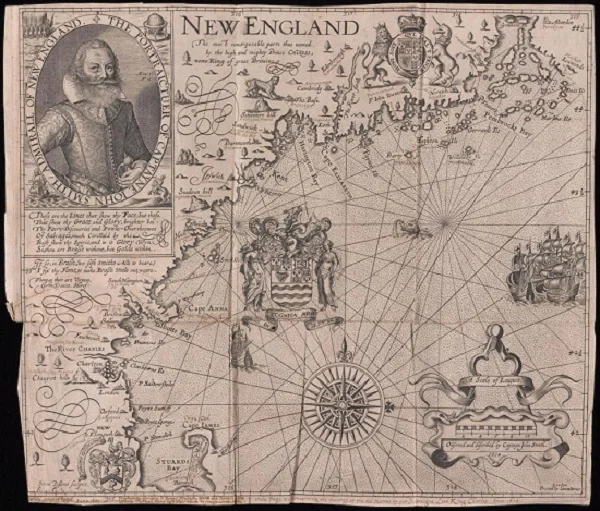






A_map_of_New_England,_being_the_first_that_ever_was_here_cut_..._places_(2675732378).jpg

Vox clamantis in deserto

Commentary Robert Whitcomb Commentary Robert Whitcomb

Charles Pinning: A separate peace in Newport

By CHARLES PINNING

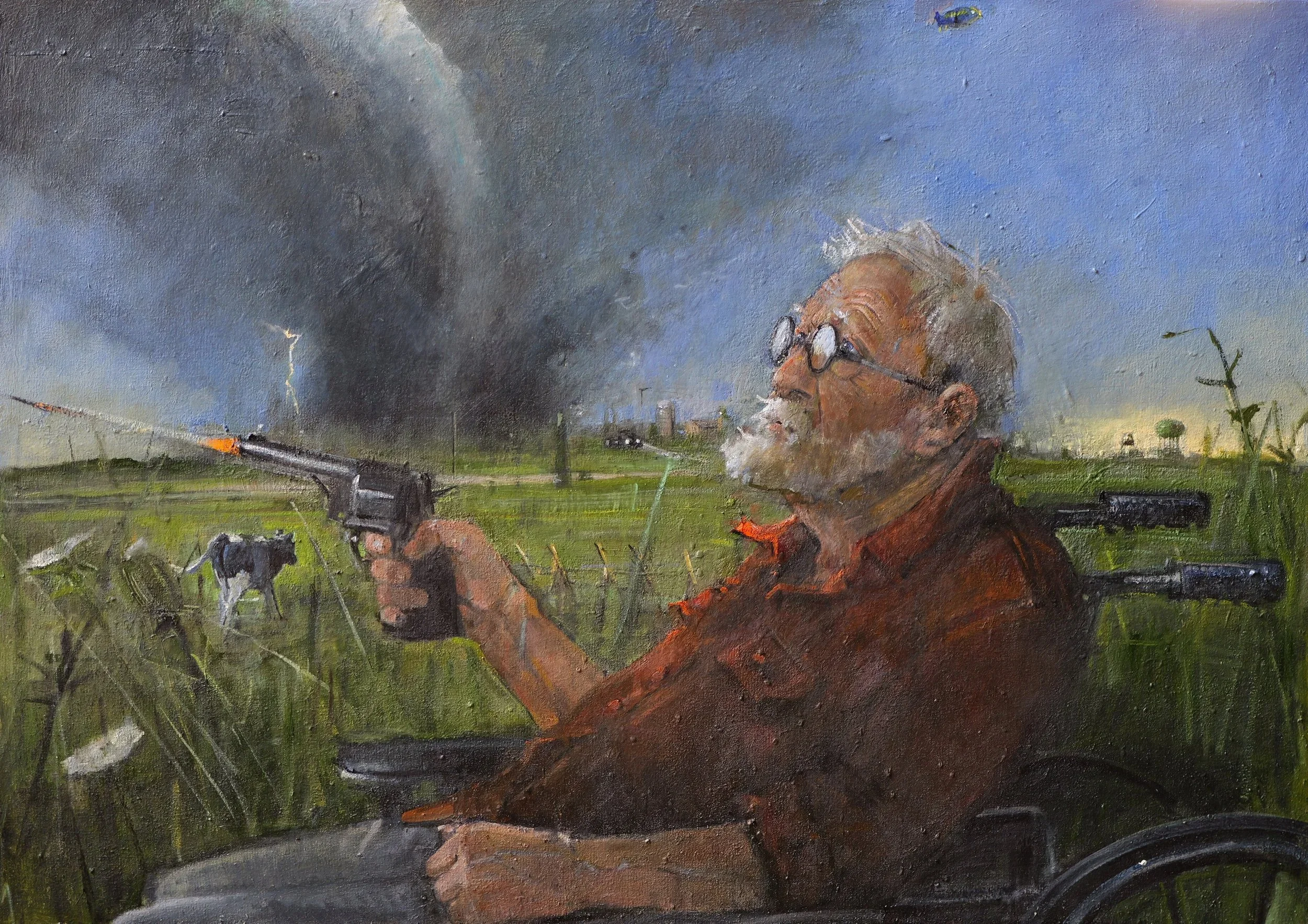
An enemy ambush had separated me from my battalion and I was alone in the field. Crouching in the tall grass, I took a long pull from my canteen and wiped my lips. The noon sun was beating down and I would have to handle my water carefully. I squeezed some dirt and smeared it on my face for camouflage.

A big, orange monarch opened and closed its wings only a foot away. Running to my position, I’d flown past blackberry bushes that had ripped my pants. My goal was to reach the ocean where, hopefully, I would find a landing craft to get me the hell out of here.

I checked my compass and looked up at the sky. In a house at the edge of the field, a woman was hanging laundry on a clothes line. A cherry tree in the yard had lost most of its pink blossoms. There was a small shed in the yard and a sandbox. I squinted back into the field, scanning the tall grass for any movement that might signal the enemy.

I pondered when to make my move.

The woman hanging clothes looked out across the field and I lowered myself. There was no telling whose side she was on. One couldn’t be too careful in these parts.

A funny sound came from a stand of trees and I flattened myself to the ground. Footsteps, many footsteps. I unholstered my .45 and lay still as a corpse. They passed by, without seeing me, not more than 10 feet away.

When I raised myself again to look around, a girl in a red blouse was standing in the yard next to the one where the lady had been hanging clothes. She waved to me. I signaled her to stay quiet and as she retreated into her house I lowered myself back into the grass.

I reached down and touched my leg where the blackberry bush had ripped my pants. When I brought my hand up there was some blood on it. This was not good. The enemy had dogs and the smell of blood would only make me more easily discovered. I fingered the leather handle of my trench knife. I would have to kill the dog first, quickly, with the knife in its throat and then shoot the handler with my .45. That would be loud and, I hoped, unnecessary.

The thing to do now was inch forward on my belly. Slow work, but I would remain invisible as well as be able to spot any mine trip wires.

Suddenly a plane came in low and strafed the field. I drew my helmet down over my head and gritted my teeth as the ground around me jumped up like popcorn, then it was gone. The butterfly opened its wings again on the blade of grass and I took another pull from my canteen and wiped my lips. The water, what was left of it, was warm but I was grateful for it.

From my breast pocket, I withdrew a letter from my wife, Pamela. She said all was well at home and that everyone prayed for me all the time. God, my leg hurt from the blackberry bushes. It was possible a thorn was embedded. I was susceptible to such things, having had blood poisoning twice from thorns.

I missed Pamela. I missed our walks in the neighborhood and I missed riding our bikes together. If I ever got out of this hellhole alive, I’d tell her every day how much I loved her paintings. She’d painted the side of our Pontiac station wagon: flames streaming down the sides from the front wheels.

Now, she was in our house in Newport, probably having lunch. A sandwich. Probably turkey and cheese, her favorite. God, I was getting hungry! And my leg hurt. What if I did have blood poisoning again? And stuck in this hellhole!

Back home, my team might have a baseball game tonight. I played in the Sunset League, an adult league. We played down at Cardines Field just off the bay. Pamela came to all of my games. She brought snacks. After the game, we’d sit in the stands eating celery and peanut butter. She had freckles. God, I loved her freckles. She didn’t like her freckles.

I was probably going to have to make a break for it. Between the blood poisoning in my leg and my hunger, I had to get out of this hellhole!

Slowly, I rose to my knees. I adjusted my helmet strap, checked everything hanging off my equipment belt and made a run for it. I zigzagged through the high grass to make myself a harder target, was almost there when I was hit by machine gun fire. I dove down, knowing I’d have to crawl the rest of the way if I had any hope of making it alive.

But as I dove into the grass, a stiff piece hit me in the eye.

“Raaah!”

I dropped my rifle and ran toward the backyard. My mother came running out and immediately saw the stalk of grass sticking out of my eye. She threw me in the station wagon and we drove straight to Dr. Grimes’s house, where he’d just sat down for Sunday lunch with his wife and 12 kids.

He brought me into his office at the front of the house and removed the stalk. I was going to live. I was going to be fine. He put a pirate’s patch over my eye.

At home, my mother made me take a bath and then daubed Merthiolate on my scratched leg and put me to bed. She ferried up a grilled cheese sandwich and tomato soup.

Pamela, who’d heard me screaming earlier, came over and sat on my bed. She brought her sketch pad and drew while I thumbed through a Mad magazine. I thought about how pretty she looked in her red blouse. Suddenly, she crawled up and kissed me on the cheek.

“I don’t want you playing war anymore,” she said. “I don’t want to lose you.”

I sighed. After a rough start, it had become a perfect summer’s day.

 Charles Pinning is  a Providence-based writer and the author of the New England-based novel "Irreplaceable'', about, among other thing, the art world.

 

Read More
art, Commentary Robert Whitcomb art, Commentary Robert Whitcomb

The faces of art

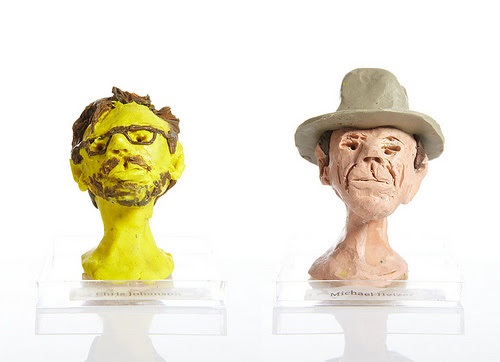
Liebeskind Work by BILL LIEBESKIND, in his show "We Make Art: 1,001 Artist Portraits'', at the Cape Cod Museum of Art, in Dennis, Mass., through June 14.

This artist has fashioned 1,001 heads of artists (including alive and long dead) from modeling clay. Incredibly, it took him only two years. Not surprisingly, he also makes comic books.

This project is educational in a number of ways. One is that it's  way for people to see what famous artists whose faces are little known actually looked like. (The faces of only a few famed artists are well known, such as those of Andy Warhol and Salvador Dali.)

That might help viewers understand their personalities a bit more.

The museum's blurb says that, in addition to his art about fellow artists,  he is "inspired by current events, such as the destruction of the World Trade Center and the dismantling of the Berlin Wall. Liebeskind attempts to make sense of the chaos in the world by using such powerful imagery in his work.''

Don't we all  try to make sense of the world's chaos -- until, usually later in life, we give up trying?


Read More
art, Commentary Robert Whitcomb art, Commentary Robert Whitcomb

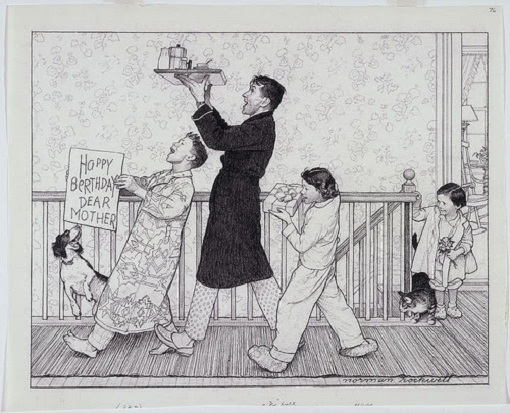
Norman Rockwell's world and ours

rockwell "Mother's Birthday'' (conte crayon drawing), by NORMAN ROCKWELL,  at  the Springfield (Mass.) Museum, through Jan. 4, 2015 in the show "Norman Rockwell's World: Reinterpreting the American Tradition in the 21st Century''. (Picture is a gift of MassMutual.)

This image was one of 21 drawings that MassMutual (the Springfield-based insurance company) hired Rockwell to do in the '50s and '60s that celebrated such traditional "American themes as hard work that appealed to corporate America,'' says the Springfield Museum blurb for the show. (Note that the father needs a shave!)

"So with today's fluid definitions of family, love and success and our fast-paced self-motivation, how do we make the work of Rockwell and the themes he so passionately believed in relevant to the world as we know it? That's what makes this exhibition so enlightening: comparing and contrasting the important themes of today with the depictions of family, work and leisure given to us by Rockwell himself.''

Ads these days tend to be much edgier and hipper than back then. But Rockwell, despite his rural image, was a very sophisticated man,  well attuned to the culture around him, albeit sometimes in flight from it, too.  And, I think, he had a rather tragic view of life that led him to paint the world that he wanted rather than the messy one he lived in.

How might he have adjusted his illustration approach today so that his work would remain salable,  long after the heyday of print mass-media illustration in which he thrived in the early and mid 20th Century? I suppose he would have learned Photoshop....

Would his celebration of "traditional family values'' appeal to Silicon Valley start-up people?

In any event, his work now  is more popular than ever, in what might reflect our escapism from our present attention-deficit-disordered, too fast and too ironical world, and our admiration for Rockwell's superb craft and professionalism. Ah, if only we of a certain age who remember seeing these images for the first time on paper (in magazines) had only appreciated back then how special they were, and that they would last.


Read More
Commentary Robert Whitcomb Commentary Robert Whitcomb

Let them take responsibility


By ROBERT WHITCOMB


In the appendix of Philip K. Howard's mordantly entertaining new book, The Rule of Nobody: Saving America From Dead Laws and Broken Government, is a well-named collection of proposed new amendments to the U.S. Constitution that he calls the “Bill of Responsibilities.”I over-summarize them here; read the book. Mr. Howard is an engaging writer, using stories (some grimly funny) to get across his strong prescriptions.

Mr. Howard proposes amendments to: “sunset” old laws and regulations; give the president power to far more effectively manage the executive branch — including line-item vetoes and expanded discretion to hire and fire and reorganize operations, all subject to being overridden by a majority of each house of Congress — and widen judges’ power to dismiss unreasonable lawsuits.

Finally, he recommends an amendment to create a “Council of Citizens” as an advisory body to make recommendations on how to make government more responsive to the public’s needs. This reminds me of the Hoover commissions on government reorganization of the late 1940s and the ’50s, named after Herbert Hoover, who chaired them. The composition of this council would be very federalist, with members chosen “by and from a Nominating Council composed of two nominees by each governor of a state.” The idea is to push along the ideas represented by the other new amendments. This is intriguing but the nomination process could get caught in political sludge.

The phrase “Bill of Responsibilities” gets to the heart of what Mr. Howard is saying throughout his book: that we have become so tangled up in laws and regulations that it’s often impossible to exercise authority and take responsibility — the avoidance of which, I would add, is attractive to many people, just as long as they continue to have the perks of their positions. As a result, it’s tougher and tougher to get things done, at the local, state and federal levels, whether it is fixing a bridge, creating a health-care system whose benefits are commensurate with its vast cost, or firing an incompetent bureaucrat.

Admiral Chester Nimitz said during World War II, “When in command, command.” President Truman said of the prospect of Dwight Eisenhower as president: “He’ll sit here, and he’ll say ‘Do this! Do that!’ And nothing will happen. Poor Ike. It won’t be a bit like the Army. He’ll find it very frustrating.” Well, Eisenhower turned out to be a pretty effective president but Truman was fairly accurate: It has always been hard to make government work, and in many ways it’s harder now than 60 years ago because of the accretion of laws and regulations, many of which should have been eliminated or streamlined long ago. A law or a regulation cannot cover every eventuality, Mr. Howard writes: You need judgment and common sense. Fewer laws and more decisions, please!

The problems that Philip Howard tackles remind me of the growing dominance of process over content (or maybe call it substance). You see this in daily life with the increasing time demanded to keep up with endlessly updated computer programs (planned obsolescence!), and the hours needed to fill out tax returns and insurance forms.

Meanwhile, the European Court of Justice has issued an advisory judgment that European Union residents have the right in certain circumstances to make search engines remove links to personal information that people think damages them. It’s “the right to be forgotten,” a cousin of Americans’ famous, if informal, “right to be left alone.”

This will be very difficult to enforce, given the vast complexity of the Web. But I like the idea of taking down the arrogance of Google, et al., a few notches. You don’t have to be much of a “public figure” to be the object of scurrilous inaccurate attacks on the Internet for which the likes of Google wrongly take no responsibility. In the Digital Age your good name can be instantly destroyed on the screen.

The court supported exceptions for “public figures,” especially politicians. But that’s very tricky: Almost anyone can become a “public figure” on the Internet. And is it fair to exclude politicians, etc., from such protection from attacks? Whatever, the European case at least raises the issue of responsibility for content, which the search-engine companies, most notably Google, have tended to avoid while raking in billions of dollars.

***

A college “commencement” is a strange term because it seems much more of an ending, as emphasized by the dirge-like “Pomp and Circumstance.” Sadder is that so many colleges, supposedly refuges of the free exchange of ideas, surrender to demands for censorship by “activists” to block commencement speeches by people (usually with comparatively “conservative” views) whose opinions they don’t like. Cowardly college chiefs fail to take responsibility for protecting one of their central missions -- free and open discussion.

Robert Whitcomb (rwhitcomb51@gmail.com)  is an editor, writer,  fellow of the Pell Center for International Relations and Public Policy and a member of a management-consulting firm in the health-care sector.

Read More
Commentary Robert Whitcomb Commentary Robert Whitcomb

Llewellyn King: The U.S. cancer-research crisis

By LLEWELLYN KING  

No diagnosis strikes fear into people as thoroughly as cancer. It is the sum of all fears when it comes to health.

My mother died in 1961, when treatments were few, in great pain from cancer of the uterus. Four treasured friends died of cancer more recently, but in equally awful ways; Barbara of bone cancer, Grant of colon cancer, Ian of brain cancer, and JoAnn of melanoma.

Cancer deserves its position as the most feared disease, even if it is not as lethal as it once was and many cancers can be treated. To know someone in the throes of cancer is to know something terrible. Heart disease kills more of us, but cancer is enthroned as the ultimate horror.

Yet we are, in some measure, winning the war on cancer; to medical science, it is less mysterious and more conquerable. But it has been a long battle against an implacable enemy.

The war on cancer is war with many theaters; cancer itself being a misnomer, as there are many cancers with very different profiles, rates metastasis and treatments.

So it is both puzzling and appalling that Congress has allowed funding for government biomedical research to languish and has made it subject to the blunt tool of sequestration. Less money means everything slows down; research projects are drawn out or cancelled, and scientists are discouraged.

Nothing is as fatal for research as uncertain funding. You cannot shut down a line of research and start it up again as funds become available: It blunts the picks.

Scientists at the hard-rock face of research cannot be expected to sustain commitment when they do not know if their research grants will be renewed in the next budget cycle. Lawyers can anticipate steady work, why not can cancer researchers? When we implore young people to study biomedicine, we are asking them to take up a career of uncertainty.

Enter the non-government funders, from giants like the American Cancer Society to small but determined outfits like the National Foundation for Cancer Research (NFCR).

This organization, according to its president, Franklin Salisbury Jr., believes in “adventure funding.” Although he eschews the description, Salisbury’s efforts might be called seed funding at the genomic and molecular level; understanding the role of genes in cancers and finding the mechanisms that control cells. He emphasizes the gap between science and medicine, and the need to provide funding to bridge that gap.

Salisbury also underscores the need for regular funding, rather than large periodic and unpredictable infusions. His organization, founded in 1973 by his father, Franklin Sr., a creative entrepreneur, and Albert Szent-Györgyi, a Hungarian-born physiologist and biochemist who won the Nobel Prize 1937, has been keeping research alive for some researchers, such as Dr. Curt Civin, of the University of Maryland Medical Center, and Dr. Harold Dvorak, of Beth Israel Deaconess Medical Center, in Boston.

NFCR is just one — and a small one, with a $15 million annual budget — of hundreds of cancer-related charities. Its uniqueness and what it portends for the whole future of research is its willing support, within the research community, of disruptive biomedical technologies as well as its appreciation for long-term support for particular scientists. These scientists are part of establishment teaching hospitals like Massachusetts General, as well as an honors list of top universities from Harvard to Oxford and across the Pacific to China.

Increasingly, China is becoming more important in biomedical research. American dollars are finding their way into Chinese research Institutions, as a new wave of collaboration outside of traditional channels is being established. These are sometimes housed in open medicine centers, six of which NFCR supports.

With the pressure here on government funding, researchers fear the government will fund only the safe and sure projects. This is being felt across the broad range of biomedical research in the, as scientists are turned away in larger and larger numbers from the National Institutes of Health empty handed. Respected researchers are turning to innovative funding sources, including crowd-sourcing. A renowned virus researcher at Columbia, Dr. Ian Lipkin, is trying to raise $1.27 million, having been turned down by NIH, by crowdsourcing

Llewellyn King is a national columnist and a longtime publisher, and the co-host of White House Chronicle, which appears on many PBS stations.

Read More
Commentary Robert Whitcomb Commentary Robert Whitcomb

Making Google clean up your nasty past

  The overseer of this site is an admirer of White House Chronicle, a  weekly TV show that appears on many PBS and other stations around America weekly.  (Southeastern New Englanders may see it  at 11:3o a.m. Sunday on Channel 8, WSBE.)

One of the shows is about a European ruling against Google and the right to delete nasty stuff about yourself from the Internet. The other is  about what went wrong in Africa when the European colonial powers left and what is going better now, whatever outrage you may be hearing in the news.

And there's some rapid-fire art done before your eyes on one of the shows.


Read More
Commentary Robert Whitcomb Commentary Robert Whitcomb

Vana's rock

Masonstone  

Photo by STEVE MASON, to be shown in the Sept. 20-21 Arts Marketplace Pawtucket.  Is cold rock  the  central symbol of New England?

Read More
Commentary Robert Whitcomb Commentary Robert Whitcomb

'New Englanders of the Year'

The New England Council, the country’s oldest regional business organization, will present its prestigious “New Englander of the Year” awards at its 2014 Annual Dinner at the Seaport Hotel/World Trade Center in Boston on Thursday, October 9, 2014.  This year’s recipients are Peter Frates, who inspired the ALS Ice Bucket Challenge; Gary L. Gottlieb, M.D., President & CEO of Partners HealthCare; Alan S. McKim, Chairman & CEO of Clean Harbors Environmental Services; and George Stephanopoulos, Chief Anchor at ABC News.  Over 1,400 New England Council members representing businesses large and small across a wide range of industries throughout New England will be in attendance. The “New Englander of the Year” awards are presented each year by the New England Council and honor residents or natives of the New England states for their commitment and contributions in their fields of work, as well as their leadership and impact on the New England region’s quality of life and economy.  First presented in 1964, over the years the award has been presented to Senators Ted Kennedy, Jack Reed, Jean Shaheen, Kelly Ayotte, Susan Collins and John Kerry; Congressmen Richard Neal, Ed Markey, John Larson, and Barney Frank; and business leaders Abigail Johnson of Fidelity Investments, Robert Reynolds of Putnam Investments, Anne Finucane of Bank of America and many other respected government, business, and non-profit leaders.

“Each of our 2014 honorees has made remarkable contributions to our economy and our communities, both here in New England and beyond,” said James T. Brett, President and CEO of the New England Council.  “Through thoughtful leadership, innovative thinking, and dedication to their community, these individuals truly embody all that is great about New England. We’re delighted to be celebrating their accomplishments with hundreds of our members at this year’s Annual Dinner.”

The New England Council’s Board of Directors selected this year’s honorees based on their commitment to the community, distinguished careers and countless contributions to the region:

Peter Frates Peter Frates is a native of Beverly, MA, and a graduate of Boston College, where he was the captain of the Eagles baseball team.  In 2012, Peter was diagnosed with Amyotrophic Lateral Sclerosis (ALS), often referred to as “Lou Gehrig’s Disease.”  Since his diagnosis, Peter and his family have dedicated much of their time and energy to raising awareness of ALS and raising funds to support research for a cure.  Peter is the inspiration for the “ALS Ice Bucket Challenge,” which “went viral” and became a global phenomenon during the summer of 2014.  Around the world, millions of people, from politicians, to celebrities, to countless private citizens, took the challenge and donated to the ALS Association, resulting in over $140 million raised to support research for a cure.

Gary L. Gottlieb, M.D. – President and CEO, Partners HealthCare Gary L. Gottlieb, M.D., is the President and CEO of Partners HealthCare, an integrated health system founded by Brigham and Women’s Hospital and Massachusetts General Hospital. Partners HealthCare, one of the largest employers in New England, and one of the world’s largest academic biomedical research enterprises, also includes community and specialty hospitals, a managed care organization, community health centers, a physician network, home health and long-term care services, and other health-related entities. Dr. Gottlieb is  a Professor of Psychiatry at Harvard Medical School and a member of the Institute of Medicine of the National Academies.  He has served in a variety of leadership posts at some of the nation’s top hospitals, including President of Brigham and Women’s Hospital. A recognized community leader in the region, Dr. Gottlieb also focuses his attention on workforce development issues, serving as the Chair of Boston’s Private Industry Council. He is a graduate of Rensselaer Polytechnic Institute, Albany Medical College of Union University and the Wharton School of the University of Pennsylvania.

Alan S. McKim – Founder and CEO, Clean Harbors, Inc. Alan S. McKim founded Clean Harbors in 1980, and today serves as its Chief Executive Officer and Chairman of the Board. Under McKim’s leadership, Norwell, MA-based Clean Harbors has grown from a four-person tank cleaning business to the leading environmental, energy and industrial service provider in North America, with revenues over $3.5 billion in 2013. Clean Harbors has led clean-up efforts following natural disasters, such as hurricanes and tornadoes, as well as environmental incidents, including the massive oil spill in the Gulf of Mexico in 2010. Clean Harbors also provides leading edge technologies and services to prevent the release of contaminants to the environment and its wide range of sustainability and recycling capabilities include the world’s largest oil re-refining facility. McKim serves as a Trustee of Northeastern University, where the University’s D’Amore-McKim School of Business was named in honor of Mr. McKim and a fellow classmate in recognition of their significant business achievements and substantial contributions to the university. He holds an MBA from Northeastern University and an Honorary Doctorate from the Massachusetts Maritime Academy. George Stephanopoulos – Chief Anchor, ABC News George Stephanopoulos was named Chief Anchor of ABC News in June 2014, leading the network’s coverage of special events and breaking news. The Fall River, MA, native currently serves as the anchor of ABC’s “This Week with George Stephanopoulos”, and as the anchor of “Good Morning America”, which he has helped propel to the number one spot in the competitive national morning news market. Prior to joining ABC News in 1997, Stephanopoulos served as a senior adviser to President Bill Clinton. He is also the author of the New York Times number one best seller, “All Too Human”. Stephanopoulos is a graduate of Columbia University and Oxford University, where he was a Rhodes Scholar.

The New England Council’s 2014 Annual Dinner will be held on Thursday, October 9, 2014, at the Seaport Hotel/World Trade Center in Boston.  The reception will begin at 4:30 p.m., followed by a dinner program and award presentation beginning at 6:00 p.m.  This year’s Annual Dinner is being chaired by New England Council board member Patricia Jacobs, New England President of AT&T.

The New England Council, the country’s oldest regional business organization, is an alliance of businesses, academic and health institutions, and public and private organizations throughout New England formed to promote economic growth and a high quality of life in the region.  The Council is dedicated to identifying and supporting federal public policies and articulating the voice of its membership regionally and nationally on important issues facing New England.  The NEC is also committed to working with public and private sector leaders across the region and in Washington through educational programs and forums for information exchange.  For more information, please visit: www.newenglandcouncil.com.


Read More
Commentary Robert Whitcomb Commentary Robert Whitcomb

The market's geometry

"The Market Is a Snake,'' by MICHAEL YEFKO, in the show "Further on Down the Yellow Brick Road,'' at Hera Gallery, in Wakefield, R.I., through June 20. In it he explores "temporal aspects of geometry.''

He says: "I want to create a landscape of meaning for the viewer where meaning evolves from visual cues and self-references.''

Read More
Commentary Robert Whitcomb Commentary Robert Whitcomb

What is really meant by 'patient engagement'?

”Here is the CFAH definition of patient engagement: ‘Actions people take to support their health and benefit from their health care.’ What’s missing from this definition? What would you add, subtract or word differently?”

  A colleague of mine at Cambridge Management Group (cmg625.com),  senior adviser Marc Pierson, M.D., had some pithy things to say when  the Center for Advancing Health (CFAH) recently interviewed him and other health-reform experts.

Here are some of the remarks of Dr. Pierson, who is also retired vice president for clinical information and quality for PeaceHealth’s St. Joseph Medical Center, Bellingham, Wash.:


CFAH: ”Here is the CFAH definition of patient engagement: ‘Actions people take to support their health and benefit from their health care.’ What’s missing from this definition? What would you add, subtract or word differently?”

Dr. Pierson: ”….Defining {patient} engagement is very much the product of who is doing the defining. If from within health care, then the key question becomes for what or for whom is ‘patient’ engagement primarily intended to benefit?…I would prefer thinking of ‘people’ engaged in their health and health care. However, I do like that this definition recognizes that both health and health care require people’s active participation…Medical care is not the same as health. Health is much more than the lack of illness…We need to incorporate more perspectives from real people and ask them what they need to become more engaged with their medical conditions, their health, and their well-being.”

CFAH: ”If a person is engaged in their health and health care, what difference does that make? To whom?”

Dr. PIERSON: “Typically, engagement is defined by health care insiders as paying attention to what you are told to do and being compliant with ‘orders.’ The current non-system of health care plays into this by being disconnected and difficult for people to understand or navigate….

”Health care offers technology and knowledge but is set up for the people that work inside it, not for its clients’ ease, safety, or affordability. Payment for health care is based on professionals managing clients’ ill health, not on engaging with people to prevent illness, create well-being, or for self-care of illnesses and chronic conditions.

”People are scared of what they are not allowed to know or understand. They don’t want to be more dependent. They don’t want to end up going to an emergency room. Their primary relationships are with family, friends, neighborhood, and community — not professional service providers.”

Read More